A grab bar only helps when it stays firmly in place at the exact moment someone needs it. To install grab bars safely, treat the job as more than a quick bathroom upgrade. Placement, wall construction, mounting hardware, and the user’s daily routine all affect whether the finished bar provides real support.
For Knoxville homeowners planning for aging in place, recovering from an injury, or making a bathroom more comfortable for a family member, a properly installed grab bar can add confidence without changing the character of the room. The key is making sure the bar is attached to a structure that can handle body weight, not simply to a finished wall surface.
Start With the Right Location
Grab bars should support natural movement. Before measuring or drilling, think through where a person reaches when stepping into the shower, lowering onto the toilet, standing up, or moving across a wet floor. A bar that is slightly out of reach may look fine but offer little help when balance is compromised.
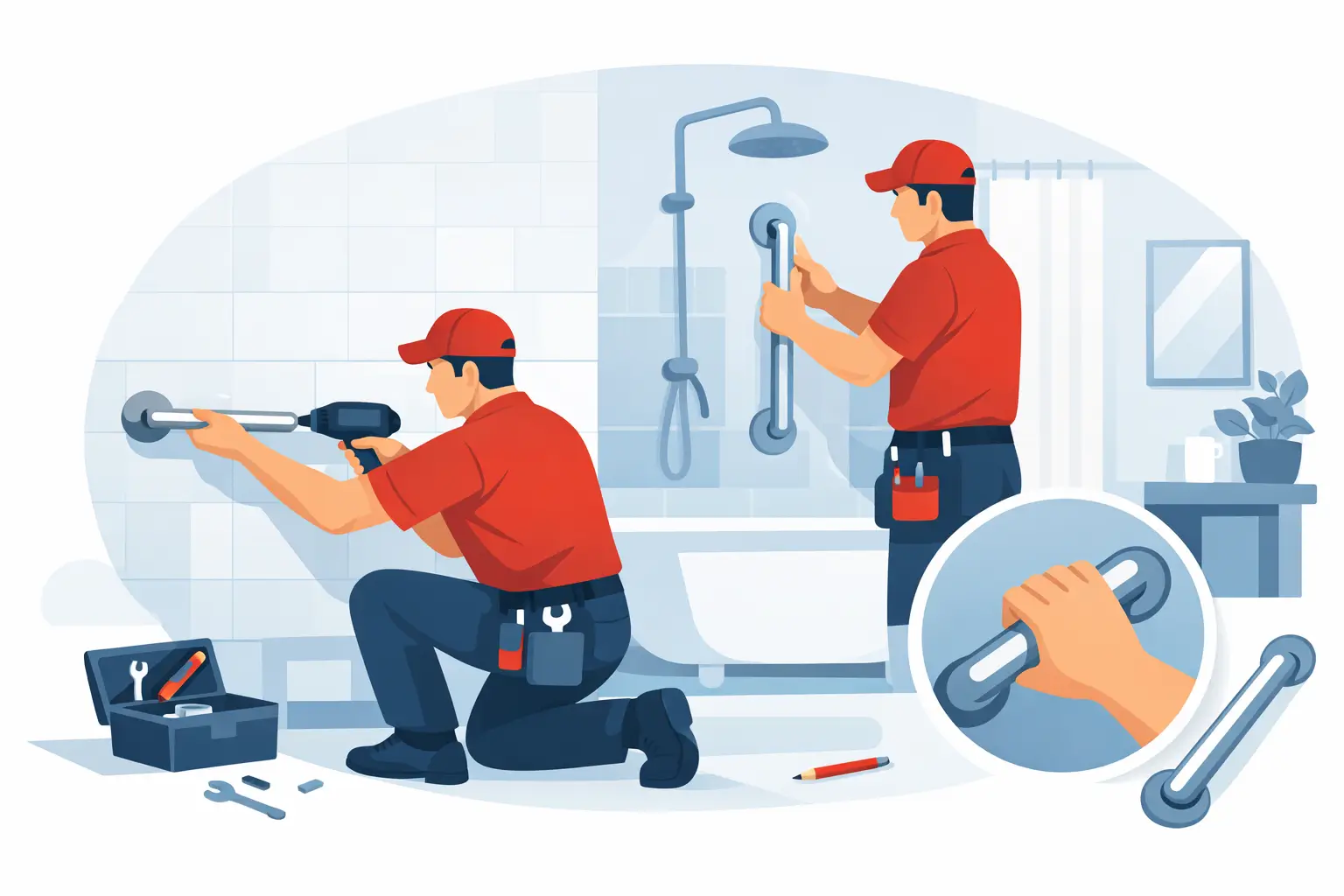
In a tub or shower, an entry bar near the opening can provide a steady handhold while stepping over the tub wall or threshold. A second bar along the longer wall can help with standing, turning, and sitting. Near a toilet, a horizontal bar on the side wall is common, while some bathrooms need a fold-down support or a bar placed behind the toilet when side-wall space is limited.
There is no one-size-fits-all height. Many residential installations use a range similar to accessible-design guidelines, often around 33 to 36 inches from the finished floor to the top of a horizontal bar. However, the better choice depends on the height, strength, reach, and mobility needs of the person using it. If the bar is for someone recovering from surgery or living with a specific condition, ask their medical or occupational therapy provider for placement guidance.
Before committing to a location, have the intended user stand in the space and mimic the movement they need support for. This simple check often reveals whether the bar should be horizontal, vertical, or angled. Vertical bars are especially useful where users need to hold at different heights, such as at a shower entrance.
Find Solid Framing Before You Install Grab Bars Safely
The most critical part of the work is what sits behind the wall. Standard drywall, tile, fiberglass surrounds, and decorative panels are finish materials. They are not designed to hold the repeated pulling force a grab bar may experience.
The strongest approach is fastening the grab bar directly into wall studs or into solid wood blocking installed between studs. Most framed walls have studs spaced 16 or 24 inches apart, but do not assume the spacing or location. Use a reliable stud finder, confirm with careful measuring, and verify the results before drilling.
A stud finder can be confused by dense tile, plumbing, metal corner bead, or other materials inside the wall. When possible, use several methods to confirm framing. Check measurements from a known stud, look for a pattern, and drill only a small exploratory hole in a concealed location if the wall assembly allows it. In a tiled shower, this may not be practical, which is one reason professional installation is often the safer choice.
Some grab bars are designed for specialized anchors that are rated for grab-bar use. These systems can be appropriate when stud placement does not line up with the needed location, but the anchor must be specifically intended for this application and installed exactly as the manufacturer directs. A standard plastic wall anchor, toggle bolt chosen for a picture frame, or drywall screw is not an acceptable substitute.
If the bathroom is being remodeled, adding wood blocking before the walls are closed is an excellent long-term solution. Blocking allows bars to be installed later in the best location rather than being limited by existing studs. It is a small planning decision that can make a future accessibility upgrade much easier.
Match the Bar and Hardware to the Bathroom
Choose a purpose-built grab bar, not a towel bar or decorative bath accessory. A towel bar may look similar, but it is not engineered or mounted to provide the same level of support. Look for a product with clear installation instructions, mounting hardware intended for the wall type, and a design that is comfortable to grip.
Bar length should fit the available support area. A longer horizontal bar can offer more usable hand positions, but it needs sound mounting at both ends. In a shower, select a finish that resists corrosion and a grip that remains comfortable when wet. Textured or peened surfaces can improve grip for some users, while others prefer a smooth bar that is easy to clean.
Suction-cup products can be useful as temporary balance aids in limited situations, but they should not be treated as a permanent safety device or relied on for full body weight. Their hold can change with surface condition, temperature, moisture, and installation quality. For dependable daily support, mechanically fastened grab bars are the better choice.
Plan Carefully Around Tile, Plumbing, and Electrical Work
Bathrooms hide more than studs. Water supply lines, drain vents, electrical wiring, and sometimes shower valve components may be located inside the wall. Drilling without a plan can create a repair that is far more involved than the original project.
Tile deserves special care. Rushing through ceramic or porcelain tile can crack the surface, chip the glaze, or damage the waterproofing behind it. The correct bit, a controlled drilling speed, and steady pressure matter. Once the tile is penetrated, the mounting holes should be sealed as directed by the grab bar manufacturer to reduce the chance of water reaching the wall cavity.
Fiberglass and acrylic shower surrounds present a different challenge. They can flex under load if there is no solid backing behind them. A bar mounted through the surround must still connect to suitable framing or a properly designed backing system. Tightening hardware against a thin surround without support can cause cracking or distortion.
If there is any uncertainty about what is behind the wall, stop before drilling. A qualified handyman or remodeling professional can assess the wall, identify a sound mounting strategy, and make repairs if access is needed. This is particularly valuable in older homes, tiled shower walls, and bathrooms with limited space.
Install With Care, Then Test the Mounting
Once the location and structural support are confirmed, use the manufacturer’s instructions as the final authority for hole size, fastener type, flange orientation, and tightening method. Even a well-chosen bar can become unsafe if the hardware is overtightened, under-tightened, or installed at an angle that leaves the mounting plate unsupported.
After installation, inspect the bar closely. The flanges should sit flush to the wall, fasteners should be secure, and any trim covers should be properly seated. Check for cracked tile, gaps around penetrations, or visible movement in the wall surface.
Testing should be deliberate, not casual. Apply firm, controlled pressure in the directions the bar will be used: downward, outward, and sideways where appropriate. The bar should not rotate, shift, creak, or pull away from the wall. If anything moves, do not use it until the mounting issue has been corrected.
It is also worth checking the bar periodically, especially in a frequently used shower. Changes in caulk, tile, wall finishes, or hardware can signal moisture or movement that needs attention. A grab bar is a safety feature, and it deserves the same attention as a handrail or stair tread.
When Professional Installation Makes Sense
A straightforward installation into clearly located studs may be manageable for an experienced homeowner. The trade-off is that a mistake can damage finished surfaces or, more seriously, leave a bar that appears secure but is not. Professional help is a smart choice when tile is involved, wall framing is uncertain, multiple bars are needed, or the installation supports a person with significant mobility needs.
Smart Home Fix helps homeowners in Knoxville and surrounding communities make practical safety upgrades with dependable workmanship. A professional assessment can determine the best locations, account for the construction of the existing bathroom, and help create a finished result that looks clean while providing the support it is meant to deliver.
A well-placed grab bar should feel like a natural part of the room, ready when needed and never in doubt. Taking the time to mount it correctly gives the people in your home one less thing to worry about on a wet bathroom floor.