
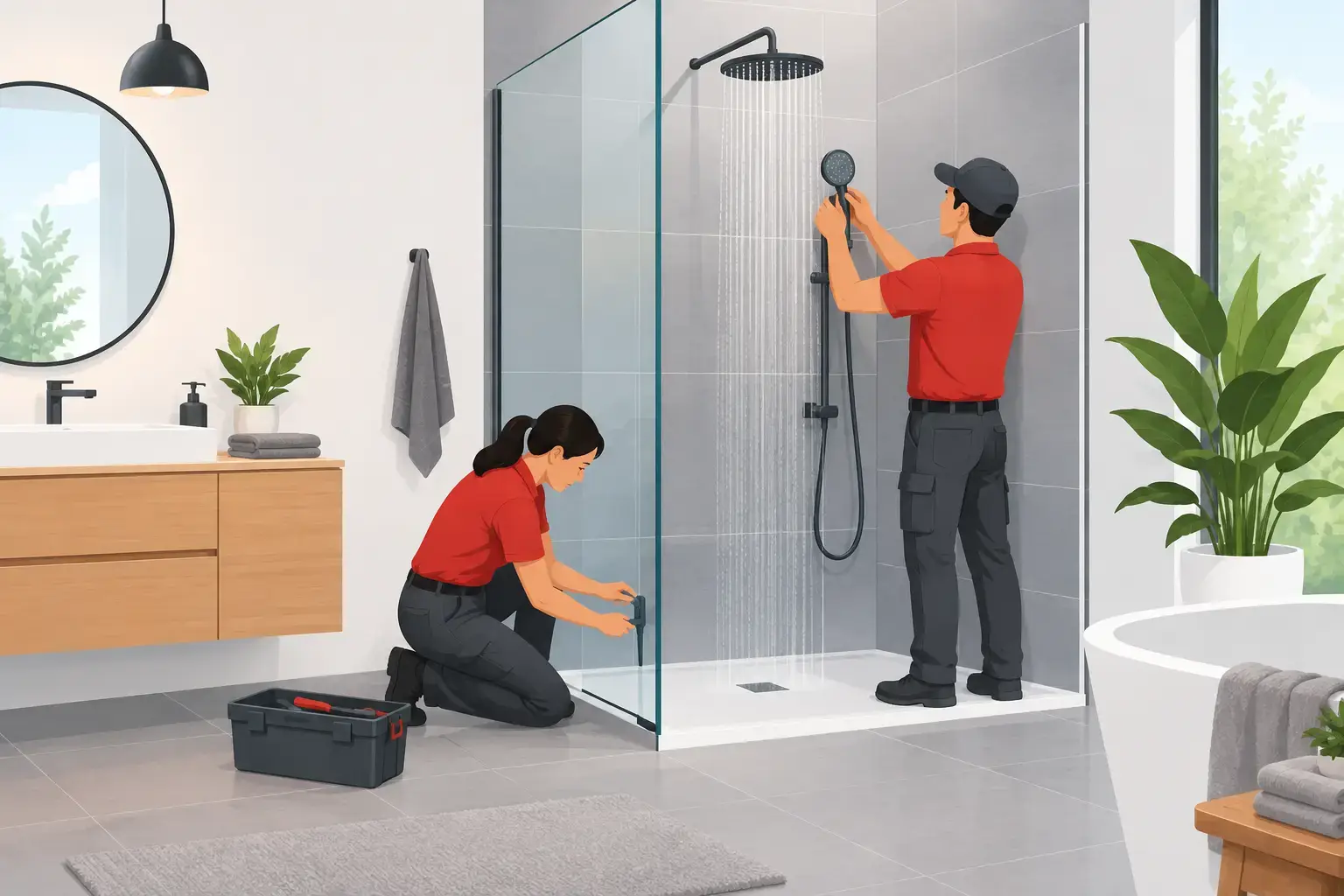
A shower is one of the hardest-working spaces in a home, yet it is often designed as an afterthought. The best shower trends are not just about a more polished bathroom. They make rushed mornings easier, create a more comfortable place to unwind, and reduce the small cleaning and maintenance frustrations homeowners live with every day.
For Knoxville-area homeowners planning a bathroom update, the smart approach is to choose features that suit the home, the household, and the way the room is actually used. A striking finish can be a nice touch, but a shower that drains correctly, stores essentials within reach, and stays easier to clean will continue to feel like a good decision years later.
Shower Trends Built Around Better Daily Use
Larger, open shower layouts
Walk-in showers remain popular because they make a bathroom feel less confined. Many use a fixed glass panel instead of a full enclosure and a low or curbless entry for a cleaner visual line. This style can be especially useful in a primary bathroom where homeowners want more room to move around.
The practical trade-off is water control. An open layout needs the right showerhead placement, floor slope, drain location, and glass-panel size to keep water where it belongs. A curbless shower also requires careful planning below the finished floor. It can be a great long-term accessibility feature, but it is not a detail to treat casually during a remodel.
Larger-format wall tile
Large porcelain tiles create a calm, continuous look with fewer grout lines breaking up the walls. Less grout also means fewer places for soap residue and mildew to collect, which is a meaningful advantage in a busy household.
That does not mean larger tile is always the answer. Small mosaic tile is still a practical choice for shower floors because its many grout joints add traction and allow the material to follow a sloped surface. A common and effective combination is larger wall tile paired with a smaller, slip-resistant floor tile.
Built-in niches that earn their space
A recessed shower niche is one of the most useful upgrades in a bathroom. It gives shampoo, soap, and other daily essentials a permanent home without relying on a wire rack or balancing bottles on the tub edge.
The key is sizing and placement. A niche should be wide and tall enough for the products your household uses, but it should not interfere with plumbing, structural framing, or the waterproofing system behind the wall. A shelf within the niche can help organize products, while a slight slope toward the shower helps water drain instead of pooling.
A spa feel without a complicated room
Homeowners are moving away from bathrooms that feel purely functional. The newer direction is warm, simple, and comfortable: softer lighting, natural-looking tile, matte finishes, and shower fixtures that make a routine feel more relaxing.
A rainfall-style showerhead can add a pleasant experience, but it works best when there is enough ceiling height and the water supply can support it. Many homeowners prefer a standard wall-mounted showerhead plus a handheld option. This pairing offers flexibility for rinsing the shower, bathing children or pets, and accommodating changing mobility needs.
Shower Trends in Materials and Finishes
Warm neutrals and natural texture
Bright white bathrooms are still common, but warmer colors are gaining ground. Think soft beige, sand, greige, muted clay tones, and stone-inspired porcelain. These choices can make a bathroom feel inviting without becoming overly trendy.
Porcelain that resembles natural stone or wood provides texture without the upkeep concerns associated with some natural materials. It is durable, water-resistant, and available in a wide range of patterns. In a shower, consistency and reliable performance often matter more than choosing the most dramatic surface.
Matte black, brushed nickel, and mixed metals
Matte black fixtures remain a strong design choice, particularly when paired with light tile or warm wood cabinetry. Brushed nickel is another dependable option because it works with many styles and tends to hide water spots better than highly polished finishes.
Mixed metals can look intentional when used with restraint. For example, a homeowner may choose black shower hardware and a warmer metal for a vanity light or mirror frame. The room needs a clear plan, though. Too many finishes can make a compact bathroom look busy rather than collected.
Glass that supports an open feel
Clear glass enclosures are popular because they show off tilework and allow more light into the shower. They can make even a modest bathroom feel larger. For homeowners who prefer more privacy or want to disguise water spots, frosted or textured glass may be a better fit.
Glass is not maintenance-free. It benefits from regular squeegeeing and cleaning, particularly in areas with mineral-heavy water. Selecting quality hardware and making sure the door swings, seals, and aligns properly are just as important as choosing the glass itself.
Comfort and Safety Should Shape the Design
The most worthwhile bathroom improvements often address needs homeowners do not notice until they are missing. A properly located grab bar, for example, can blend into a modern shower design while adding valuable support. Reinforcement behind the wall should be considered during construction, even if grab bars are not being installed immediately.
A handheld showerhead on a slide bar, an adjustable-height fixture, a built-in bench, and a low threshold can all make a shower more comfortable for people of different ages and abilities. These are not only aging-in-place features. They also make shaving, cleaning, bathing young children, and recovering from an injury more manageable.
Slip resistance deserves the same attention as style. Glossy tile may look attractive in a showroom, but a shower floor needs dependable traction when wet. Ask about tile suitability for wet floors rather than assuming every tile can be used everywhere.
The Details That Protect a Shower Remodel
A beautiful shower is only as reliable as the work behind the tile. Waterproofing, drainage, ventilation, and sound plumbing connections determine whether the remodel holds up. Skipping care in these areas can lead to leaks, damaged framing, loose tile, and mold concerns that are far more disruptive than the original project.
Proper waterproofing is not simply applying grout and caulk. Grout is not waterproof, and caulk is a maintenance item that will eventually need replacement. The shower assembly behind the finish materials must be built to direct water safely to the drain.
Ventilation also matters in East Tennessee, where humidity can linger. An adequately sized bathroom exhaust fan helps remove moisture after showers, protecting paint, trim, and surrounding surfaces. If the existing fan is weak, noisy, or poorly vented, a bathroom update is a sensible time to correct it.
Before choosing tile or fixtures, consider the condition of the current plumbing. Moving a drain, replacing aging supply lines, or adjusting a valve may add complexity, but it can prevent trouble later. The right scope depends on the age of the home and how much the new layout changes from the old one.
Choosing Trends That Will Still Work for You
Not every popular feature belongs in every bathroom. A large walk-in shower may be ideal for a primary suite, while a tub-shower combination can be the more practical choice in a family bathroom. A dark tile may create drama, but it can also show mineral deposits and soap residue more readily than a mid-tone finish.
Start with the frustrations you want to solve. Maybe it is poor storage, a cramped enclosure, a hard-to-clean surround, weak lighting, or a shower floor that feels unsafe. Then choose the style details that support those improvements. This keeps the project focused on function first and helps prevent a design from feeling dated too quickly.
For work that involves moisture protection, plumbing coordination, tile installation, or structural changes, dependable workmanship matters. Smart Home Fix helps homeowners make practical bathroom improvements with the care expected from a licensed and insured local team.
The right shower should feel good on a busy Tuesday morning, not only on the day the remodel is finished. Choose features that simplify your routine, protect your home, and make the room a more comfortable place to start and end the day.