A crawlspace is easy to ignore because it is out of sight, but it has a direct effect on the rooms above it. Musty odors, cold floors, sticking doors, higher indoor humidity, and unexpected pest activity can all start below your home. This guide to crawlspace maintenance helps Knoxville-area homeowners recognize early warning signs and take practical steps before a small issue becomes a costly repair.
Why Crawlspace Maintenance Protects the Rest of Your Home
Your crawlspace supports the framing, plumbing, electrical components, insulation, and sometimes HVAC equipment that keep your home functioning. When moisture collects there, wood can stay damp long enough to encourage mold, mildew, rot, and insect activity. The problem may remain hidden until floor joists soften, insulation falls, or indoor air begins to smell stale.
Crawlspaces are especially vulnerable in East Tennessee. Rainy seasons, humid summers, changing temperatures, and sloped lots can all send moisture toward a foundation. A home does not need standing water to have a crawlspace problem. Consistently damp soil, condensation on pipes, or wet insulation can be enough to create damage over time.
Regular attention gives you a chance to correct drainage, seal gaps, and manage humidity before the structure is affected. It also helps preserve the comfort and efficiency of your home.
Start With a Safe Visual Inspection
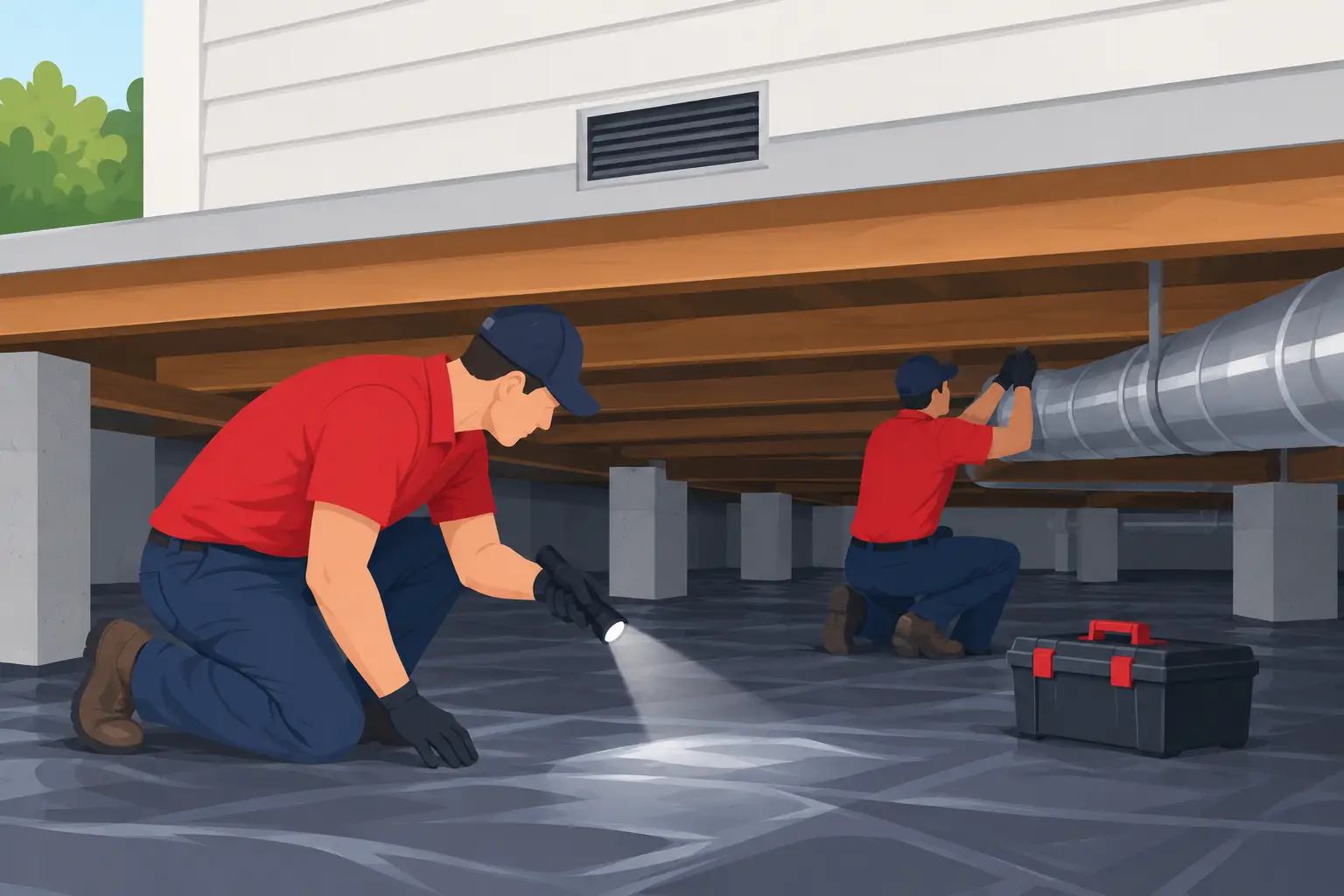
Most homeowners can perform a basic crawlspace check twice a year, ideally in spring and fall. Use a bright flashlight, wear gloves and sturdy shoes, and avoid entering an area with standing water, exposed wiring, sagging framing, or suspected mold growth. If access is tight or conditions look unsafe, leave the inspection to a qualified professional.
From the entry point, look for obvious moisture, damaged insulation, droppings, wood debris, loose ductwork, leaking pipes, and signs of insects. Bring a camera so you can compare conditions over time. Photos make it easier to tell whether a stain is old or whether moisture is actively spreading.
Pay close attention to the underside of the subfloor and the floor joists. Dark staining, fuzzy growth, soft wood, or a strong earthy odor deserve further evaluation. A few old water marks may not mean there is an active leak, but fresh dampness after rain is a clear sign that water management needs attention.
Check for Moisture From Above and Below
Water can enter a crawlspace from more than one direction. Plumbing leaks and sweating pipes introduce moisture from inside the home, while poor grading, clogged gutters, and short downspouts allow rainwater to collect near the foundation.
Look for wet areas around plumbing connections, water heater lines, and HVAC condensate drains. Then inspect the exterior. Soil should slope away from the home so water does not pool against the foundation. Gutters should be clear, and downspouts should carry water well away from the house.
If water appears after heavy rain, the solution may involve exterior drainage rather than a repair inside the crawlspace. This distinction matters. Covering damp ground with a vapor barrier without correcting the source of the water can trap the problem instead of solving it.
Control Ground Moisture and Humidity
A properly installed ground vapor barrier is one of the most useful tools for crawlspace maintenance. This durable plastic sheeting covers exposed soil and helps limit the amount of moisture that rises into the space. It should lie flat, cover the full ground surface, and extend neatly around piers and obstacles.
Torn, thin, or incomplete plastic does not provide much protection. Replace damaged sections and avoid leaving bare soil exposed along foundation walls or around support posts. If the crawlspace regularly feels damp, has visible condensation, or smells musty, a more complete moisture-control plan may be needed.
That plan depends on the home. Some crawlspaces benefit from carefully managed ventilation, while others perform better when sealed and conditioned with a dehumidifier. Open vents can help in certain situations, but in a humid Tennessee summer they can also bring more moist air into a cool crawlspace, where it condenses on surfaces. There is no one-size-fits-all answer. The home’s drainage, insulation, HVAC setup, and existing conditions all matter.
A dehumidifier can be a practical addition when humidity remains high after drainage and vapor-barrier issues are addressed. It needs proper drainage, routine filter cleaning, and enough capacity for the space. A unit that constantly runs but never improves conditions may signal an unresolved water source.
Keep Insulation, Ducts, and Pipes in Good Condition
Crawlspace insulation is often the first material to show moisture damage. Insulation that is wet, sagging, compressed, or hanging from the subfloor is no longer doing its job well. It can hold moisture against wood and provide nesting material for pests.
Replace damaged insulation only after the moisture issue has been corrected. Otherwise, the new material may fail quickly. The right insulation approach also depends on whether the crawlspace is vented, sealed, or conditioned, so it is wise to get guidance before changing the entire system.
While you are checking insulation, examine ductwork for loose connections, torn sections, and missing insulation. Leaky ducts in a crawlspace waste conditioned air and can make rooms above feel less comfortable. In winter, unprotected pipes are more vulnerable to freezing during cold snaps. Secure loose pipe insulation and watch for small drips, mineral buildup, or corrosion around fittings.
Watch for Pests and Wood Damage
Crawlspaces offer shelter to rodents, insects, spiders, and other unwanted visitors. Signs include droppings, gnawed materials, nesting, insect wings, mud tubes, and chewed wiring. Do not assume a pest issue is separate from a moisture issue. Damp crawlspaces often create the conditions that attract wood-damaging insects and make access points easier to exploit.
Check the foundation perimeter for gaps around pipes, vents, utility lines, and access doors. Repair damaged screens and make sure the crawlspace door closes securely. Sealing an opening is helpful, but do not block ventilation or drainage components without understanding their role in your home’s moisture-control system.
Wood damage requires prompt attention. Surface discoloration may be manageable, while soft or crumbling joists, beams, or sill plates can affect structural safety. A professional assessment is the right next step when you see significant deterioration, shifting supports, or floors that feel bouncy above the crawlspace.
Follow a Simple Seasonal Routine
Consistency is more valuable than an occasional deep inspection. In spring, check for water after heavy rain, clear gutters, and look for winter pipe damage. During summer, monitor musty odors and humidity, especially if the crawlspace is vented. In fall, remove leaves from drainage paths, inspect the access door, and make sure pipe insulation is secure before colder weather arrives.
A quick check after major storms is also worthwhile. Look for pooling water near the foundation, overflowing gutters, and new signs of dampness inside the crawlspace. Acting quickly after a weather event can prevent weeks of moisture exposure.
Keep a simple record of what you find, including dates, photos, and repairs. This is useful for spotting recurring problems and gives a repair professional a clearer starting point if the issue becomes more involved.
Know When to Call for Professional Help
Some crawlspace tasks are straightforward, such as replacing a damaged access-door latch or securing a loose section of insulation. Others require more experience and the right equipment. Standing water, extensive mold-like growth, structural wood damage, repeated plumbing leaks, electrical concerns, and persistent odor are all reasons to bring in qualified help.
For homeowners who would rather not crawl under the house, Smart Home Fix provides dependable local support for practical home maintenance and repair needs. A licensed and insured professional can help identify what is causing the issue, complete appropriate repairs, and make your life easier without leaving you to guess at the next step.
A dry, orderly crawlspace rarely gets attention, and that is exactly the goal. Give it a brief check before changing seasons, respond to moisture quickly, and your home will be better protected from the ground up.