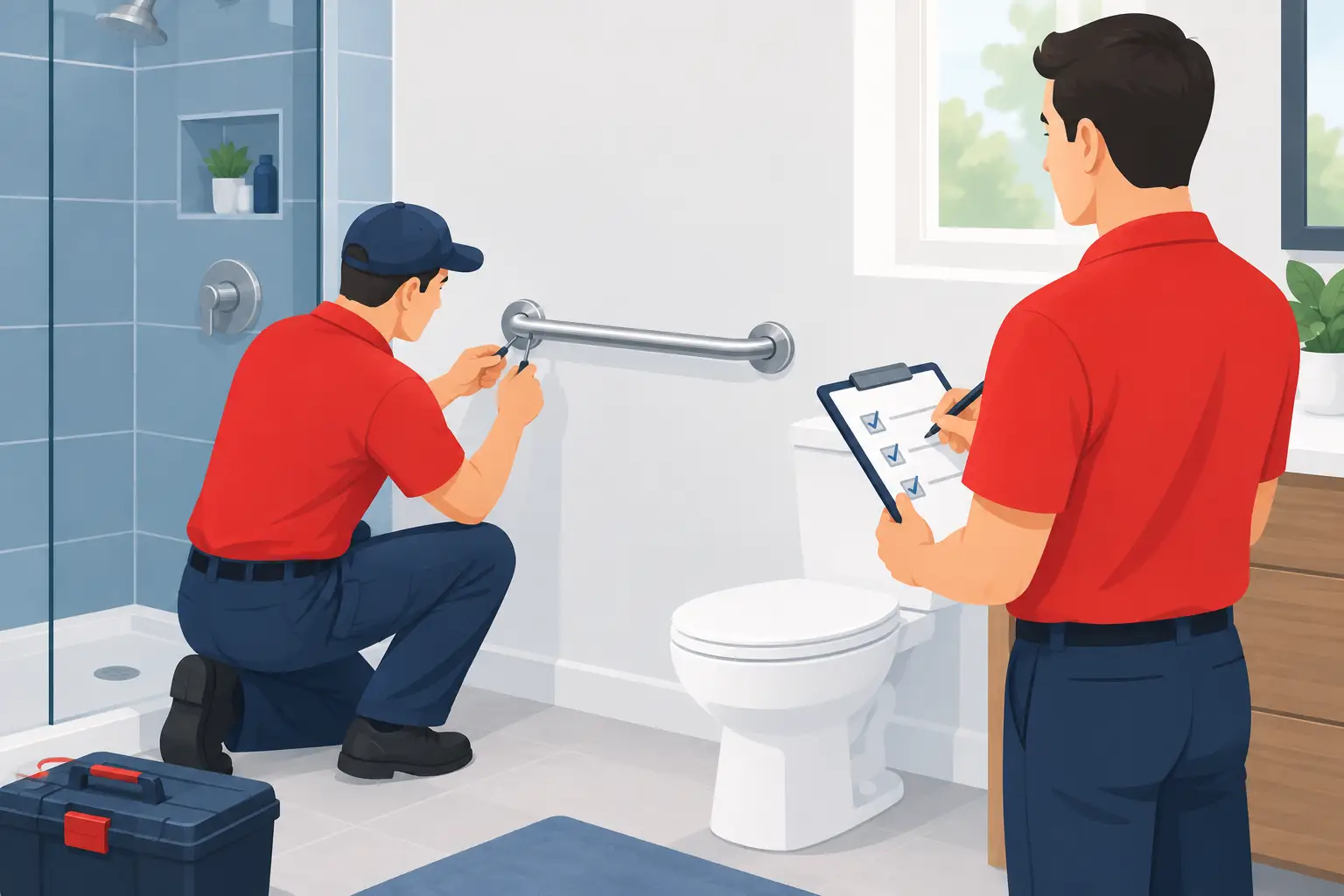
A grab bar installation review is not just about whether a bar looks straight on the wall. The real question is whether it will stay secure when someone needs it most – stepping out of a wet shower, lowering onto the toilet, or regaining balance after a slip. That confidence comes from proper placement, the right mounting method, and careful installation behind the finished surface.
For many homeowners, grab bars are a practical upgrade that supports aging in place, recovery after an injury, and everyday bathroom safety. They can also make a home more comfortable for guests and family members of different ages. The work may look simple, but bathroom walls, tile, plumbing, and hidden framing all make installation more involved than drilling a few holes.
What a Grab Bar Installation Review Should Cover
A useful review starts with the person using the space. A grab bar should support a natural movement, not force someone to reach, twist, or stretch for it. In a shower, that may mean a vertical bar near the entry, an angled bar that helps with both standing and sitting, or a horizontal bar on the wall beside the controls. Near a toilet, the ideal location depends on available wall space, the user’s dominant hand, and how they transfer from standing to seated positions.
Placement needs to account for doors, shower glass, towel bars, built-in shelves, and the path someone takes through the room. A bar mounted too close to the shower controls may be hard to reach on entry. One placed at an awkward height can offer less support than expected. The best layout is specific to the bathroom and the people who use it.
The next part of the review is the wall itself. A secure grab bar is generally fastened into solid framing or reinforced blocking behind the wall. This is especially important in bathrooms with drywall, tile, fiberglass surrounds, or other finished surfaces that are not designed to bear a person’s full weight on their own. The installer needs to identify where the studs are, determine whether the proposed location has adequate backing, and choose a mounting approach suited to that condition.
A professional should also inspect for obstacles before drilling. Water lines, drain pipes, electrical wiring, and shower valves can be hidden inside the wall. In older Knoxville homes, framing may not be consistently spaced or located where a homeowner expects. Taking time to assess the wall protects the bathroom and helps prevent a costly repair.
Secure Mounting Matters More Than the Finish
Grab bars come in many finishes, from brushed nickel and chrome to matte black and oil-rubbed bronze. Matching faucets and shower hardware can make the upgrade feel intentional rather than medical. Still, appearance should come after strength and location.
Suction-cup bars and adhesive handles can be useful as temporary balance aids in limited situations, but they are not a substitute for a permanently mounted safety grab bar. Their holding power can change with surface texture, moisture, cleaning products, and repeated use. They should never be relied on for full body-weight support unless the product is specifically designed, installed, and rated for that purpose.
For permanent installations, fasteners and mounting brackets need to be compatible with the wall material and the manufacturer’s instructions. Tile requires particular care. Drilling through it with the wrong bit or too much pressure can crack a tile or damage waterproofing behind it. A clean installation also includes sealing where appropriate so water does not work its way into the wall cavity.
A finished grab bar should feel solid from every direction. There should be no movement at the mounting plates, no gaps that invite water behind the trim, and no sharp edges that catch a hand or towel. The bar should be easy to grip, including for someone with reduced hand strength or arthritis.
Common installation issues worth catching
Some problems are visible immediately, while others only appear once the bar is used regularly. Watch for a bar that flexes, mounting plates that pull away from the wall, loose trim covers, cracked tile, or caulk that has separated around the mounting area. These are signs that the work may need attention.
Other concerns are less obvious. A bar may be firmly attached but placed where it does not help with the actual movement a person makes. It may interfere with the shower door, sit behind a towel rack, or be positioned where wet hands cannot reach it safely. This is why a review should consider function as closely as craftsmanship.
Choosing the Right Type of Grab Bar
The right style depends on the room and the user’s needs. Straight bars are common because they are versatile and easy to grip. A horizontal straight bar can provide stability along a wall, while a vertical model can offer support when stepping over a shower threshold. Angled bars work well when a person needs assistance moving between standing and seated positions.
Some homeowners prefer a multipurpose design, such as a grab bar that also functions as a towel bar or toilet paper holder. These can preserve a clean, coordinated look in a primary bathroom or guest bath. The trade-off is that not every combination product provides the same gripping area or support position as a dedicated bar. Function should lead the decision.
Fold-down support bars can be helpful beside a toilet where there is no convenient side wall. They require especially secure mounting and enough clearance to fold up and down without blocking traffic. In compact bathrooms, it may also be worth considering a broader accessibility plan that includes improved lighting, non-slip flooring, a handheld showerhead, or a curbless shower renovation.
When Existing Walls Need Reinforcement
Sometimes the safest place for a bar does not line up with a stud. That does not mean the location is impossible, but it does mean the installer needs a sound alternative. In a remodel, adding wood blocking before drywall or tile is installed creates a strong mounting point exactly where it is needed. In an existing bathroom, the solution may involve accessing the wall from the opposite side, opening and repairing a small section, or using an engineered mounting system appropriate for the wall condition.
This is one area where shortcuts can create false confidence. A bar can feel secure when lightly pulled but fail under a sudden, forceful load. The goal is not merely to attach hardware to a finished wall. It is to create a dependable support point that can be used without hesitation.
A bathroom safety upgrade that fits the home
Grab bars do not have to make a bathroom feel institutional. Thoughtful placement and coordinated finishes allow them to blend into a well-kept home while adding a meaningful layer of safety. For homeowners planning to remain in their homes for years, installing them before they are urgently needed is often the easier and less stressful choice.
If the project involves tile, uncertain wall framing, plumbing near the work area, or several accessibility updates at once, professional help is a sensible choice. Smart Home Fix provides licensed and insured handyman support for homeowners who want safety upgrades completed with care and minimal disruption.
A properly installed grab bar is a small feature with a big job. When it is placed for the person using the room and secured to the structure behind the wall, it becomes one less thing to worry about on an ordinary morning.