A familiar home holds more than furniture and memories. It holds routines: the coffee made in the same kitchen, the favorite chair by the window, the neighbors who know your name. Aging in place is about protecting that independence by making a home safer and easier to use as needs change.
For many Knoxville-area homeowners, the best time to plan is well before a fall, injury, or mobility challenge forces a quick decision. Thoughtful upgrades can blend into the home you already love. They do not need to make it feel clinical, temporary, or unlike you.
What Aging in Place Really Means
Aging in place means being able to live safely and comfortably in your own home as you get older. It may involve small repairs, targeted accessibility improvements, or a larger renovation that makes everyday spaces work better.
The right approach depends on the house and the homeowner. A one-story ranch may need a few bathroom and entry updates. A two-story home may benefit from creating a usable bedroom and full bathroom on the main level. The goal is not to predict every future need. It is to remove preventable obstacles and create more options.
This kind of planning benefits more than older adults. Safer walkways help guests. Better lighting helps everyone. A more functional shower can make life easier after surgery, during recovery from an injury, or while caring for a family member.
Start With the Places Used Every Day
Most homes do not need a full renovation to become more comfortable. Start by walking through the spaces used from morning to night. Pay attention to where you reach, step, turn, carry items, and move in low light.
A practical home assessment often reveals simple concerns: loose handrails, uneven thresholds, dim hallway lighting, stiff door hardware, or a rug that slides on a hard floor. These issues can seem minor until balance, vision, or strength changes. Addressing them early is usually less disruptive than making emergency repairs later.
The entry should feel steady and welcoming
The path from the driveway or sidewalk to the front door deserves close attention. Cracked concrete, shifting pavers, poor drainage, and overgrown landscaping can create trip hazards. An entry should have a clear, stable walking path, dependable lighting, and a handrail where steps are involved.
A threshold can also matter more than it appears. High transitions at exterior doors can catch a toe, walker, or wheelchair wheel. In some homes, reducing that transition is a sensible improvement. The best solution depends on the door, weather protection, and drainage around the opening, so it should be evaluated carefully rather than treated as a one-size-fits-all project.
Bathrooms often need the most attention
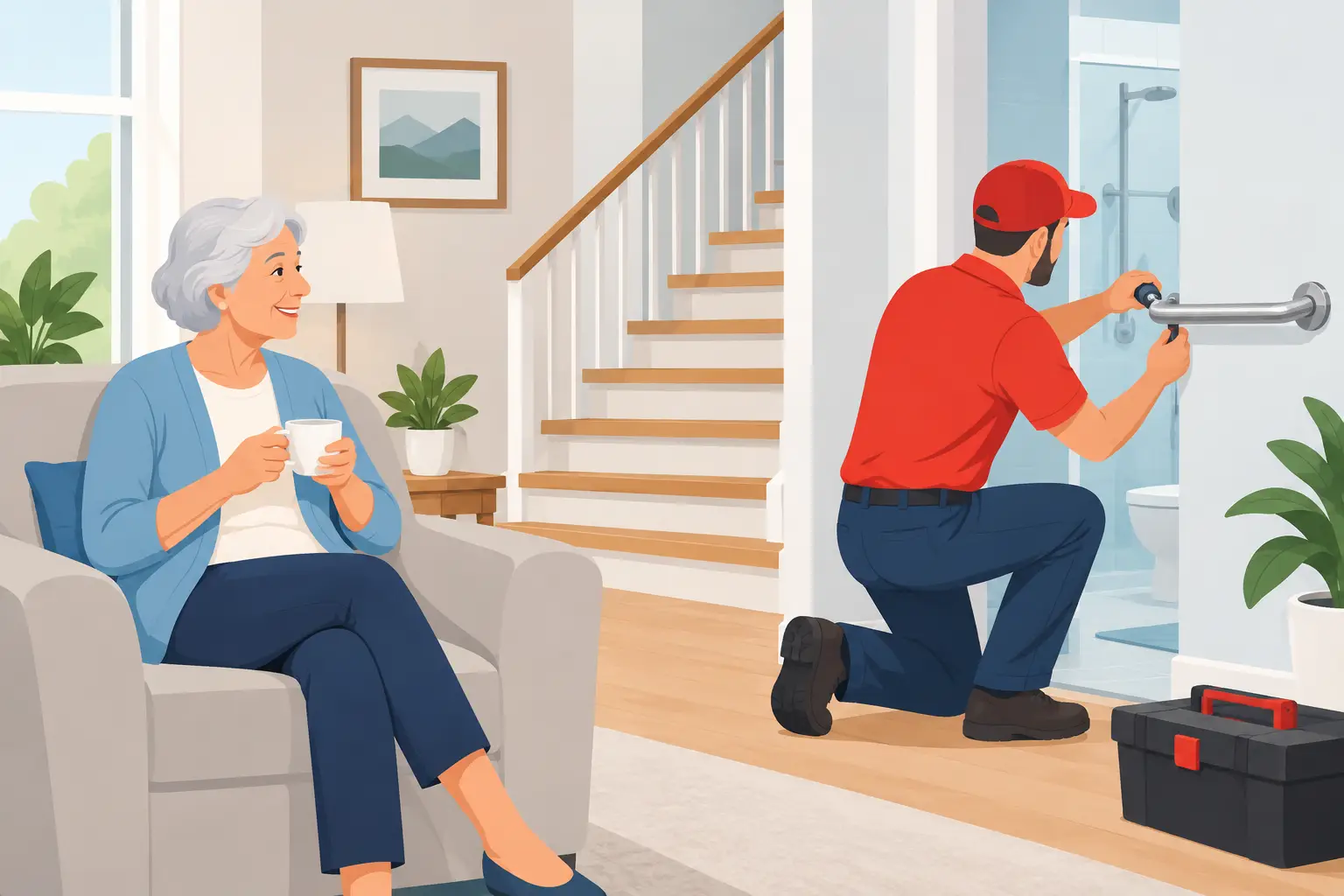
Bathrooms combine water, hard surfaces, tight turns, and frequent use. That makes them one of the most important rooms to update for safety. A secure grab bar near the toilet and bathing area can provide meaningful support, but it must be properly anchored. Towel bars and decorative hardware are not designed to hold a person’s weight.
A curbless shower or a low-threshold shower can reduce the need to step over a tub wall. A built-in or fold-down seat, hand-held showerhead, non-slip flooring, and easy-to-reach controls can make bathing more comfortable. These updates are especially useful when paired with a layout that leaves enough room to move safely.
Not every bathroom has space for a larger shower, and moving plumbing is not always necessary. In some cases, targeted improvements to lighting, storage, fixtures, and support hardware are the right first step. A qualified home professional can help homeowners understand what their existing layout can realistically accommodate.
Kitchens should reduce reaching and carrying
The kitchen is another area where small changes can have a large daily impact. Good task lighting makes counters and stovetops easier to see. Lever-style handles can be easier to operate than knobs. Pull-out shelves or drawers can reduce bending and reaching into deep base cabinets.
Think about the items used every day. Plates, glasses, coffee supplies, and cooking tools should be stored between shoulder and knee height whenever possible. This reduces the need for step stools, which can become a serious fall risk. A stable workspace near the microwave or refrigerator also gives homeowners a place to set down hot or heavy items before carrying them farther.
Make Movement Through the Home Easier
A safer home supports natural movement. Hallways and commonly used paths should stay clear of furniture, cords, pet beds, and loose rugs. If a rug is important to the look of a room, it should lie flat and have appropriate backing to prevent sliding.
Lighting deserves more attention than it usually gets. Brighter, well-placed lighting can improve visibility on stairs, in closets, along hallways, and near exterior doors. Motion-sensor lighting can be useful for nighttime trips to the bathroom or laundry room because it reduces the need to search for a switch in the dark.
Door hardware, wall switches, and outlet placement can also affect daily comfort. Lever handles are often easier for people with arthritis or limited grip strength. Rocker switches are simpler to operate than small toggle switches. These are modest upgrades, but they can make a home feel more cooperative instead of more demanding.
Stairs require an honest assessment. Strong handrails on both sides, secure treads, clear edges, and consistent lighting improve safety. But when stairs are becoming difficult, handrails alone may not solve the larger problem. A main-level living plan, with sleeping and bathing accommodations on the first floor, can provide greater long-term flexibility.
Plan for Safety Without Making the Home Feel Institutional
The most successful aging-in-place updates respect the character of the house. Grab bars are available in finishes that coordinate with faucets and cabinet hardware. Attractive lighting, well-designed showers, and thoughtfully selected flooring can look like a renovation choice rather than an accessibility feature.
That balance matters. Homeowners are more likely to use safety features when those features fit naturally into the space. A shower seat that is stable and comfortable is more useful than a temporary item brought out only when someone feels unsteady. A handrail that feels solid and looks intentional is more likely to be used every day.
Consider future maintenance as well. Smooth flooring that is easy to clean, durable surfaces in wet areas, and reliable door and cabinet hardware can reduce frustration over time. The goal is not just a safer home today. It is a home that stays manageable.
Choose Projects in the Right Order
It can be tempting to focus first on a major remodel, but the best plan often begins with safety repairs and the spaces that create the most daily stress. Fix loose railings, unstable steps, trip hazards, leaking fixtures, and poor lighting before moving to cosmetic changes.
Next, consider the activities that would be hardest to move elsewhere. Bathing, entering the home, preparing food, and getting in and out of bed are usually high priorities. A homeowner who can safely manage these routines has more independence and more time to decide whether larger changes are worthwhile.
Keep in mind that some improvements require more than handyman work. Structural changes, major plumbing or electrical work, and certain accessibility modifications may require permits or specialized trades. Working with a licensed and insured local professional helps ensure the project is evaluated correctly and completed with care.
When to Begin Planning for Aging in Place
The ideal time is before a home becomes difficult to use. Planning early gives you more choices, more time to consider materials and layout, and less pressure to settle for a temporary fix. It also lets homeowners spread projects over time based on what will make the biggest difference first.
A recent fall, a new diagnosis, trouble using stairs, or a change in a spouse’s mobility are all good reasons to reassess the home. So is a planned bathroom renovation or repair project. When walls, flooring, or fixtures are already being updated, it may be the right opportunity to include improvements that support long-term comfort.
For homeowners who want practical help identifying and completing the right repairs and upgrades, Smart Home Fix provides dependable local service for projects that make daily life easier. The smartest changes are often the ones that quietly let you keep living your life on your own terms, in the home that still feels like home.