A bathroom shower can look like a simple choice from the outside: pick a color, choose a fixture, and get it installed. But the surface behind the showerhead does a great deal of work. It has to handle daily water exposure, steam, cleaning products, and the occasional dropped bottle without allowing moisture into the wall. When weighing a shower insert versus tile surround, the better choice depends on your bathroom’s condition, how you use it, and how much ongoing maintenance you want to take on.
For many Knoxville-area homeowners, the decision comes down to a practical question: do you want a durable, low-maintenance shower update, or do you want more control over the finished design? Both can be excellent solutions when they are installed correctly.
What Is a Shower Insert?
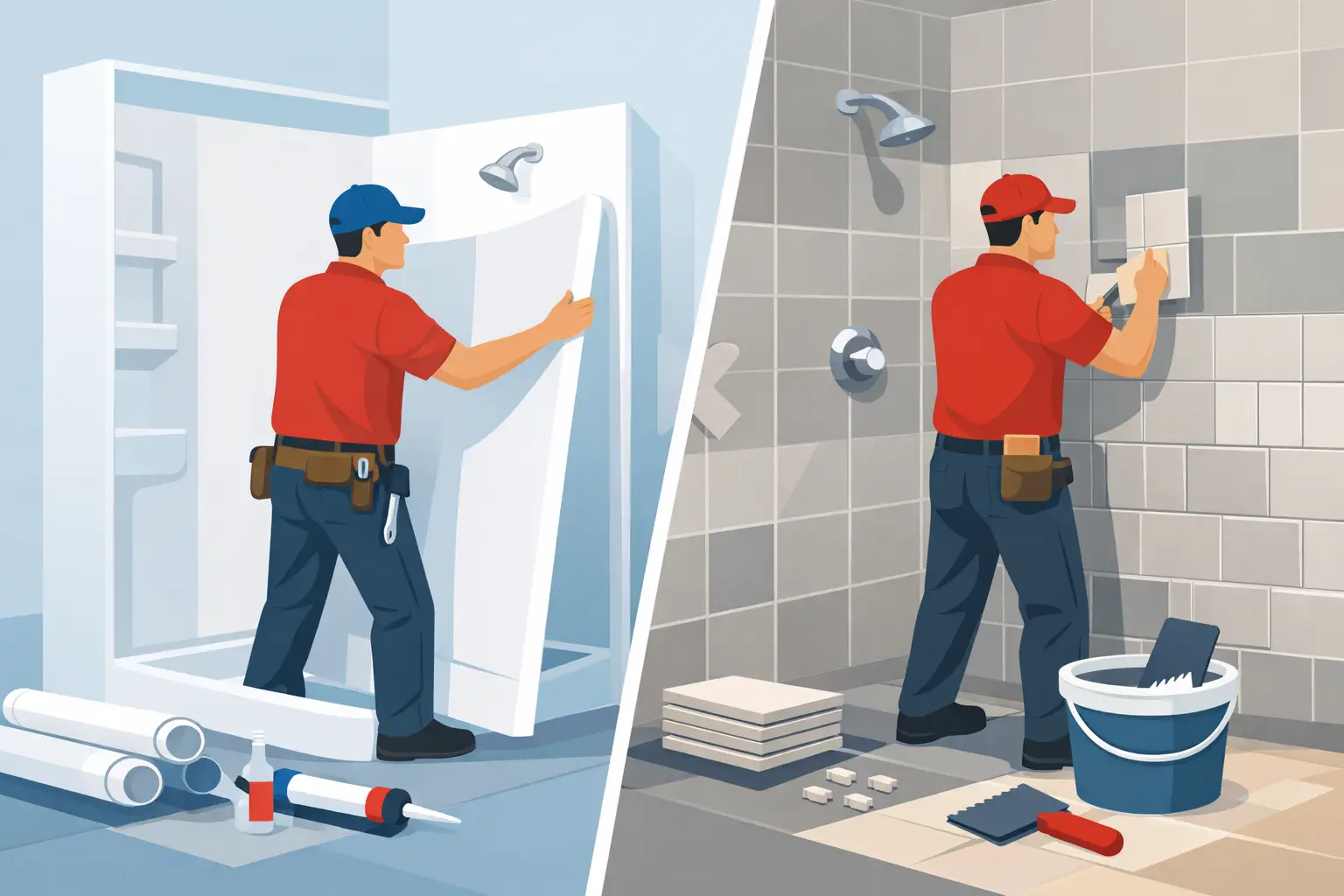
A shower insert is a molded shower unit, commonly made from acrylic or fiberglass. It may be a single-piece unit or a multi-piece system assembled inside the bathroom. Depending on the layout, it can include the shower walls, base, shelves, and even a built-in seat.
The main advantage is the continuous surface. Instead of dozens or hundreds of grout lines, an insert has very few seams. That means there are fewer places for moisture, soap residue, and mildew to collect.
One-piece inserts are especially watertight, but getting one into an existing home can be a challenge. The unit must fit through doorways, around corners, and into the bathroom. Multi-piece inserts solve that access issue and are often a better fit for a remodel where walls are staying in place.
What Is a Tile Surround?
A tile surround uses individual tiles installed on shower walls over a properly prepared waterproof backing system. It can be built around an existing tub or paired with a shower base for a custom shower enclosure. Homeowners can choose from ceramic, porcelain, natural stone, glass accents, and many sizes and patterns.
Tile is not waterproof by itself. The quality of the waterproofing behind it is what protects the framing and wall cavities. A sound installation includes the correct backer material, sealed seams, waterproof membrane or system, properly treated corners, and carefully finished plumbing penetrations.
That detail matters. A beautiful tile job can still fail if water finds a path behind the surface. This is why shower tile work is not a place to cut corners or cover up existing water damage.
Shower Insert Versus Tile Surround: The Key Differences
The most visible difference is appearance. Tile offers almost unlimited design flexibility. You can create a bright, simple white shower, a modern large-format wall, a niche for toiletries, or a pattern that coordinates with the rest of the bathroom. It is often the right option when the shower is meant to be a focal point.
A shower insert is more limited in color and layout, but today’s acrylic and fiberglass units are far from the plain, institutional-looking options many homeowners remember. Clean white, soft neutral, and stone-look finishes can give a bathroom a fresh, updated appearance without requiring a highly customized build.
The bigger differences show up in maintenance, repairability, and installation conditions.
Cleaning and routine maintenance
For a busy household, an insert is usually the easier surface to maintain. Its smooth, nonporous finish wipes down quickly, and there are minimal seams to scrub. Use a nonabrasive cleaner and avoid harsh products that can dull or scratch acrylic or fiberglass.
Tile needs regular cleaning as well, but grout requires extra attention. Even sealed grout can discolor or collect residue over time, especially in a shower with heavy daily use. Grout may eventually need touch-ups or replacement in isolated areas. That does not make tile a poor choice, but it does mean tile asks more from the homeowner after installation.
If low-maintenance cleaning is one of your top priorities, an insert has a clear advantage.
Water protection and durability
Both choices can last for years when installed properly. An insert’s continuous panels create a straightforward water-management system, and its limited seams reduce potential weak points. It is a dependable option for a hall bath, children’s bathroom, rental property, or any shower that gets frequent use.
Tile can be exceptionally durable, particularly porcelain tile with a well-built waterproofing system underneath. Still, tile has more components: tile, grout, corners, caulked joints, substrate, and waterproofing. More components create more opportunities for a future repair if the work was not completed carefully.
Tile is also harder than acrylic or fiberglass. It resists surface scratching well, while inserts can be scratched or cracked by impact. Minor damage to some inserts can be repaired, but a deep crack or significant flexing may point to a problem with the support underneath.
Design flexibility and accessibility
Tile is the stronger choice when bathroom layout or accessibility needs call for customization. A custom tile surround can accommodate an unusual wall size, a recessed niche, grab bars with proper blocking, a bench, or a shower design that works with a specific base and door configuration.
An insert works best when the bathroom has standard dimensions and the goal is a clean, functional replacement. Many insert systems include molded shelves and practical storage, which can eliminate the need for separate accessories.
For an aging-in-place renovation, the surface choice should be part of a larger plan. Grab bars, non-slip flooring, shower entry height, lighting, and secure backing inside the walls matter as much as whether the walls are tile or acrylic.
Repairs down the road
Repairs are rarely identical from one bathroom to the next. With tile, it may be possible to remove and replace a cracked tile or renew deteriorated grout and caulk. The challenge is matching older tile if the original product is no longer available. If water has traveled behind the tile, the repair can become more extensive because the wall system may need to be opened and rebuilt.
With an insert, small scratches, chips, and some cracks can sometimes be addressed with a repair kit or professional refinishing. However, a failed seam, a cracked base, or hidden water damage behind the panels may require removal of the unit. Because inserts are manufactured as a system, replacement options can be more limited if the original model has been discontinued.
Check What Is Behind the Existing Shower First
Before choosing either material, find out why the current shower needs attention. Loose tile, soft drywall near the tub, recurring mildew, staining on a ceiling below, or a spongy shower floor can signal moisture damage. Installing a new surround over an unresolved leak simply hides the problem for a while.
A proper shower update begins with the structure. Damaged framing, subflooring, plumbing connections, and wall materials should be repaired before the new surface is installed. This is also the right time to confirm that plumbing valves, showerheads, and drain connections are in good condition.
If your home has an older tub or shower, expect some surprises once the walls are opened. Planning for careful inspection is one of the smartest ways to protect a bathroom renovation from preventable problems later.
Which Choice Fits Your Bathroom?
Choose a shower insert when you want a dependable, easy-to-clean surface with fewer seams and a more straightforward installation path. It is especially practical for secondary bathrooms, high-use family baths, and homeowners who prefer simple upkeep over custom finishes.
Choose a tile surround when visual flexibility, custom storage, unique dimensions, or a more tailored bathroom design are the priority. Tile can be an excellent long-term choice, provided the waterproofing and installation are handled with the same care as the visible finish.
There is also a middle ground. Wall panels made from solid-surface materials can offer a more upscale appearance than a basic insert while keeping seams and grout lines to a minimum. The best fit depends on the condition of the room, the shower layout, and your expectations for maintenance.
Professional Installation Protects the Work You Cannot See
Whether you select tile or an insert, the details behind the finished wall are where lasting performance begins. Shower walls must be flat, plumbing must be secure, joints must be sealed correctly, and every transition around the tub, base, and fixtures needs to direct water where it belongs.
For homeowners who want help evaluating an aging shower or planning a replacement, Smart Home Fix brings licensed and insured workmanship to bathroom repair and improvement projects throughout the Knoxville area. A clear assessment of the existing space can help prevent a cosmetic update from turning into a repeat repair.
The right shower surface is the one that fits your household well and is built on a dry, properly prepared foundation. Start there, and your updated bathroom will be easier to enjoy every day.