A loose deck board can seem like a small annoyance until a guest catches a toe, a railing shifts under someone’s hand, or water finds its way into framing below the surface. Deck repair is not only about improving appearance. It is about protecting a space where your family gathers, cooks, relaxes, and spends time outdoors.
In Knoxville, changing temperatures, summer humidity, heavy rain, and seasonal debris can all take a toll on wood decks. Catching damage early often keeps the project focused and manageable. Waiting can allow moisture and movement to turn one worn board into a larger safety concern.
What to Look for Before Deck Repair
Start with a careful walk around the deck in daylight. Look from above, below, and along the connection point where the deck meets the house. You do not need to be a builder to spot conditions worth addressing.
Surface wear is usually the first thing homeowners notice. Boards may be splintered, cracked, cupped, faded, or soft in certain areas. A few weathered boards do not automatically mean the entire deck needs replacement, but soft wood deserves prompt attention. If a screwdriver sinks easily into a board or joist, moisture damage may be more than cosmetic.
Pay close attention to movement. Deck boards should feel secure underfoot, and railings should not wobble when gently tested. Stairs should be firm, with consistent step heights and solid handrails. Loose fasteners, popped nails, and corroded hardware can often be corrected, but they may also point to ongoing water exposure or aging materials.
The underside tells an equally important story. Check for dark staining, rot around posts, cracked supports, insect damage, and rusted connectors. Leaves and soil trapped around posts can hold moisture against the wood. Water pooling beneath the deck can create problems over time, especially where framing has limited airflow.
Common Deck Repair Needs
Every deck ages differently. The right repair depends on where the damage is located, how far it has spread, and whether the deck’s supporting structure remains sound.
Damaged or loose deck boards
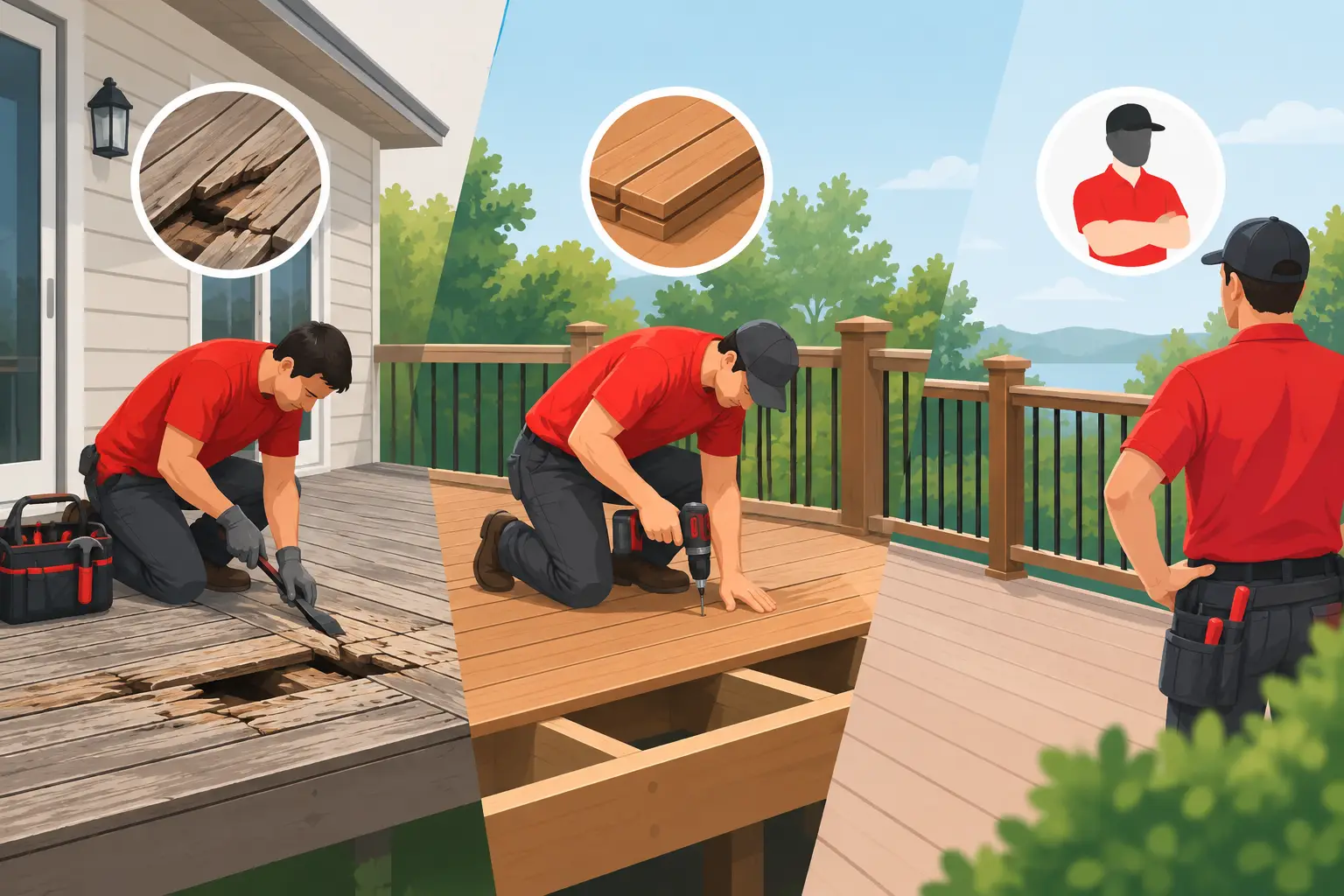
Individual boards can often be replaced when the framing underneath is in good condition. This is common when a few boards have split, warped, or begun to decay while the rest of the surface remains stable. New boards should be properly fastened and aligned so the repaired area drains well and does not create a trip hazard.
It can be tempting to simply nail a loose board back down. A more dependable repair starts by finding out why it came loose. The board may have shrunk, the fastener may have corroded, or the joist beneath it may be compromised. Addressing the cause helps prevent the same problem from returning after the next wet season.
Wobbly railings and worn stairs
A railing is a safety feature, not a decorative extra. If it shifts, leans, has loose balusters, or pulls away from the deck, it should be repaired without delay. The same applies to stairs that bounce, sag, or have loose treads.
These repairs may involve securing connections, replacing damaged components, or correcting weakened attachment points. Because railings and stairs carry regular weight and protect people from falls, this is not a place to rely on a quick patch that only looks secure.
Rotting framing and support concerns
Joists, beams, posts, and ledger connections make up the deck’s structure. Damage in these areas requires more careful evaluation than a surface-board replacement. Rot near a post base, a sagging deck edge, cracked beams, or a deck that feels bouncy can indicate a broader structural issue.
In some cases, targeted framing repair is possible. In others, widespread deterioration or outdated construction methods may make partial replacement the safer choice. The best decision comes from inspecting the full condition of the deck rather than judging it by the top surface alone.
Fastener, flashing, and drainage problems
Many deck problems start with water. Missing flashing where the deck attaches to the home, corroded screws, improper gaps between boards, and poor drainage can shorten the life of otherwise good lumber.
A proper repair may include replacing corroded hardware, improving water management, and correcting details that direct moisture away from the home and deck framing. These less visible improvements matter because they help protect the repair you can see.
When a Repair Makes Sense – and When It Does Not
Repair is often the practical choice when damage is limited to a few boards, stair treads, railing sections, or isolated areas of framing. It also makes sense when the deck is structurally sound but needs maintenance after years of sun and rain.
Replacement becomes worth considering when deterioration is widespread, multiple structural parts are failing, or the deck no longer meets your family’s needs. For example, replacing scattered boards year after year may not be the best long-term plan if the framing below is deteriorating too.
Material compatibility matters as well. Matching new wood to older, weathered boards can be difficult, especially after staining. Composite and wood surfaces also have different repair requirements. A professional assessment can help you decide whether a targeted repair will blend well and perform reliably or whether a larger update will provide better value for the work involved.
Deck Repair Tasks Homeowners Can Handle Carefully
Routine maintenance can reduce the need for major repairs. Keeping the deck clear of leaves, planters, and debris helps water drain instead of sitting against the surface. Cleaning the deck with the appropriate method for its material can remove mildew and reveal developing cracks or loose fasteners.
Homeowners can also watch for small changes over time. Take note if a board begins to lift, a gate stops latching properly, or a railing becomes less firm. These early signs are useful because deck damage rarely improves on its own.
However, avoid covering up rot, tightening a visibly failing railing without checking its connection, or applying stain over damp or damaged wood. Stain and sealant are maintenance tools, not structural repairs. They can protect sound materials, but they cannot restore strength to decayed lumber.
When to Call a Deck Repair Professional
Call for professional help when the issue involves the deck’s attachment to the house, support posts, beams, joists, stairs, or railings. You should also seek an assessment if the deck sags, moves noticeably, has extensive rot, or sits high enough that a fall would be serious.
A qualified local professional can inspect the visible condition, identify likely moisture sources, and explain which repairs are appropriate. This takes the guesswork out of deciding whether a worn-looking board is a simple replacement or evidence of damage below the surface.
For homeowners in Knoxville and nearby communities, Smart Home Fix provides dependable help for deck repairs and other residential maintenance needs. As a licensed and insured local team, we focus on practical workmanship that helps make your outdoor space safer and easier to enjoy.
Help Your Repaired Deck Last Longer
Once repairs are complete, a little consistent care goes a long way. Keep gaps between boards clear, trim back vegetation that limits airflow, and avoid letting water collect near posts or against the house. Move rugs, furniture, and planters occasionally so those areas can dry.
Plan to inspect the deck at least once each year and again after severe weather. Look closely at high-traffic spots, stair connections, and railings. If the deck is wood, maintain the protective finish based on its condition and the product instructions rather than waiting for bare, weathered lumber to appear.
A deck should feel like an easy extension of your home, not a project you worry about every time someone steps outside. Addressing small concerns while they are still small helps preserve that peace of mind and keeps the space ready for the next family meal, quiet morning, or weekend gathering.