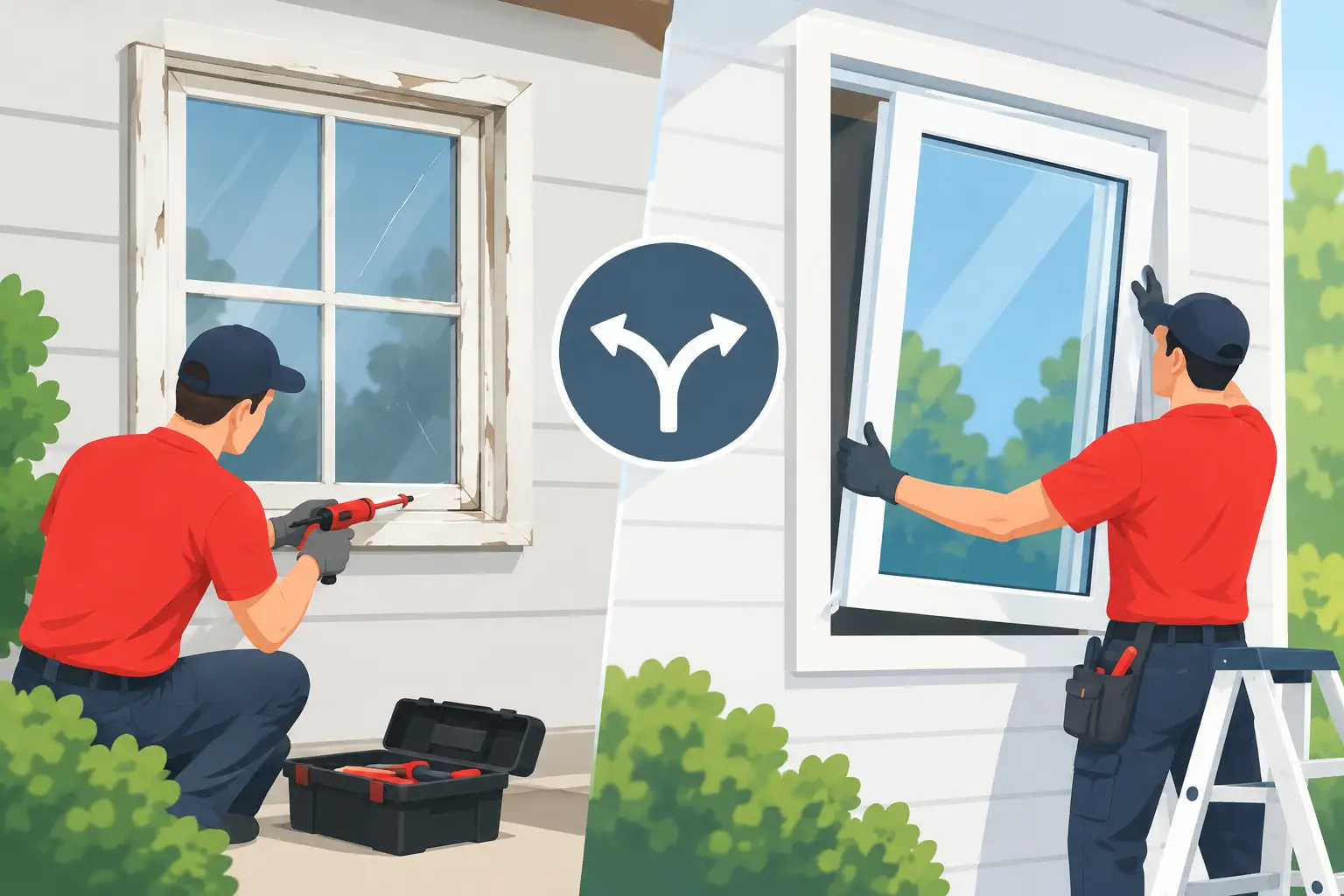
A window that sticks, fogs up, or lets in a cold draft can make a room feel neglected fast. The repair versus replace windows decision is not always obvious, especially when the problem looks small but may point to moisture, frame damage, or an installation issue. A careful assessment helps you put effort into the right solution instead of treating a symptom.
Start With the Window’s Condition
Most window problems fall into one of three areas: the glass, the operating parts, or the frame and surrounding wall. Damage limited to one component can often be repaired. Problems that affect several components, repeat after repairs, or involve rot and water intrusion may make replacement the more dependable choice.
Start by opening and closing the window. Notice whether it moves smoothly, locks securely, and sits squarely in the opening. Then look closely at the frame, trim, caulking, glass, and area beneath the window. Soft wood, peeling paint, stains, bubbling drywall, or a musty smell deserve attention. Those clues can indicate that water has moved beyond the window itself.
A window can also look worn without being beyond repair. Old paint, a loose screen, worn weatherstripping, or a broken latch can affect comfort and function, but these are often manageable repairs when the frame remains solid.
When Window Repair Is the Smarter Choice
Repair makes sense when the window’s basic structure is sound and the issue is isolated. For homeowners who want to preserve the look of an older home or address a practical concern without replacing a whole unit, targeted repairs can restore useful life.
Minor drafts and air leaks
A draft does not automatically mean the entire window has failed. Gaps around movable sashes, worn weatherstripping, cracked caulk, and small openings around exterior trim can allow outside air in. Replacing weatherstripping, adjusting hardware, and resealing appropriate areas can improve comfort and help the window perform as intended.
It is worth distinguishing between a draft at the sash and a draft around the frame. Air entering around the frame may point to a gap in the installation or deteriorated exterior sealing. That calls for a closer inspection, because simply adding interior caulk may hide a larger moisture concern.
Broken hardware or difficult operation
Windows that will not stay open, will not lock, or require too much force may have worn balances, hinges, latches, tracks, or cranks. These parts can sometimes be replaced or adjusted. A repair is particularly reasonable when the glass is clear, the frame is stable, and the window has not suffered water damage.
For painted wood windows, paint buildup can also make operation difficult. Careful prep and repair can free the sash without damaging the window or its surrounding trim.
Small glass and screen issues
A cracked pane, torn screen, failed latch, or damaged grid may be a repair issue rather than a replacement issue. The right path depends on the window style and whether a matching component is available, but a single damaged part should not automatically lead to replacing every window in the room.
Sound frames with cosmetic wear
Exterior trim and wood frames need maintenance in East Tennessee’s humid summers and changing winter conditions. If peeling paint is caught early, the wood beneath may still be solid. Scraping loose material, making minor wood repairs, priming, and repainting can protect the window from more serious deterioration.
Repair Versus Replace Windows: Signs Replacement Is Needed
Replacement becomes the stronger long-term choice when a window has reached the point where repairs will not address the underlying problem. The goal is not to replace a window simply because it is old. It is to avoid repeated patchwork when the unit or opening can no longer reliably keep out weather, operate safely, or support the home’s exterior.
Rot, warping, or structural damage
Wood that is soft, crumbling, or deeply discolored often signals decay. Frames that have warped can leave gaps, prevent proper locking, and allow water to reach adjacent materials. Aluminum or vinyl frames can crack, bend, or separate at corners as well.
Surface damage may be repairable. But when rot reaches deep into the frame, sill, or surrounding wall, replacement and related carpentry work may be necessary. This is one situation where waiting can create a larger repair later.
Condensation between glass panes
Moisture or haze trapped between double-pane glass usually means the insulated seal has failed. Cleaning the interior or exterior surface will not remove it because the problem is inside the sealed glass unit. In some cases, replacing the insulated glass unit is possible. In others, especially with older or damaged frames, replacing the full window is the more practical route.
Do not confuse this with ordinary condensation on the room-side surface of a window. Interior condensation can be related to household humidity, ventilation, and cold weather. It still deserves attention, but it does not necessarily mean the window seal has failed.
Repeated leaks or water stains
Water at a window is never something to ignore. The source could be worn caulk, damaged flashing, deteriorated trim, clogged drainage paths, roof runoff, or a failed window unit. If repairs have been made before and stains or leaks keep returning, a more complete evaluation is needed.
Replacement may be part of the answer, but correct installation matters just as much. A new window placed into a damaged opening without addressing flashing, rot, or exterior water management can leave the original problem behind the trim.
Windows that no longer provide safe operation
A window that will not open in a bedroom, will not lock, or has loose glass should be addressed promptly. Safety and security are functional requirements, not cosmetic upgrades. If replacement parts are unavailable or the frame cannot be restored to dependable operation, replacement is the responsible choice.
Consider the Whole Opening, Not Just the Glass
Homeowners often focus on the pane because it is the most visible part of a window. Yet the trim, sill, wall opening, exterior cladding, caulking, and drainage details have just as much to do with performance. A well-made window can still leak if the surrounding work has failed.
Before making a decision, ask what caused the issue. Was it simple wear? Was the window damaged by a storm or impact? Has water been running toward that wall because of a gutter or roof issue? Is the window original to the home, and have several nearby windows begun showing similar wear?
This larger view prevents a common mistake: repairing a visible crack while missing the reason it occurred. It also helps determine whether one window needs attention or whether the home is showing a broader maintenance pattern.
Think About Energy Comfort Realistically
Older windows can contribute to drafts and uncomfortable rooms, but they are rarely the only reason a home feels inefficient. Attic insulation, air leaks at doors, ductwork, and exterior wall gaps can all affect comfort. Replacing windows may improve a room, particularly when existing windows are damaged or poorly sealed, but it should be part of an honest assessment of the home.
If a single room is consistently too hot or too cold, inspect the window as well as the shade, exterior exposure, insulation, and air sealing. Direct afternoon sun, for example, can make a room uncomfortable even when the window itself is functioning properly.
A Practical Way to Make the Decision
Choose repair when the damage is limited, the frame is sound, the window operates safely, and the repair will correct the actual cause of the problem. Choose replacement when there is extensive rot, repeated leaking, failed insulated glass combined with an aging unit, major warping, or safety issues that cannot be reliably corrected.
For Knoxville-area homeowners, seasonal rain, humidity, and temperature swings make early attention especially valuable. Small exterior maintenance items can become moisture damage if they are left through several wet seasons. A professional evaluation can separate a straightforward repair from a window issue that involves trim, siding, or the wall opening.
Smart Home Fix provides dependable residential repair support with the careful, practical approach homeowners expect from a licensed and insured local team. Whether a window needs targeted repair or the surrounding area needs more extensive attention, addressing the cause now can help protect your home and make daily life easier.