
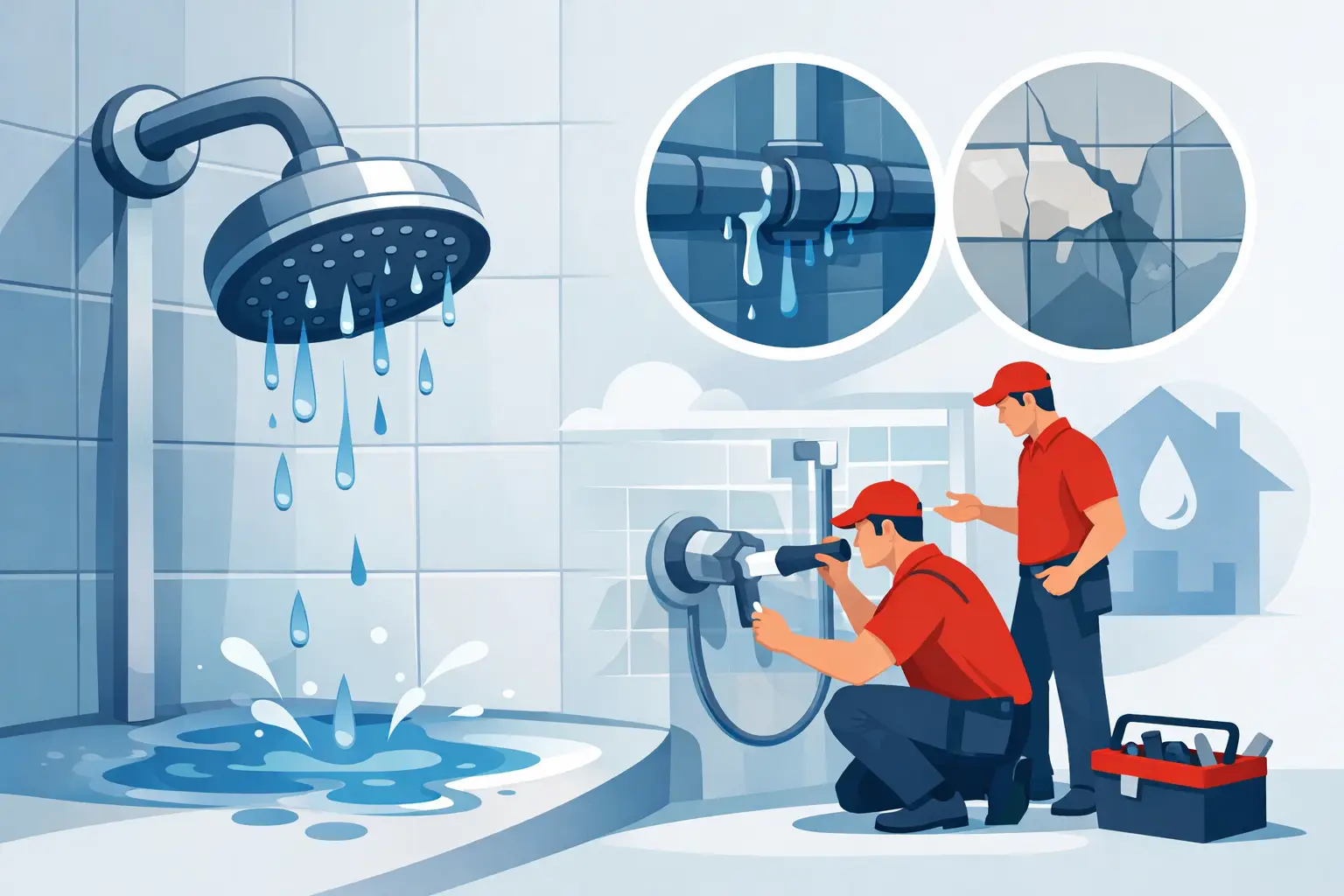
A shower leak can start with one small puddle outside the door or a faint water stain on the ceiling below. If you are asking, “why is shower leaking,” the answer is not always a broken pipe. Water can escape through a failed seal, a worn door sweep, damaged grout, a slow drain connection, or a problem hidden behind the wall. Finding the source early can protect your bathroom, subfloor, and nearby rooms from much larger repairs.
Why Is Your Shower Leaking?
The first step is figuring out when and where water appears. A leak that happens only while the shower is running points to a different issue than water that appears after the shower is off. Water on the bathroom floor may come from the shower door or curtain area, while a stain on a lower ceiling can signal a drain, supply line, or shower pan problem.
Try to notice these details before assuming the worst: Does water appear only after someone uses the shower? Is it outside the enclosure, around the base, or below the bathroom? Does the leak happen when water hits a certain wall? These clues help narrow down the repair and prevent unnecessary work.
Water Escaping Around the Door or Curtain
If water collects directly outside a shower enclosure, the door, sweep, threshold, or curtain is often the culprit. Frameless and sliding glass doors rely on carefully placed seals to keep water inside. Over time, rubber sweeps can harden, tear, shrink, or come loose. Hinges and doors can also shift slightly, leaving a gap where spray escapes.
A shower curtain can cause the same frustration when it is too short, hangs outside the tub, or is not weighted properly. This type of leak is usually easy to identify because the water appears immediately on the bathroom floor during a shower.
Check that the door closes evenly and that the bottom sweep makes consistent contact with the threshold. Clean away soap buildup that may prevent a seal from sitting correctly. If a door is out of alignment or the sweep is worn, replacing or adjusting the affected part can stop the leak without disturbing the shower walls.
Failed Caulk Is a Common Shower Leak Cause
Caulk is the flexible sealant found where shower walls meet the base, around trim pieces, and along the outside edges of many shower enclosures. It is designed to block water from getting behind finished surfaces. When it cracks, separates, becomes moldy, or pulls away from the wall, water can find its way into places it does not belong.
Do not simply apply a new bead over loose or deteriorated caulk. The old material needs to be removed, the surface needs to be cleaned and fully dried, and the replacement caulk needs time to cure before the shower is used. Skipping those steps can trap moisture and lead to another failed seal quickly.
Caulk problems are especially common at the joint between a shower base and wall panels. That joint experiences movement as the home settles and as the shower base flexes slightly under weight. A fresh, properly applied flexible seal can make a meaningful difference.
Cracked Grout and Damaged Tile
Tile and grout are durable, but they are not automatically waterproof. The waterproofing layer behind the tile is what protects the wall structure. Cracked grout, loose tile, missing grout, or a soft area around a tiled shower can allow water to move behind the finished surface.
Small grout cracks do not always mean the entire shower has failed. Sometimes a targeted repair is appropriate. However, recurring cracks, tiles that move when pressed, persistent mildew, or staining on the opposite side of the wall can suggest moisture has been getting behind the tile for some time.
Grout should be maintained, but it should not be used to hide a larger shower waterproofing problem. If moisture is reaching the framing or wallboard, surface repairs alone may only delay further damage.
Plumbing Leaks Behind the Shower Wall
A leak behind the wall often behaves differently from a failed door seal. You may see damp drywall in an adjacent room, bubbling paint, a musty smell, or a ceiling stain below the bathroom. In some cases, the leak appears even when no one is showering.
The shower valve, supply connections, shower arm, and pipe fittings can all develop leaks. A dripping showerhead may look minor, but a leak at the connection inside the wall is another matter. If the shower wall is shared with a closet or another room, that area may provide a less invasive way to inspect the plumbing.
Watch for a leak that worsens when the shower is turned on but not when water is directed toward a particular wall. That pattern can indicate a pressurized plumbing issue. Because hidden plumbing leaks can damage framing and encourage mold growth, they should be addressed promptly by a qualified professional.
A Leaking Drain or Shower Pan
Water that shows up on the ceiling below a shower can come from the drain assembly, the drainpipe connection, or the shower pan. The shower pan is the waterproof base beneath the visible floor surface. If it is damaged or improperly installed, water may escape underneath the shower even when the walls and door appear sound.
Drain leaks can be hard to see because they occur below the shower floor. They often become noticeable when water is draining, rather than while it is simply hitting the walls. A failed drain gasket, loose drain fitting, or cracked pipe may require access from below or removal of part of the shower assembly.
A pan problem can be more involved. Signs include flooring that feels soft near the shower, loose tile at the base, recurring stains below the bathroom, or moisture that returns after caulk and grout have been repaired. This is a situation where an experienced inspection is worthwhile before making cosmetic repairs.
How to Test Where the Shower Is Leaking
A careful, simple test can help separate a surface leak from a plumbing or drain issue. Start with a completely dry shower and bathroom floor. Do not run the shower until you are ready to observe what happens.
First, run water directly into a bucket or use the tub spout if your shower has one. If water appears below the bathroom during this test, the drain may be involved. Next, test the shower walls one section at a time with a handheld showerhead or a container of water, avoiding the door and threshold at first. If a leak begins when one wall gets wet, inspect the caulk, grout, fixtures, and tile in that area.
Finally, test the door, curb, and threshold. Spray water as it would normally hit those surfaces while someone watches outside the enclosure. Keep the test controlled and stop if water is entering a wall, ceiling, or electrical area. Never open walls, remove plumbing parts, or continue using the shower if there is active water damage.
What to Do Before the Damage Spreads
If the leak is clearly coming from a door sweep, curtain, or small area of failed caulk, stop using the shower until the repair is complete and the sealant has cured. Dry the surrounding floor and use ventilation to reduce lingering moisture.
For a suspected hidden leak, protect the area below the bathroom and avoid running the shower. If drywall is wet, paint is bubbling, flooring is swelling, or there is a growing ceiling stain, quick action matters. Water can travel farther than the visible stain suggests.
A professional repair should focus on the actual source, not just the visible symptom. That may mean resealing an enclosure, repairing tile and grout, correcting a drain connection, replacing damaged materials, or inspecting behind an accessible wall. Smart Home Fix provides dependable residential repair help for homeowners in the Knoxville area who need a clear answer and quality workmanship.
A shower should contain water every time it is used. When it does not, treat the leak as an early warning rather than a routine inconvenience. Addressing it while the signs are small can help keep a simple bathroom repair from becoming a disruption in the rooms around it.