A cabinet door that rubs the frame, hangs lower on one side, or will not close cleanly can make an otherwise tidy kitchen or bathroom feel worn down. The good news is that most homeowners can fix sagging cabinet doors without replacing the cabinet itself. The key is identifying whether the problem is a simple hinge adjustment, loose hardware, damaged wood, or a cabinet box that has shifted.
Cabinet doors carry more weight than they appear to, especially wide pantry doors, solid-wood doors, and doors that get opened constantly. Over time, hinge screws can loosen, mounting plates can move, and the screw holes in the cabinet frame can wear out. A careful repair restores the alignment and helps prevent more damage to the door and surrounding cabinetry.
Start by Finding the Source of the Sag
Before turning a screw, open and close the door several times. Look at the gaps around all four sides of the door. A sagging door often has a larger gap at the top on the hinge side and rubs or catches near the bottom on the latch side. That pattern usually points to loose hinges or a door that needs adjustment.
Check the hinges first. On modern cabinets with concealed European-style hinges, look for loose screws in both the hinge cup attached to the door and the mounting plate attached inside the cabinet. On older exposed hinges, inspect the screws on the face frame and along the edge of the door. If one screw turns freely without tightening, the hole may be stripped.
Also look beyond the door. If several cabinet doors are out of alignment, the cabinet box may be loose from the wall, the face frame may be separating, or the floor beneath the cabinets may have shifted. That is a different repair than adjusting a single hinge, and it deserves closer attention before forcing doors back into place.
How to Fix Sagging Cabinet Doors With Hinge Adjustments
For many kitchens, a screwdriver is all you need. Use a hand screwdriver when possible, particularly on older cabinets or soft wood. A drill can over-tighten screws quickly and strip the hole further.
Start by supporting the door with one hand or a small block of wood underneath it. Tighten every hinge screw, including the screws attaching the hinge to the cabinet box. Do not focus only on the top hinge. A loose lower hinge can let the door twist and pull the upper hinge out of alignment.
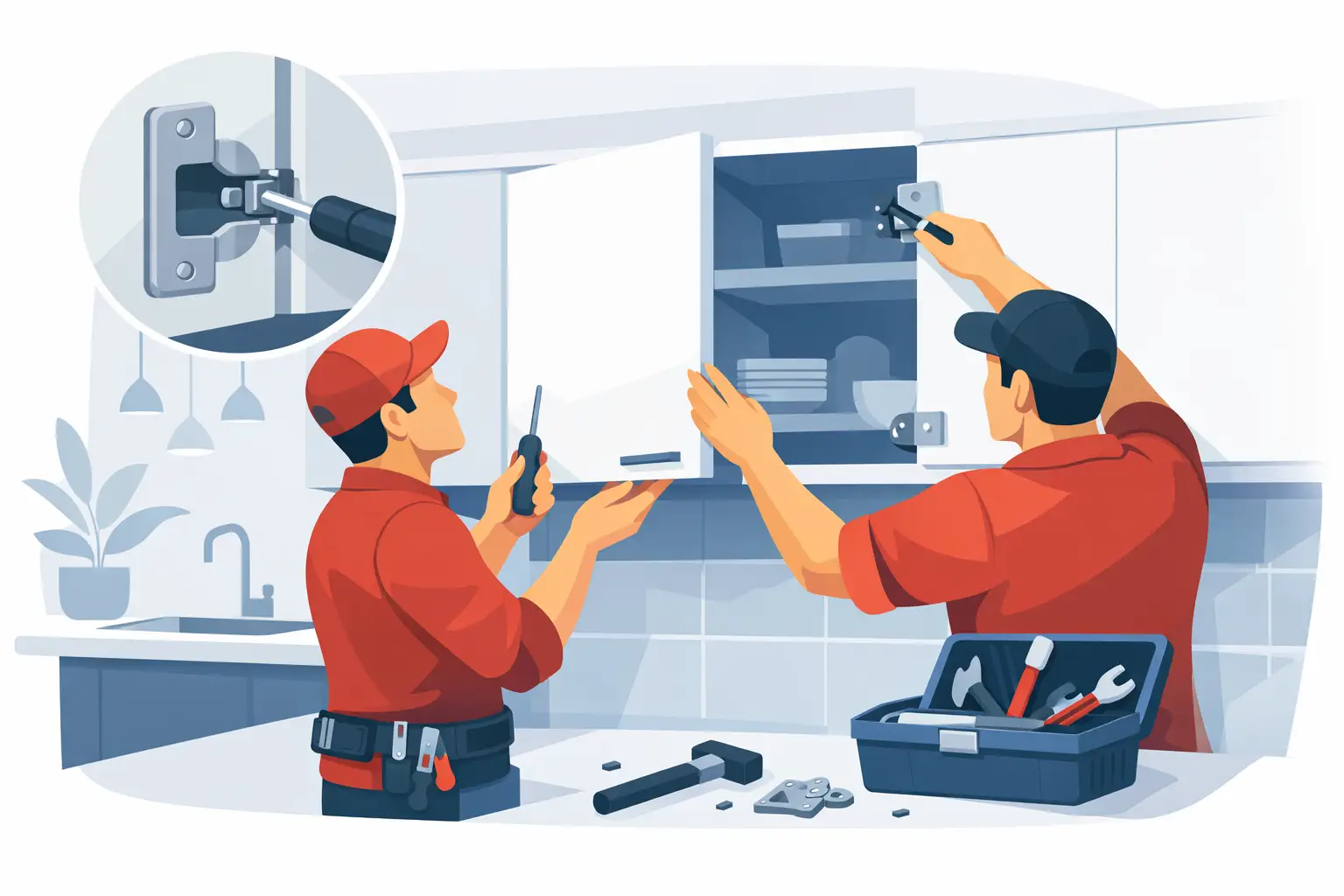
If your cabinet has concealed hinges, you will usually see two or three adjustment screws on each hinge. Their exact layout varies, but they generally control the door’s side-to-side position, depth, and height.
Adjust the Height First
A door that has dropped often needs to move upward. On many concealed hinges, height is adjusted by loosening the screws that secure the mounting plate to the cabinet frame, then sliding the door up slightly. Keep the door supported while you work so it does not drop farther.
Move the door in small increments, tighten the screws, and test the fit. It is easier to make several minor adjustments than to correct a door that has been moved too far. If the cabinet has two hinges, adjust both mounting plates evenly to keep the door square.
Correct Side-to-Side Gaps
Once the door sits at the right height, use the side-to-side adjustment screw to create even gaps around the door. Turn the screw a quarter turn at a time, then close the door and check the reveal. This adjustment is useful when the door rubs the cabinet frame or overlaps the neighboring door.
For double-door cabinets, adjust one door at a time. Begin with the door that seems most out of position, then fine-tune the second door so the center gap is consistent from top to bottom.
Set the Door Depth
If the door sits too far into the cabinet or sticks out farther than nearby doors, use the depth adjustment. This setting will not usually fix sagging by itself, but it can eliminate a door that catches as it closes. It also helps the cabinet look more uniform once the height and side gaps are correct.
Repair Stripped Screw Holes Before They Get Worse
A hinge screw that will not hold is one of the most common reasons cabinet doors sag repeatedly. Tightening it may seem to solve the issue for a day or two, but the hinge will loosen again if the wood fibers inside the hole are damaged.
For a minor stripped hole in solid wood, remove the screw and fill the hole with wood glue and a few wooden toothpicks. Let the glue dry fully, trim the toothpicks flush, then reinstall the screw carefully. The filled hole gives the screw fresh material to grip.
For a larger or badly damaged hole, a hardwood dowel and wood glue make a stronger repair. The hole may need to be drilled cleanly before inserting a glued dowel, then re-drilled for the hinge screw after it cures. This is a practical repair when the cabinet material is solid wood or plywood.
Particleboard and MDF cabinets require more caution. These materials can crumble after repeated tightening, particularly near the edge of a face frame. A hinge repair plate or a properly installed larger fastener may help, but the best method depends on the cabinet construction and the condition of the surrounding material. Using a screw that is simply longer can create a new problem if it pokes through the cabinet side or face frame.
Check for Door and Cabinet Damage
Not every sagging door is a hinge problem. Wood cabinet doors can warp from moisture, heat, or age. Hold a straightedge across the door or place it on a flat surface to see whether the door itself is bowed or twisted. A warped door may still be usable, but hinge adjustments alone will not make it sit perfectly flat.
Inspect the hinges for bent arms, cracks, worn pivot points, or missing screws. Replacing a damaged hinge is often more reliable than trying to bend it back into shape. If you replace one hinge, match the overlay, opening angle, mounting style, and existing screw locations as closely as possible.
You should also check that the cabinet box is secure. Open doors can pull against loose cabinets over time, especially on older installations. Look for gaps between the cabinet and wall, movement at the face frame, or separated joints inside the cabinet. Those issues should be corrected before readjusting the doors, or the alignment may keep changing.
Avoid Quick Fixes That Create Bigger Repairs
Do not force a sagging door shut. Repeated rubbing can chip paint, damage the edge banding on manufactured cabinets, or crack the frame. Avoid shimming a hinge with random cardboard or bending exposed hinges by hand. Those shortcuts may temporarily change the door position, but they rarely provide a stable, clean-looking result.
It also helps to avoid adjusting every screw at once. Change one setting, test the door, and move to the next adjustment only if needed. Cabinet hinges are designed for fine tuning, and a measured approach saves time.
When It Makes Sense to Call a Handyman
A straightforward loose-hinge repair is often manageable for a homeowner. It may be time for professional help when doors keep sagging after adjustment, mounting holes are badly damaged, cabinets are loose, or multiple doors need to be aligned across a kitchen.
This is especially true when the cabinets are older, custom-built, or part of a larger project involving worn drawer slides, damaged trim, water damage, or loose hardware. A trusted local repair professional can address the cause rather than repeatedly correcting the symptom. For Knoxville-area homeowners, Smart Home Fix provides licensed and insured handyman support for cabinet repairs and the other small issues that tend to collect around a busy home.
A properly aligned cabinet door should open freely, close without rubbing, and leave even gaps around the frame. Take a few extra minutes to test it after the repair. That small check can turn a temporary adjustment into a fix that stays put.