A clean, solid trim detail can make a repaired exterior, new window, or updated porch look finished instead of patched together. But when homeowners weigh wood versus vinyl trim, the right answer is rarely just about appearance. East Tennessee heat, humidity, heavy rain, and seasonal temperature swings all affect how exterior materials perform over time.
Wood offers a traditional look and broad design flexibility. Vinyl trim reduces routine maintenance and handles moisture well. The better fit depends on where the trim will be installed, the style of your home, and how much ongoing upkeep you want to take on.
Wood Versus Vinyl Trim: The Core Difference
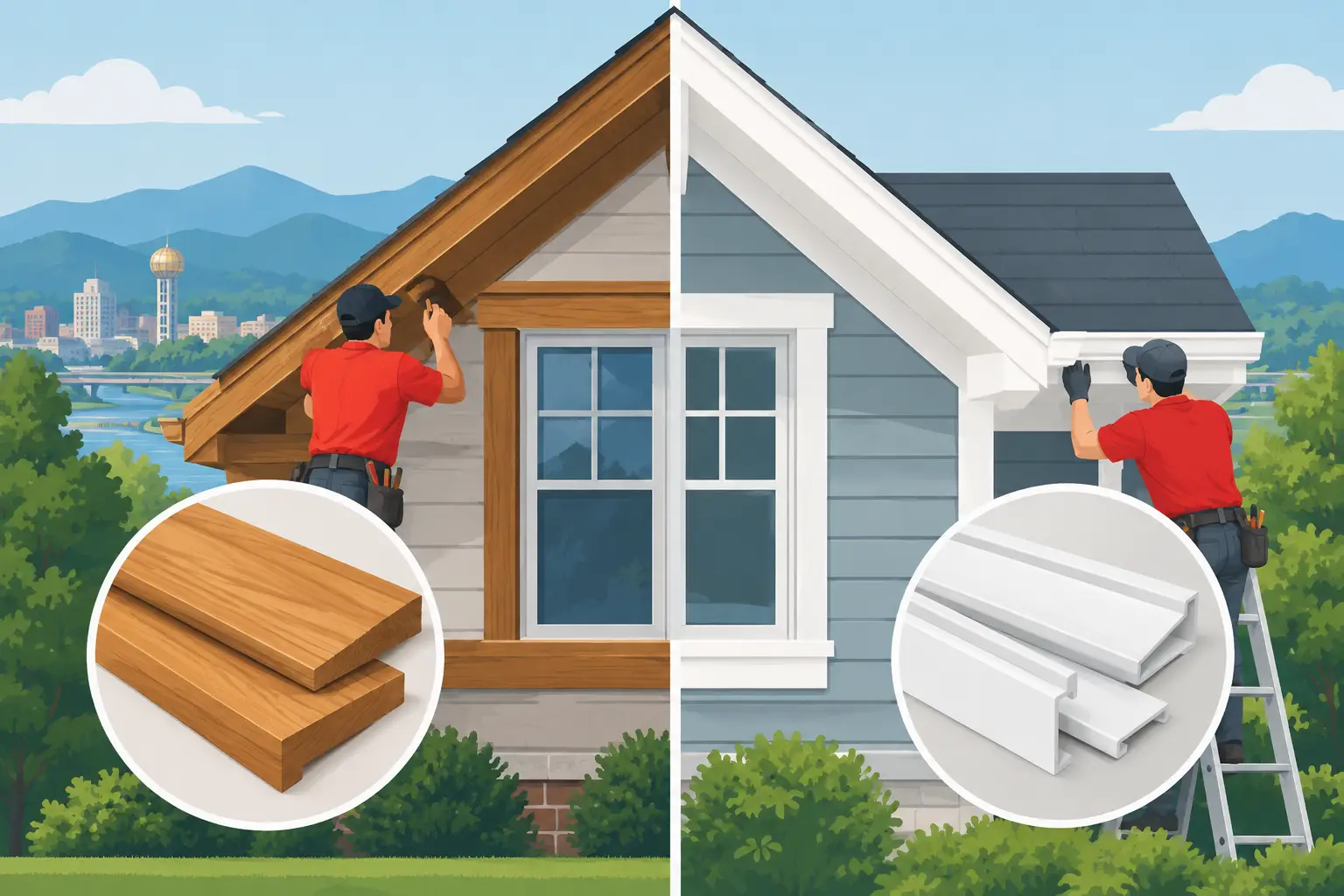
Wood trim is a natural building material, typically installed as boards, moldings, fascia, window casing, or corner details. It can be cut, shaped, and painted to suit nearly any home style. When properly installed and maintained, wood creates a warm, substantial finish that is difficult for manufactured products to fully duplicate.
Vinyl trim is made from PVC and is designed to resist water, insects, and rot. It is often used around windows, doors, soffits, and exterior corners. Many homeowners choose it because it does not need regular painting to protect it from the elements, though some vinyl products can be painted when the right materials and colors are used.
The choice is not simply old-fashioned versus modern. It is a decision between maximum design flexibility and lower-maintenance performance.
Appearance and Architectural Fit
For historic homes, craftsman-style houses, and projects with detailed exterior millwork, wood is often the natural choice. It can be milled into custom profiles, feathered into existing trim, and repaired in small sections without replacing an entire run. Paint also adheres well to properly prepared wood, making it easy to match existing exterior colors.
Vinyl trim has come a long way in appearance, especially in clean, simple profiles. It works well on many contemporary, ranch, and low-maintenance exterior designs. However, it may not have the same crisp grain, depth, or custom detail as wood. On a home with elaborate historic trim, vinyl can look too uniform unless it is selected and installed carefully.
A practical middle ground is common: use wood where detailed profiles and visual character matter most, then use vinyl in high-exposure areas where moisture has repeatedly caused problems.
Moisture, Rot, and Insect Resistance
Moisture is the main reason many exterior trim repairs begin in the first place. Wood can absorb water through unsealed end grain, failed caulk joints, cracks in paint, or improper flashing. Once water gets behind or into the boards, rot can spread beyond what is visible from the ground. Termites and other wood-damaging insects can add to the concern.
Vinyl does not rot, and insects do not consume it. That makes it especially useful for lower trim areas, window surrounds, and spots exposed to roof runoff or splashback. Still, vinyl is not a cure for a water-management problem. If a window leaks, a gutter overflows, or flashing is missing, water can still damage the framing and sheathing behind vinyl trim.
Before replacing any damaged trim, the source of the moisture should be addressed. A good repair includes more than covering the evidence. It corrects the caulking, flashing, drainage, or roof issue that allowed the damage to start.
Maintenance Needs Over Time
Wood needs regular attention. Painted wood should be inspected for peeling paint, open seams, soft areas, and cracks, particularly around windows, doors, fascia, and porch columns. Keeping paint and caulk in good condition is what protects the material beneath. Neglected wood can deteriorate quickly once its protective finish fails.
Vinyl requires less frequent upkeep. A seasonal rinse or gentle cleaning usually removes dirt, pollen, and mildew buildup. It will not need repainting for protection, which is a meaningful benefit for homeowners who want fewer exterior chores.
That said, vinyl is not maintenance-free. Caulk joints still need inspection, and the material can become chalky, stained, or damaged over time. Dark paint colors and high heat can also cause problems on some vinyl products, so manufacturer guidance matters when painting is planned.
Durability in East Tennessee Weather
Knoxville-area homes experience humid summers, frequent rain, strong sun, and occasional freezing temperatures. Both wood and vinyl can perform well here, but each reacts differently.
Wood expands and contracts as humidity changes. With careful installation, primed cuts, quality paint, and maintained caulk, that movement can be managed. The weak points are usually seams, end cuts, and areas where water sits against the trim.
Vinyl also expands and contracts with temperature changes, often more noticeably than wood. Installers need to allow room for that movement. Fastening vinyl too tightly can lead to bowing, rippling, or visible distortion when temperatures change. Long runs of vinyl trim deserve particular attention because expansion gaps and fastening methods affect the final appearance.
In other words, vinyl may be more resistant to moisture, but it still needs proper installation. Material choice cannot make up for poor flashing, incorrect fasteners, or skipped preparation work.
Installation and Repair Considerations
Wood is generally easier to customize on site. It can be trimmed to fit uneven openings, shaped for specialty details, and blended into older construction. If one section has minor rot, a skilled repair may allow replacement of only the affected portion.
Vinyl trim is best when it is measured, cut, and fastened with expansion in mind. It can be an excellent option for straight runs and standard window or door surrounds. Repairs may be less forgiving if a damaged piece is integrated into a larger trim assembly or if matching an older product is difficult.
The condition of the area behind the trim matters just as much as the trim itself. When removing failed boards, it is wise to inspect the wall sheathing, framing, window flange, and flashing. Replacing the visible trim without checking those components can leave hidden damage in place.
When Wood Is the Better Choice
Choose wood when preserving architectural detail is the priority, when you need a custom profile, or when the existing home has painted wood trim that must match closely. It is also a strong choice for protected areas where moisture exposure is limited and the homeowner is prepared to maintain the paint system.
Wood can be the more natural repair material when only a small, visible section needs replacement. It allows a closer visual match and can retain the character of an older home.
When Vinyl Is the Better Choice
Vinyl trim is often the better option for homeowners focused on reducing exterior maintenance. It is well suited to locations that have a history of rot, repeated wetness, or insect damage, provided the underlying water issue has been corrected.
It also makes sense for larger replacement projects where consistent, clean lines and long-term moisture resistance matter more than custom millwork. For busy homeowners, the reduced need for scraping, priming, and repainting can make vinyl a practical improvement.
A Smart Way to Make the Decision
Start with the location of the repair. Trim around a leaking window, a gutter discharge point, or a low porch edge needs a material and installation method that can handle moisture. Next, consider the home’s style. A detailed older facade may benefit from wood, while a straightforward exterior may look excellent with vinyl.
Then think realistically about maintenance. Wood rewards attention with a classic finish and repair flexibility. Vinyl offers convenience, but it needs thoughtful installation and will not correct drainage problems behind the wall.
For extensive trim damage, a professional inspection can help identify whether you are dealing with a surface issue or a larger moisture concern. Smart Home Fix provides dependable repair and improvement help for homeowners who want the work completed carefully and with minimal disruption. The best trim choice is the one that protects the home, fits its character, and leaves you confident when the next hard rain arrives.