A gutter problem rarely announces itself with a dramatic failure. More often, it starts with water spilling over one corner during a hard rain, a stain beneath the roofline, or a section that looks slightly out of place. Knowing when should gutters be repaired helps you address those early clues before water reaches your siding, foundation, landscaping, or interior.
For Knoxville-area homeowners, gutters work especially hard through heavy spring rain, summer storms, falling leaves, and occasional winter freezes. A quick repair at the right time can keep a small exterior maintenance issue from becoming a much larger home repair.
When Should Gutters Be Repaired?
Gutters should be repaired when they no longer move rainwater reliably away from the house. That includes obvious damage, such as a detached downspout, but it also includes smaller issues that change where water goes during a storm.
A good rule is to inspect your gutters after major weather events and at least twice each year. Look at them from the ground, then pay attention during rainfall. Water should flow into the gutter, travel toward the downspout, and discharge several feet away from the foundation. If it leaks, overflows, pools, or runs behind the gutter, repair is likely needed.
Some problems are limited to one seam, hanger, or downspout connection. Others indicate a more widespread issue with pitch, drainage, or deteriorating materials. The condition of the entire system matters more than one visible spot.
Warning Signs Your Gutters Need Attention
Water spills over the edge
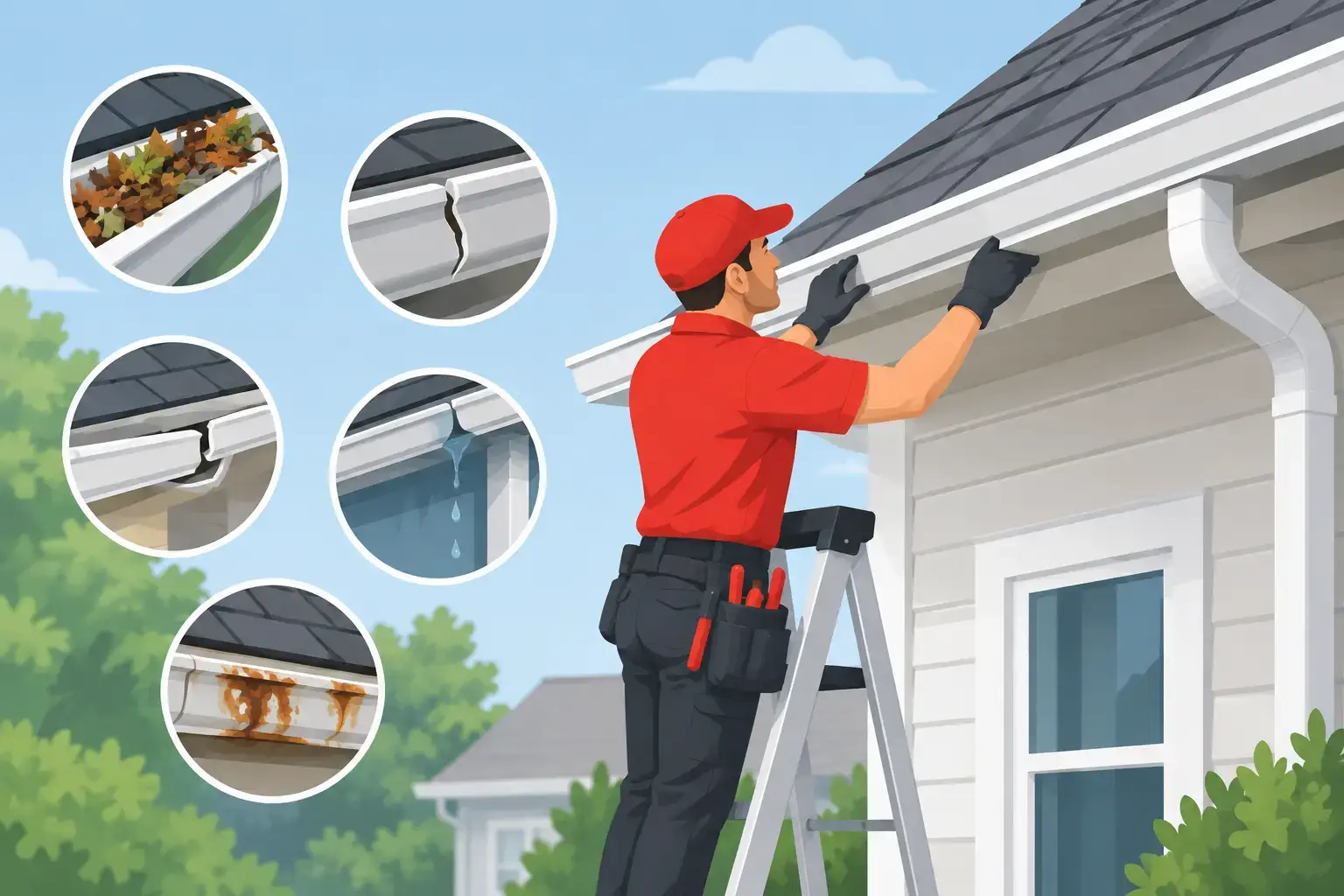
Overflow is one of the clearest signs of a problem. It often means leaves, shingle grit, twigs, or other debris are blocking the gutter or downspout. Cleaning may solve the issue, but not always. If a clean gutter still overflows, it may be pitched incorrectly, undersized for the roof area, or pulling away from the fascia.
Do not assume overflowing water is harmless just because it happens outside. Repeated runoff can saturate soil near the foundation, wash out mulch, damage plant beds, and leave water marks on siding. In some cases, it can contribute to moisture problems in a basement or crawl space.
Gutters sag, bow, or pull away from the house
A gutter should look straight and securely attached. Sagging sections usually mean the fasteners are loose, damaged, or spaced too far apart. The weight of standing water and wet debris can make the problem worse quickly.
If the gutter has pulled away from the fascia board, the repair may involve more than reinstalling a hanger. Water may have damaged the wood behind it, particularly if the issue has been present for a while. Repairing the gutter without checking the supporting surface can lead to the same problem returning.
Seams, corners, or end caps leak
Small drips at a joint can seem minor, but a seam leak will continue every time it rains. Sealant can fail with age, temperature swings, and movement in the gutter system. Corners and end caps are common trouble spots because they hold more joints than a straight run.
A localized leak can often be repaired if the surrounding metal is in good condition. However, widespread seam failures, cracks, or corrosion may mean the gutters are nearing the point where replacement is the more practical choice.
Downspouts drain too slowly or not at all
A downspout that backs up can cause water to overflow at the gutter line, even when the gutter itself is clean. Debris often collects at elbows and connections, where the path narrows. A crushed, disconnected, or improperly angled downspout can also prevent proper drainage.
Check where the downspout releases water. If it empties directly next to the foundation, it may be functioning technically but still directing water where you do not want it. Extensions or drainage adjustments can help move runoff away from the home.
You see peeling paint, stains, or soft wood
Paint that bubbles or peels around the eaves can signal repeated moisture exposure. Dark streaks on siding, water stains on soffits, and soft fascia boards deserve prompt attention as well. These signs may indicate water is slipping behind the gutter rather than into it.
Wood deterioration around the roof edge should not be ignored. Once moisture reaches fascia, soffits, or roof decking, a straightforward gutter repair can become a more involved exterior repair.
Repair, Cleaning, or Replacement: What Does Your Home Need?
Not every gutter issue calls for the same solution. Cleaning is appropriate when the system is structurally sound but blocked by debris. This is common after leaf drop or a storm. If water flows normally after cleaning and there are no leaks, loose sections, or damaged connections, regular maintenance may be all that is needed.
Repair makes sense when the issue is isolated. A loose hanger, leaking joint, separated downspout, minor crack, or section with poor support can often be corrected without disturbing the rest of the system. Prompt repairs are generally easier because the damage has not had time to spread to nearby wood or siding.
Replacement becomes more likely when gutters have recurring leaks across multiple seams, extensive rust or corrosion, large cracks, severe warping, or repeated sagging. It may also be the better path if the system is consistently too small or poorly designed for the roofline. A repair should solve the cause, not simply improve the appearance for a short time.
Why Gutter Pitch Matters More Than Most Homeowners Realize
A gutter can be clean and securely attached but still fail because it does not have the correct slope. Gutters need a subtle pitch toward the downspout so water can move through them instead of sitting in low spots.
Standing water adds weight, encourages debris buildup, and can speed up corrosion. In colder weather, trapped water can freeze and put added stress on seams and hangers. You may notice this problem when one area repeatedly holds water after rain or when debris collects in the same section despite routine cleaning.
Correcting pitch requires careful adjustment. Too little slope leaves water behind, while too much can look uneven and reduce the gutter’s ability to catch water along the roof edge. This is a repair where proper installation and attention to detail make a meaningful difference.
Do Not Wait for Interior Water Damage
Gutters are part of your home’s water-management system, not just an exterior accessory. When they fail, water can find its way into places that are more expensive and disruptive to repair. Foundation moisture, rotted trim, damaged siding, and roof-edge deterioration can all begin with water being directed incorrectly.
Pay special attention after a heavy Tennessee rain. Walk around the home once the storm has passed and look for muddy splash marks, washed-out areas, puddles near the foundation, and stains beneath gutter seams. During a light rain, you may be able to spot a problem directly without climbing a ladder.
Avoid leaning ladders against gutters, and do not attempt a high repair if you are not comfortable working at elevation. A professional can assess the gutter, downspouts, fasteners, fascia, and drainage path together. That broader view is useful because the most visible problem is not always the original cause.
A Practical Seasonal Checkup
Spring and fall are natural times to inspect gutters, but the roofline deserves another look after severe wind, hail, or a branch strike. Clear visible debris, confirm downspouts are attached, and make sure extensions are directing water away from the home. Watch for new sagging, drips, or sections that appear uneven.
For busy homeowners, scheduling routine exterior maintenance can make these small issues easier to manage before the next storm exposes them. Smart Home Fix provides dependable, licensed and insured help for gutter-related repairs and the exterior maintenance concerns they often uncover.
A gutter repair is most effective when it happens before water has a chance to damage the parts of your home that are harder to see. If something looks off at the roofline, trust that early observation and have it addressed while the fix is still straightforward.