A staircase can look like a small repair until one loose tread shifts underfoot or a handrail pulls away from the wall. The most useful stair repair examples show why these issues deserve prompt attention: stairs carry repeated weight every day, and a minor defect can quickly become a fall risk for family members, guests, and pets.
Some stair problems are cosmetic. Others involve structural framing, secure anchoring, or building-code considerations. Knowing the difference helps homeowners decide when a simple repair is appropriate and when it is time to call a qualified professional.
Common Stair Repair Examples Homeowners See
Loose or squeaky treads
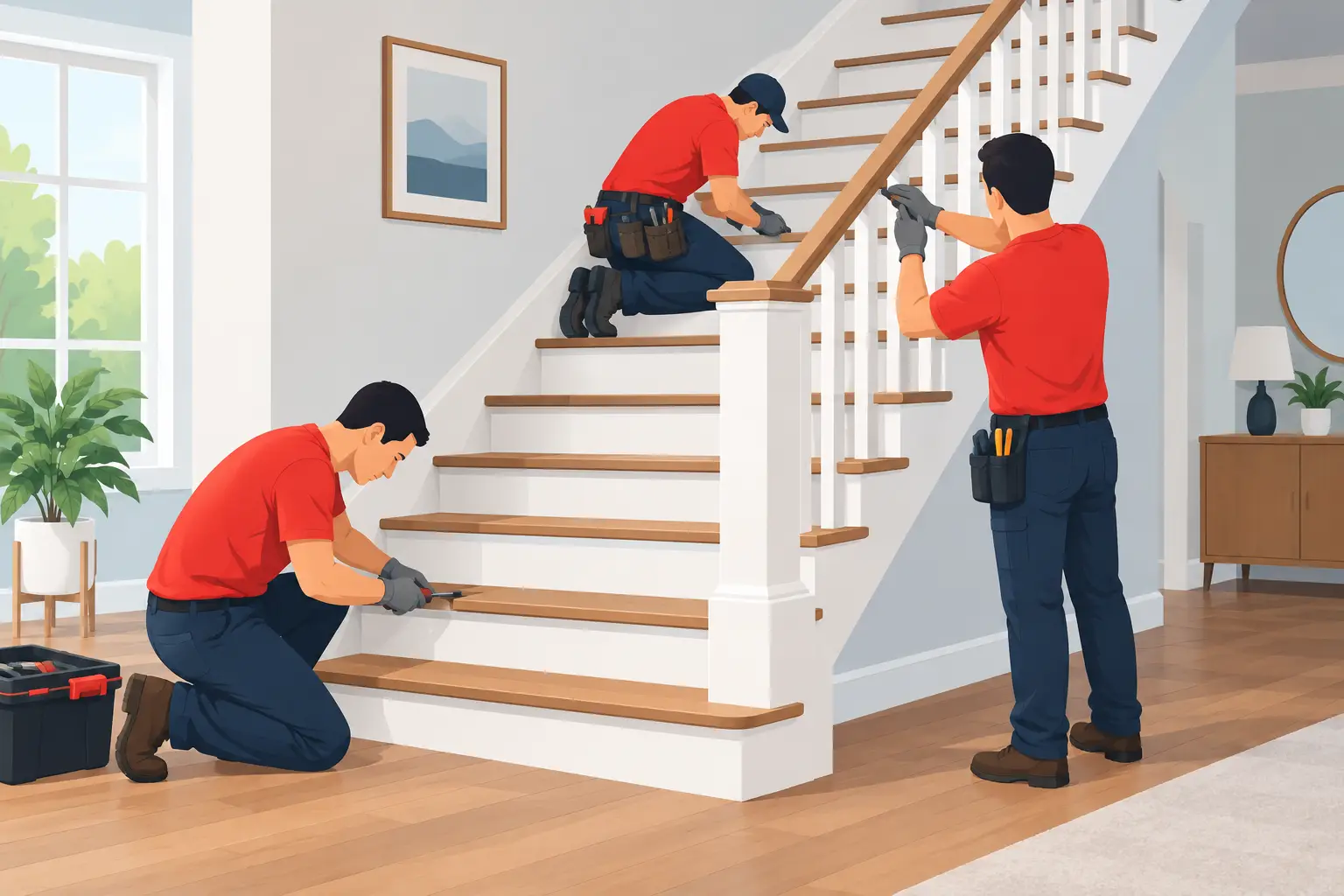
A tread is the flat surface you step on. When it squeaks, shifts, or feels soft near the front edge, the problem may be loose fasteners, gaps between the tread and framing, or wood movement caused by changing humidity. A squeak is not always dangerous, but movement is a warning sign that should not be ignored.
A proper repair begins by finding the source of the movement rather than simply driving a screw through the visible surface. Depending on access, the tread may need to be secured from below, reinforced where it meets the stringer, or reset with the correct construction adhesive and fasteners. On carpeted stairs, the carpet may need to be carefully lifted and reinstalled so the repair is secure without leaving a visible patch.
Cracked, split, or damaged treads
Wood stairs can split near a knot, along the edge of a tread, or where fasteners have weakened the material. Water exposure, heavy furniture moves, and years of repeated use can also leave a tread gouged or cracked. Filling a small surface blemish can improve appearance, but filler alone is not a safe solution for a tread that flexes or has a deep split.
In many cases, replacing the affected tread is the better long-term repair. The new piece should match the stair dimensions, sit level, and be firmly attached to the existing structure. If the stairs will be painted or refinished, repairing several worn treads at once can create a more consistent result.
Loose handrails and wall brackets
A handrail should feel solid the moment you grip it. If it rocks, pulls away from the wall, or has brackets that visibly move, it needs attention. The issue may be as simple as loose screws, but it can also mean the brackets were fastened only into drywall instead of wall studs or solid blocking.
The right repair anchors the rail into secure framing and uses brackets designed to handle the load. A rail can look straight and still be unsafe if its mounting points are weak. This is one repair where appearance should never be the only test – the handrail must support a person who suddenly needs it.
Wobbly newel posts and balusters
Newel posts are the larger posts at the bottom, top, or turn of a staircase. Balusters are the smaller vertical pieces beneath the railing. A loose newel post can make the entire guardrail system unstable, while missing or loose balusters can create a safety concern for children and pets.
Repairs vary based on how the post or balusters were originally installed. Tightening a visible fastener may help in limited cases, but long-lasting work often requires reinforcing the connection at the framing, tread, or floor system below. Replacement balusters also need consistent spacing and secure attachment. If several parts are loose, the stair railing may need a full assessment rather than a series of isolated fixes.
Damaged stair nosing
The nosing is the front edge of a tread, where the surface projects over the riser below. It gets significant wear because many people step on that edge first. Rounded, chipped, or separating nosing can make stairs feel uneven and can catch a shoe.
A minor finish issue may be sanded and refinished. But if the nosing is pulling loose or the wood beneath it is deteriorated, the repair should restore a firm, level step surface. A new tread is often more dependable than trying to rebuild a badly damaged edge with patch material.
Repairing Outdoor Stairs Requires a Different Approach
Exterior stair repair examples often involve moisture damage. Wood steps at a deck, porch, or side entry can rot from the bottom up, especially where stringers contact soil, concrete, or poorly drained areas. Paint may hide early decay, so press gently around suspicious spots with a screwdriver or inspect for soft wood, dark staining, peeling paint, and loose connections.
Replacing one rotten board is sometimes enough, but not always. If the stair stringers, ledger connection, or landing structure are compromised, replacing only the visible tread does not solve the actual problem. Outdoor stair repairs should also address drainage and use materials and fasteners suited for exterior exposure.
Concrete steps present their own issues. Small surface chips can often be patched, while wider cracks, settling, or a step that has separated from the porch may point to movement below. A patch can improve appearance, but it will not stop an active settling problem. The repair should match the cause, not just cover the crack.
When a Stair Repair Becomes a Safety Project
A staircase is more than a collection of boards. The treads, risers, stringers, railing, landing, and wall connections work together. That is why a stair repair can become more involved when the problem affects the framing or the stair’s overall geometry.
Call for professional help when a stair feels bouncy, sloped, or unstable; when several treads are loose; when a handrail has pulled free; or when there is visible rot, water damage, or cracking in the stringers. The same applies when a repair may affect stair height, tread depth, railing height, or baluster spacing. These details influence safety and may need to meet current requirements, particularly during a larger renovation.
It also depends on the age and construction of the home. Older Knoxville-area houses may have stairs built with methods that differ from modern construction, and hidden conditions are common behind finished walls, carpet, or trim. A careful inspection prevents a quick fix from creating a larger repair later.
What a Quality Stair Repair Should Accomplish
Good repair work does more than quiet a squeak or make a railing look straight. It should remove movement, restore solid connections, preserve a consistent walking surface, and blend appropriately with the home’s finishes. On painted stairs, that may mean filling, sanding, priming, and repainting after the structural work is complete. On stained hardwood, matching grain, stain color, and finish may take more care.
Homeowners should also consider how the stairs are used. A busy family staircase needs a durable repair that handles constant traffic. Stairs used by an older adult may benefit from an added or improved handrail, better lighting, and high-contrast tread edges. A repair can be a practical opportunity to make everyday movement through the home easier.
Small Warning Signs Worth Addressing Early
Do not wait for a complete failure before taking action. A new squeak, a screw head working loose, a railing that shifts slightly, or a tread that feels different underfoot can be the first sign of a developing problem. Taking care of the issue early is usually less disruptive than waiting until a step breaks or a rail comes loose.
For homeowners who want dependable help without coordinating several trades, Smart Home Fix provides licensed and insured residential repair support for stairs and other high-use areas of the home. The goal is straightforward: identify what is causing the problem, make the repair correctly, and leave the space safe and usable.
A staircase should feel unremarkable when you use it – firm underfoot, steady at the rail, and ready for another day of traffic. If yours gives you any reason to hesitate, that is reason enough to have it checked.