A doorknob hole, a spreading water stain, or a long crack above a doorway can make a room look neglected fast. The right choice in the repair versus replace drywall decision depends less on how noticeable the damage is and more on what caused it, how far it extends, and whether the wall is still structurally sound.
Drywall is designed to create a smooth, finished surface, but it is not indestructible. Everyday life brings dents, nail holes, furniture damage, plumbing leaks, settling cracks, and moisture problems. A professional evaluation can separate a simple cosmetic repair from damage that needs a larger section, or an entire wall, replaced.
When Drywall Repair Is the Smarter Choice
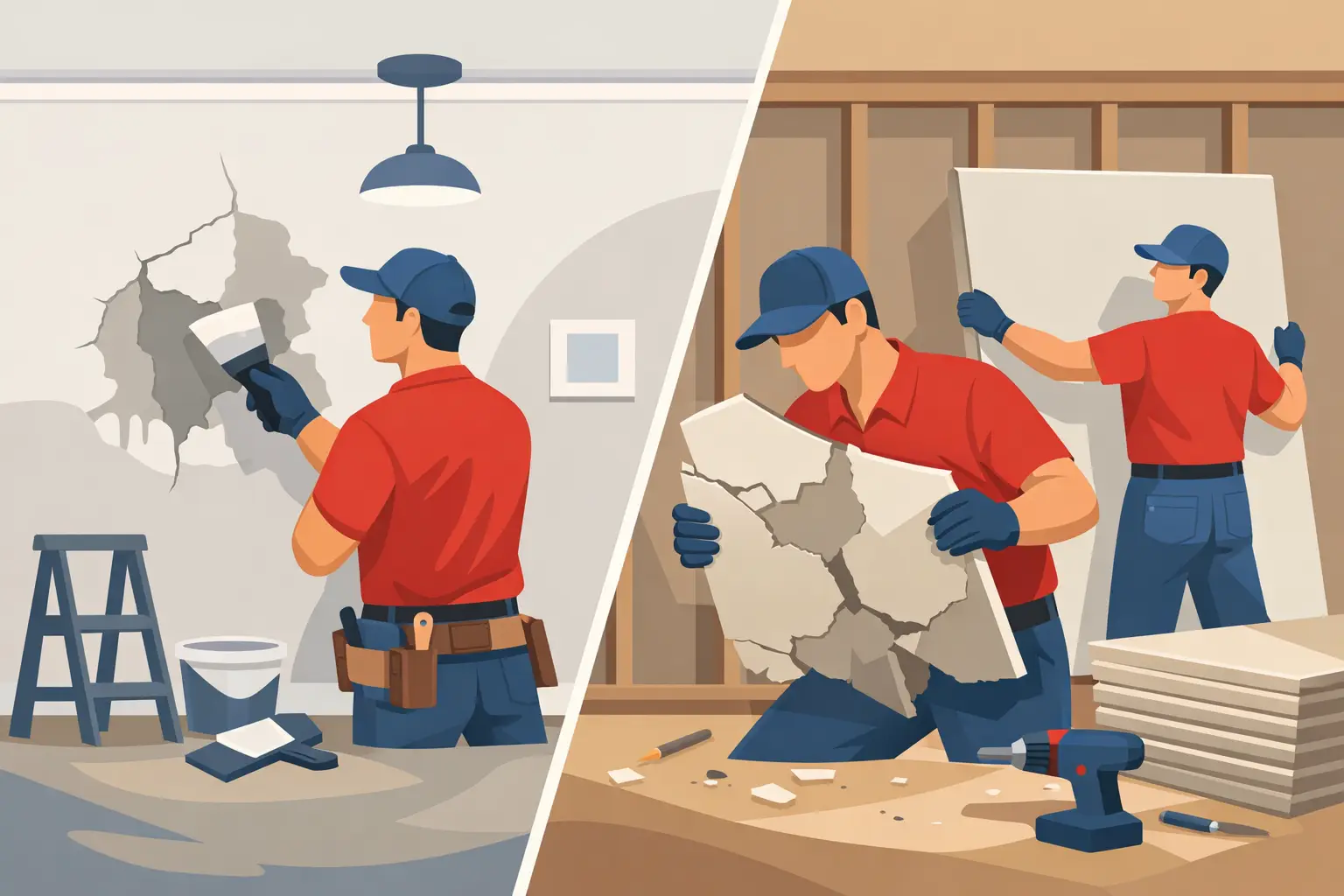
Repair is usually the practical path when the damage is isolated and the drywall around it is dry, firm, and stable. Small imperfections do not require tearing out a full wall. With proper patching, taping, sanding, and paint matching, many repairs can disappear into the finished surface.
Small nail holes, picture-hanger damage, shallow dents, and minor scuffs are straightforward repair projects. These issues affect the paper face or joint compound, not the strength of the wall itself. The same is often true for a small hole caused by a bumped piece of furniture or a door handle.
Cracks can also be repairable, particularly when they are thin, limited to one area, and not continuing to grow. Homes naturally shift with seasonal temperature and humidity changes. Minor settling cracks may only need the joint reinforced and refinished. However, a crack that returns after repair or runs diagonally across a wall deserves closer attention before cosmetic work begins.
A localized plumbing issue may also allow for a repair if the leak was stopped quickly and the drywall fully dried. In that situation, a damaged section can be removed, replaced with a fitted patch, and blended into the surrounding wall. The key is confirming that the material behind and around the patch has not retained moisture.
Signs a Patch Will Hold Up
A drywall repair is more likely to last when the surrounding area feels solid, there is no musty odor, and the drywall paper has not separated or bubbled. The damaged area should be contained, with no discoloration spreading beyond it. Just as importantly, the cause of the damage must be resolved first. Repairing drywall over an active leak, recurring condensation, or a poorly adjusted door only sets up the same problem to return.
When It Is Time to Replace Drywall
Replacement becomes the better option when drywall has lost its integrity. Water saturation, mold concerns, widespread cracking, crumbling gypsum, or extensive holes can leave too little sound material for a dependable patch.
Water is the most common reason homeowners move from repair to replacement. A brown ceiling stain is not always proof that drywall needs to come down, but soft drywall, sagging areas, peeling paper, or a ceiling that feels swollen should not be ignored. Once drywall absorbs enough water, its gypsum core can weaken and the facing paper can separate. Drying the room may stop further damage, but it does not restore material that has already broken down.
Mold is another serious consideration. Surface mildew from humidity may be addressed once the moisture source is controlled, but visible mold that has penetrated damaged drywall often calls for removal of the affected material. Drywall is porous, and moisture can travel farther than the stain visible from the room. Replacing compromised sections helps create a clean, sound surface for the new finish.
Large holes or repeated damage in the same area may also justify replacement. A single hole can be patched well, but a wall covered in old patches, damaged corners, loose tape, and uneven textures may look better and perform better with a new section of drywall. This is especially true during a renovation, when opening a wall may also reveal outdated insulation, damaged framing, or other repairs worth addressing while the area is accessible.
Ceiling Damage Requires Extra Caution
Drywall on ceilings carries its own weight, so water damage or loose sections are more concerning overhead than on a vertical wall. A sagging ceiling, cracked seams that widen, or a damp area near a light fixture should be assessed promptly. Do not press on a visibly swollen ceiling or assume paint alone will cover the issue safely.
Repair Versus Replace Drywall: Questions to Ask First
Before deciding on a patch or replacement, start with the cause. Was the wall hit by something? Did a roof, plumbing, or appliance leak create the stain? Is the damage near a shower, window, exterior wall, or another place where moisture may be ongoing? The visible drywall problem is often only one part of the job.
Next, consider the extent of the damage. A contained hole between studs is very different from a large section of softened wallboard. Damage that reaches electrical boxes, plumbing lines, insulation, or framing may require a more careful approach. Removing drywall without knowing what is behind it can create avoidable problems.
Finally, think about the finish you expect when the work is complete. Smooth walls can be easier to blend than heavily textured walls, but matching existing texture and paint still takes experience. A repair that is technically sound can remain visible if the finish is rushed. For high-visibility areas such as living rooms, entryways, kitchens, and ceilings, careful surface preparation makes a meaningful difference.
Why the Cause Matters More Than the Hole
Homeowners sometimes focus on the size of the damaged spot, but the source of the damage should drive the decision. A two-inch hole from a doorknob can be repaired. A two-inch stain caused by a slow pipe leak may point to a much larger issue behind the wall.
Moisture problems should be fixed before new drywall goes in. That may mean addressing a plumbing repair, improving bathroom ventilation, sealing an exterior opening, or correcting water intrusion around a window. Installing new material over an unresolved source can trap moisture and lead to staining, mold, and another repair later.
Repeated cracks also deserve investigation. Small movement is common in many homes, but doors that begin sticking, cracks that widen, or separation at ceilings and trim can indicate more than a failed drywall joint. In those cases, treating the symptom without evaluating the movement may not provide a lasting result.
A Professional Finish Is Part of the Repair
Drywall work has a reputation for being messy, and sanding dust is one reason. But the most challenging part is often not cutting out damaged material. It is rebuilding the wall so the repair is straight, strong, and difficult to spot after painting.
A quality repair may involve adding backing behind a patch, using the right joint tape, applying several thin coats of compound, feathering the edges well beyond the patch, sanding between coats, and matching the existing wall texture. Corners, ceiling seams, and repairs near trim require additional care because even small uneven areas can catch light and stand out.
For Knoxville homeowners managing busy schedules, a dependable handyman can make the process much easier. Smart Home Fix provides professional residential repair support with the care homeowners expect from a licensed and insured local team. The goal is not simply to cover damage, but to leave the area looking finished and functioning as it should.
Do Not Wait on These Drywall Problems
Some drywall damage can wait until your next home maintenance project. Others need timely attention to protect the home and avoid a more disruptive repair. Arrange an assessment when you notice any of the following:
- A ceiling that sags, bulges, or feels soft after a leak
- Visible mold, a persistent musty smell, or recurring moisture stains
- Cracks that grow, return quickly, or appear with sticking doors and windows
- Crumbling drywall, loose tape across large seams, or peeling wall paper
- Damage near plumbing, electrical fixtures, or an exterior wall where hidden moisture is possible
These signs do not automatically mean a full wall replacement is necessary. They do mean it is worth identifying what is happening behind the finished surface before deciding on the repair.
A clean patch is often all a wall needs. When moisture, instability, or widespread deterioration is involved, replacing the affected drywall is the more reliable path. Taking the time to solve the cause first helps protect your home and gives the finished repair the best chance to stay that way.