A door can look perfectly fine and still let in enough outside air to make a room feel uncomfortable. Drafty door sealing is one of those small home repairs that can make a noticeable difference quickly, especially when Knoxville weather shifts from humid summer days to colder winter nights. The key is identifying where the air is getting through before adding the wrong material in the wrong place.
A properly sealed exterior door should close easily, latch securely, and create a consistent barrier around all four sides. If you feel a chill near the entryway, see daylight around the frame, or notice leaves and water making their way inside, the door needs attention. The cause may be simple worn weatherstripping, but it can also point to an adjustment issue, damaged trim, or a threshold that no longer seals correctly.
Why a Drafty Door Is More Than a Comfort Problem
Air leaks force your heating and cooling system to work harder to maintain the temperature you set. A gap around an exterior door can also bring in humidity, dust, pollen, and moisture. Over time, moisture near the threshold or door frame can contribute to swollen wood, peeling paint, soft trim, and other avoidable repairs.
Drafts are particularly common around doors that get frequent use, such as a front entry, garage access door, patio door, or side door. Weatherstripping compresses each time the door closes. Door sweeps scrape against the threshold. Hinges can loosen slightly, and a house can settle over the years. None of that automatically means you need a new door, but it does mean the opening should be evaluated as a complete system.
How to Find the Source of the Draft
Start with a visual check from inside the home during daylight. Look closely along the top and sides of the door for visible light. Then inspect the bottom edge, where gaps are often hidden by rugs or a worn door sweep.
A simple hand test can help on a breezy day. Slowly move your hand around the perimeter of the closed door and feel for cold air movement. You can also hold a thin piece of tissue near suspected gaps. If it moves while the door is shut, air is likely entering there.
Pay attention to how the door operates. A door that rubs at the top corner, has to be pushed hard to latch, or springs open slightly after closing may be out of alignment. In that case, replacing weatherstripping alone may not solve the problem. The new seal may compress unevenly, wear prematurely, or make the door harder to close.
Check the Corners and Latch Side
The corners of a door frame are easy to overlook, but they are common trouble spots. Weatherstripping pieces can shrink, pull away, or leave a small opening where they meet. On the latch side, the door may not be pressing firmly enough into the seal because of loose hinges, an improperly positioned strike plate, or a warped door.
A good seal requires even contact. If one section of weatherstripping is flattened while another section barely touches the door, the problem is often alignment rather than the seal itself.
Inspect the Threshold and Door Sweep
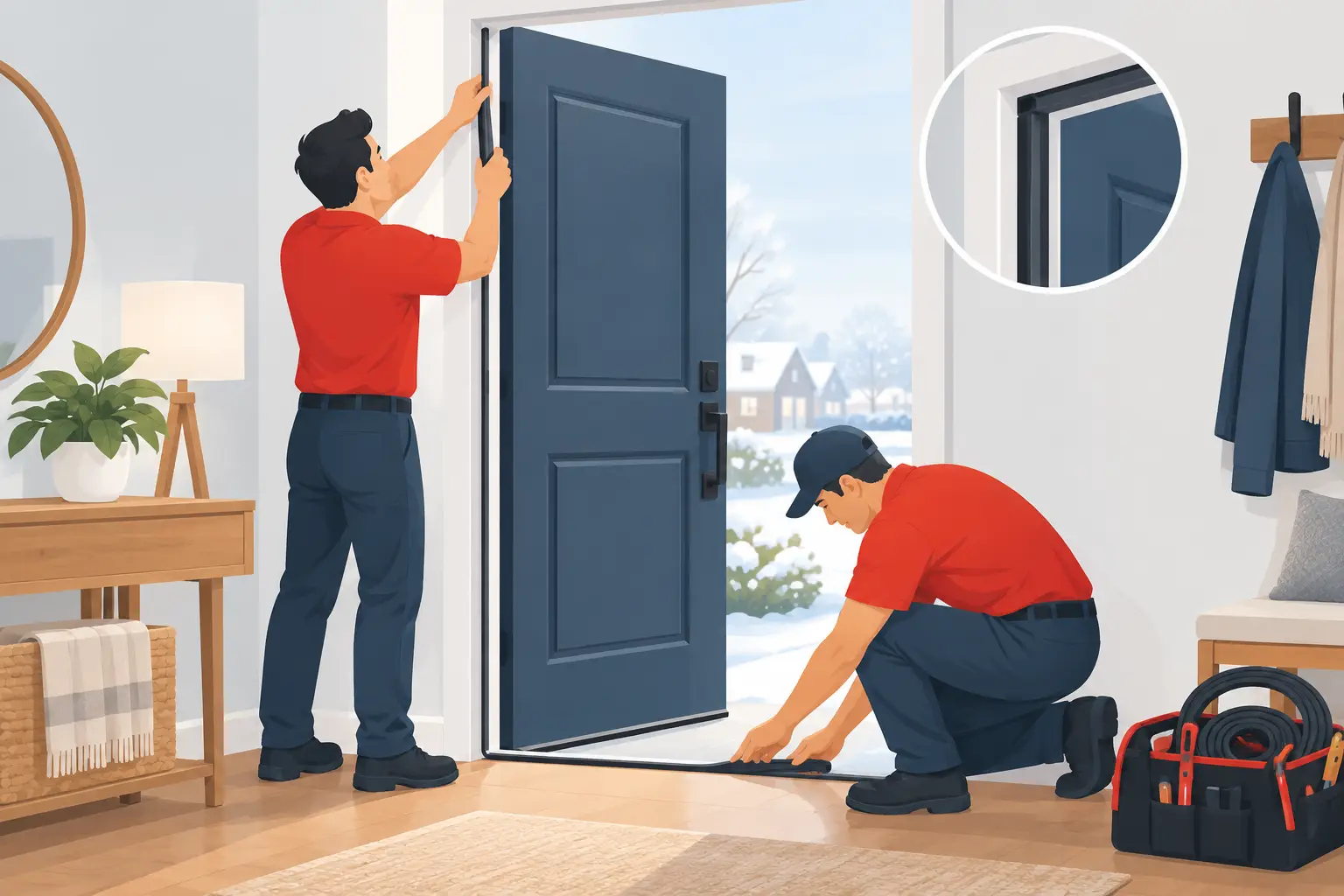
The bottom of the door takes the most abuse from foot traffic, rain, dirt, and temperature changes. Look for a torn rubber sweep, a bent aluminum edge, or a gap between the sweep and threshold. If you can see daylight below the door, that area should be addressed promptly.
Some thresholds are adjustable, allowing the sealing surface to be raised slightly. This can be useful when a door sweep is in good condition but no longer makes consistent contact. Adjustment should be done carefully, though. Raising a threshold too much can make the door drag or interfere with smooth operation.
Choosing the Right Drafty Door Sealing Material
The best material depends on the location of the gap and the condition of the door. Adhesive-backed foam weatherstripping is easy to install and works well for minor gaps, but it can flatten or peel over time in high-use areas. Rubber or silicone weatherstripping usually holds up better and provides a more durable seal when correctly fitted.
For the bottom of the door, a door sweep is often the practical choice. Sweeps are available with flexible vinyl, rubber, or brush-style seals. A flexible rubber or vinyl sweep generally provides better protection from air and moisture at a standard exterior entry door. Brush sweeps can be useful in certain applications, but they may not stop wind-driven rain as effectively.
Do not use expanding foam, caulk, or other permanent fillers in a way that prevents the door from operating. Those materials may have a place around exterior trim or larger frame openings, but they are not substitutes for proper weatherstripping and a functional door sweep.
When Weatherstripping Is Enough
Replacing weatherstripping is often a straightforward repair when the door is square, closes smoothly, and has only a minor gap around the frame. Remove old material fully, clean the surface, and measure carefully before cutting the replacement. The seal should touch the closed door firmly without requiring excessive force to latch it.
If the old weatherstripping is cracked, brittle, permanently compressed, or missing in places, replacement is a sensible first step. The same is true for a worn door sweep that has obvious tears or has pulled away from the bottom edge.
Take your time with the fit. A weatherstrip that is too thick can make the door difficult to close, encouraging people to slam it. One that is too thin may look tidy but leave the original draft untouched.
When the Door Needs More Than a Seal
Drafty door sealing becomes more involved when the door itself is damaged or misaligned. Loose hinges can allow the door to sag. A failing threshold can leave an uneven gap at the bottom. Rotting jamb material, cracked exterior caulk, or loose trim can allow air and water behind the frame.
Wood doors may swell or warp with repeated moisture exposure. Steel and fiberglass doors can also develop issues if the frame shifts or the weatherstripping channel is damaged. Sliding patio doors have their own challenges, including worn rollers, dirty tracks, and pile weatherstripping that no longer contacts the panel correctly.
These issues are worth handling before the next stretch of cold or wet weather. A repair that restores the door’s fit can protect surrounding finishes and help prevent a minor draft from becoming a larger frame or moisture problem.
Avoid These Common Sealing Mistakes
The most common mistake is treating every draft as a weatherstripping problem. If the door is sagging or the frame is out of square, new seals may only mask the issue temporarily. Another mistake is layering multiple products over old material. This often creates an uneven surface and makes the door difficult to operate.
Avoid blocking weep holes or drainage paths, especially on storm doors and patio doors. Those openings are designed to let water escape. Sealing them can trap moisture where it does not belong.
Finally, do not ignore a door that is hard to lock. A secure latch is part of a properly functioning exterior door. If sealing work affects the latch or deadbolt alignment, adjust the door and hardware so comfort and security work together.
A Small Repair With a Noticeable Payoff
A well-sealed exterior door should feel solid, close smoothly, and keep outdoor air where it belongs. For busy homeowners, a professional inspection can save time by identifying whether the solution is a new sweep, fresh weatherstripping, hinge adjustment, threshold repair, or a combination of smaller fixes.
Smart Home Fix helps Knoxville-area homeowners handle practical repairs like these with dependable workmanship and minimal disruption. Addressing a draft now can make the entryway more comfortable through the next weather change and help protect the door for years to come.