A kitchen can feel dated long before it stops working. Worn finish, orange-toned oak, chipped paint, and tired hardware can make the entire room feel older than it is. When homeowners weigh refinishing versus replacing cabinets, the right answer usually comes down to one question: Are the cabinet boxes still worth keeping?
That distinction matters. Cabinet doors get most of the attention, but the boxes, shelves, mounting, and layout determine whether a cosmetic update will truly solve the problem. A careful assessment can help you invest in an improvement that looks good, functions well, and supports the way your household uses the kitchen.
When Refinishing Cabinets Makes Sense
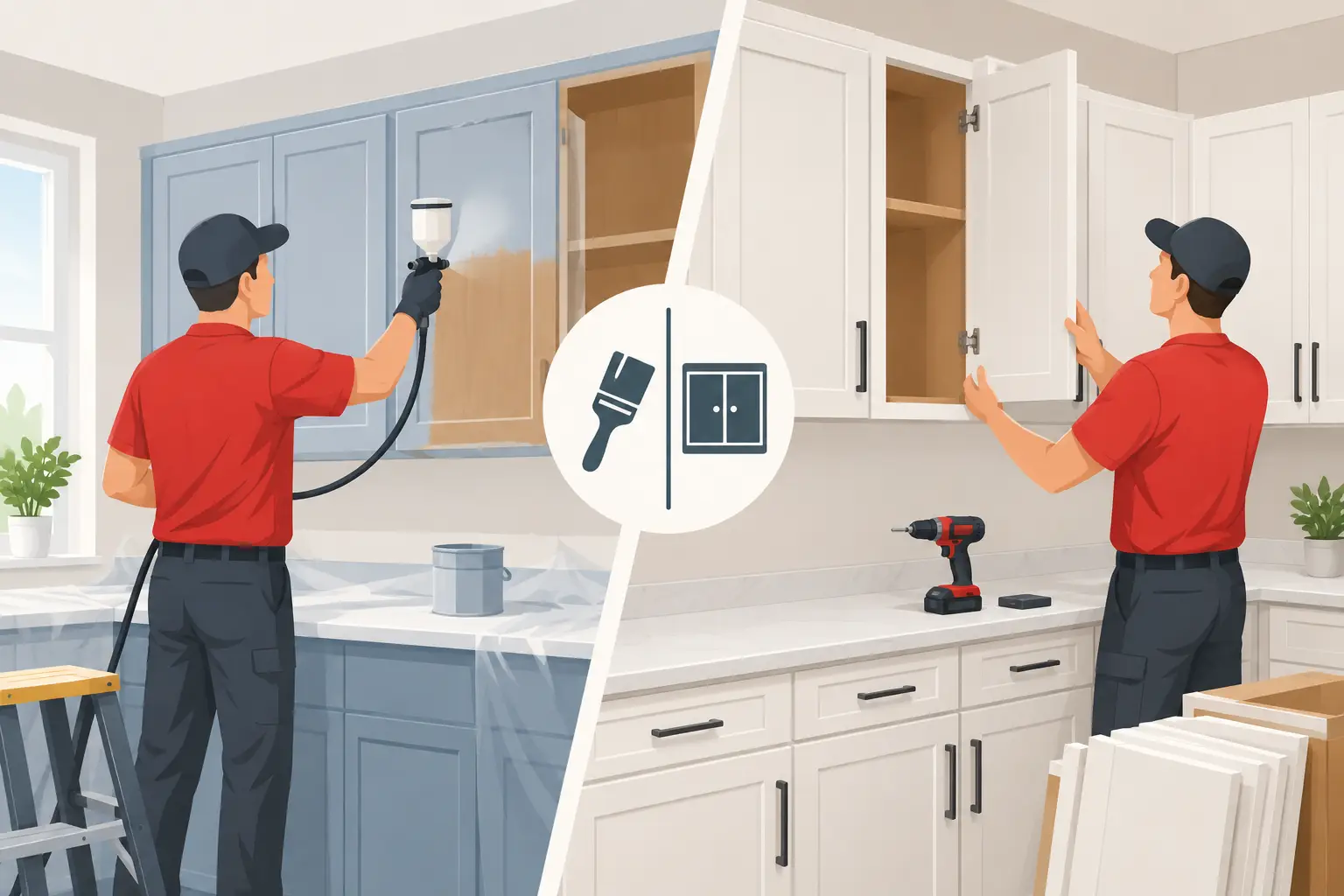
Refinishing is a strong option when your existing cabinets are structurally sound and the current layout works for your needs. It can involve cleaning and repairing the surfaces, sanding, staining or painting, and applying a durable protective finish. Hardware, hinges, and drawer pulls may also be updated to complete the change.
This approach is especially practical for solid-wood cabinets with good doors and drawers. Older cabinets were often built with durable materials, and their construction may be worth preserving. If doors close properly, cabinet boxes are square, shelves are not sagging, and there is no significant water damage, refinishing can give the kitchen a noticeably different appearance without removing the entire cabinet system.
A color change has a major visual impact. Deeply stained wood can be refreshed with a lighter stain, or painted cabinetry can shift the room toward a clean white, warm neutral, or richer modern color. New hardware can add a finished look, while soft-close hinges or drawer upgrades may improve day-to-day use where the cabinet design allows.
Refinishing also makes sense when the rest of the kitchen remains in place. If countertops, flooring, backsplash, plumbing locations, and appliance placement are all working well, replacing cabinets can create a larger chain of work than homeowners expect. Keeping the existing cabinet layout may allow the project to stay focused on the surfaces that need attention.
Refinishing Has Limits
A new finish cannot correct every cabinet problem. Paint and stain will not fix swollen particleboard, delaminating veneer, cracked frames, or drawers that no longer operate reliably. It also will not create more storage, improve an awkward work triangle, or make a narrow kitchen feel more functional.
Preparation is where cabinet refinishing succeeds or fails. Grease residue, worn coatings, loose hinges, dents, and imperfections must be addressed before the finish is applied. A rushed paint job can chip early, show brush marks, or leave doors sticking. Professional preparation and proper curing time are essential for a finish that holds up to daily cooking, cleaning, and family life.
When Replacing Cabinets Is the Better Choice
Replacement is usually the more practical route when the cabinets have structural damage, recurring moisture issues, poor construction, or a layout that no longer serves the household. The visible finish may be the first concern, but damaged boxes and failing shelves are signs that a surface-level update may not last.
Water damage deserves particular attention around sink bases, dishwashers, and refrigerator water lines. If cabinet materials are swollen, soft, warped, or mold-affected, replacement may be necessary after the moisture source has been corrected. Refinishing over those conditions can hide the issue temporarily, but it will not restore the cabinet’s strength.
Replacement also gives you the freedom to solve functional problems. Perhaps the kitchen lacks deep drawers for pots and pans, has limited pantry storage, or forces people to walk around an inconvenient island. New cabinetry can improve storage, accessibility, and traffic flow. It can also accommodate changes such as a larger sink, new appliances, or a redesigned cooking area.
For homeowners planning a more complete kitchen renovation, cabinet replacement may be the logical foundation. Countertops, backsplash, lighting, flooring, and appliances are easier to coordinate when the cabinet plan is settled first. That does not mean every renovation requires new cabinets, but it does mean the decision should be made with the whole room in mind.
Replacement Brings More Project Decisions
Replacing cabinets is not simply a matter of removing old boxes and installing new ones. Measurements must be accurate, walls and floors may need adjustment, and plumbing or electrical work can be uncovered once the old cabinets are removed. A kitchen may also be less usable during portions of the work.
That added scope can be worthwhile when it resolves long-standing frustrations. The key is to plan for the full condition of the room, not just the cabinet style. A dependable contractor can help identify repair needs early, coordinate the work in the proper order, and keep the project moving with fewer surprises.
Refinishing Versus Replacing Cabinets: Questions to Ask First
Before choosing a direction, look beyond the door fronts. Open every cabinet, test every drawer, and inspect areas around plumbing fixtures. The answers to a few practical questions usually make the path clearer.
Start with the cabinet boxes. Are they solid, level, and securely attached to the wall? Next, consider door and drawer operation. Minor alignment issues are common and often repairable, but widespread sagging, broken drawer slides, or loose joints may point to deeper problems.
Then consider your kitchen’s layout. If you had the same cabinet finish in a new color, would the kitchen still meet your needs? If the answer is yes, refinishing may be the right fit. If you immediately think about adding storage, moving appliances, creating a better prep area, or making room for accessibility needs, replacement is more likely to deliver the result you want.
Finally, think about timing. A homeowner preparing for a near-term move may prefer a focused cosmetic improvement if the cabinets are in good shape. A family planning to stay for years may place more value on a layout that improves daily routines. Neither choice is automatically better. The best decision matches the home’s condition and your long-term plans.
Do Not Overlook Cabinet Refacing
There is also a middle option: refacing. This process keeps sound cabinet boxes while replacing door and drawer fronts and covering the exposed frames with a new surface. It can provide a more dramatic style change than refinishing without requiring full cabinet removal.
Refacing works only when the existing boxes are in good condition and the layout remains useful. It will not solve structural damage or add meaningful storage capacity on its own. Still, it may be worth discussing if your cabinet frames are solid but the door style is beyond saving or no longer fits the look you want.
A Smart Way to Decide
Begin with an honest condition assessment rather than choosing based on inspiration photos. Cosmetic wear favors refinishing. Structural damage, poor function, and a layout that creates daily frustration favor replacement. When the answer is somewhere in between, refacing or targeted repairs may offer a sensible path.
For Knoxville-area homeowners, humidity, busy family schedules, and the normal wear of an active kitchen can all affect how cabinets age. Looking closely at moisture-prone areas and everyday function helps prevent a beautiful update from becoming a short-lived fix.
Smart Home Fix can help homeowners evaluate repair and improvement needs with the practical perspective of a licensed and insured local team. The goal is not to replace what still works. It is to make the right improvement for a kitchen that serves your home well for years to come.