A fence gate usually starts small. It drags a little on the ground, stops latching cleanly, or needs an extra shove to close. Then one day it will not line up at all, the latch misses, the hinges strain, and the gate that used to work without a thought becomes one more problem standing between you and a normal day. That is usually when homeowners start looking for a fence gate repair handyman who can sort out the issue quickly and correctly.
A gate has one job – open, close, and secure your yard without a fight. When it stops doing that, the cause is not always obvious from the outside. What looks like a bad latch may really be a leaning post. What seems like a warped gate may actually be hinge pullout, soil movement, or old hardware that has finally given up. Getting the repair right means looking at the full assembly, not just the part that is making noise.
When a fence gate repair handyman is the right call
Some gate problems are simple maintenance issues. Others are signs that the structure supporting the gate has shifted over time. A handyman is often the right choice when the gate itself, the hinges, the latch, or the framing need adjustment or replacement, especially if the rest of the fence is still in decent condition.
That matters because most homeowners do not need a full fence replacement when one gate goes bad. In many cases, a targeted repair can restore function, improve security, and prevent added wear on the surrounding fence sections. For a busy homeowner, that is usually the better outcome – less disruption, less guesswork, and a faster path back to normal use.
A good repair starts with diagnosis. Is the post still solid? Are the rails split or sagging? Has the gate frame twisted? Is the latch failing because of misalignment, corrosion, or movement in the fence line? Those details determine whether the fix is a hinge adjustment, reinforcement, hardware replacement, post stabilization, or a gate rebuild.
The most common fence gate problems
Sagging is the issue homeowners notice most often. Over time, gravity pulls on the free side of the gate, especially if the frame is aging, the hinges are undersized, or the post is no longer perfectly plumb. A sagging gate will scrape the ground, bind when opening, or leave an uneven gap at the top and bottom.
Latch failure is another common problem. Sometimes the latch itself is broken, but often the real issue is alignment. If the gate has dropped even slightly, the latch no longer meets the strike plate where it should. Homeowners may try to force it, but that usually accelerates wear and can split wood around the hardware.
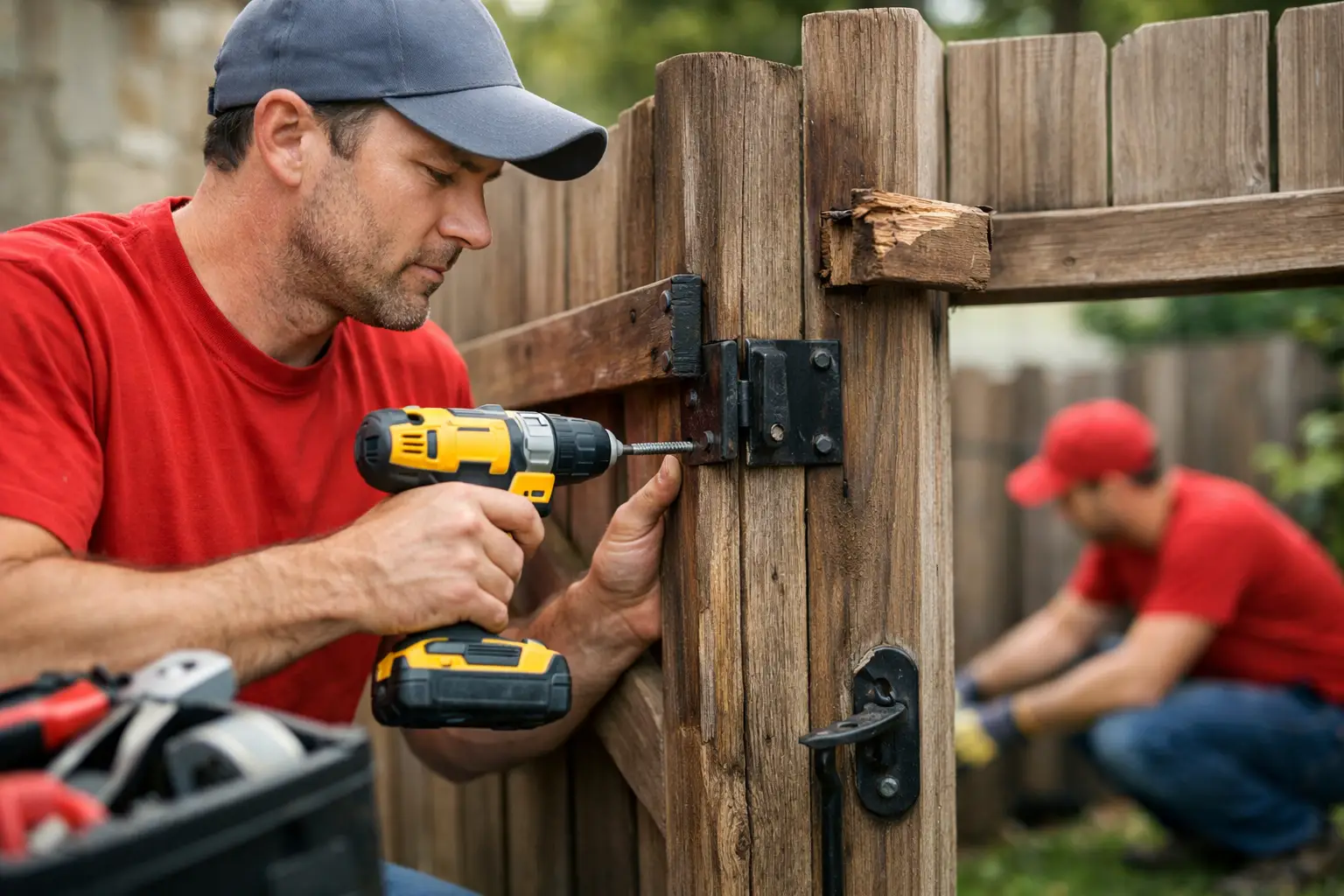
Loose hinges create a different kind of trouble. Screws back out, wood softens, and metal parts corrode. The gate may wobble or shift under load. If left alone, loose hinges can enlarge the mounting holes and make a straightforward repair more involved.
Post movement is where things get more serious. A gate depends on a solid anchor point. If the post leans because of age, moisture, soil shift, or rot, the entire gate assembly goes out of alignment. In that case, replacing hardware alone will not solve the problem for long.
Wood rot and weather damage also show up often, especially in older gates exposed to years of rain and sun. Rot near the bottom rail, around hinge points, or at the latch side weakens the structure. Even if the gate still opens, it may no longer be safe or secure.
Repair or replace? It depends on the condition
This is where experience matters. Not every failing gate should be repaired, but not every damaged gate needs to be replaced either. The right answer depends on how widespread the damage is and whether the surrounding fence can still support a lasting fix.
If the gate frame is sound and the issue is limited to hardware, alignment, or minor sagging, repair usually makes sense. If one or two boards are damaged but the frame is stable, selective replacement can often extend the life of the gate without rebuilding the whole section.
If the wood is rotting in multiple locations, the frame is twisted, and the post is unstable, a piecemeal repair may only buy a short amount of time. In that situation, a more complete rebuild is often the smarter decision. The goal is not just to make the gate shut today. It is to restore reliable use.
That is one reason many homeowners prefer working with a licensed and insured handyman service. A professional can tell you whether the repair will hold up or whether the gate is at the point where replacement is the more practical move.
What a professional repair should include
A proper gate repair is more than tightening a few screws and hoping for the best. The work should address the reason the gate failed, not just the symptom.
That often starts with checking the post, because everything depends on that anchor. If the post is loose, leaning, or deteriorated, the gate cannot stay aligned. From there, the handyman should inspect the frame, rails, pickets or panels, hinge mounting points, latch alignment, and ground clearance.
Depending on the problem, the fix may involve resetting or reinforcing hardware, replacing worn hinges, adjusting the gate frame, adding bracing, correcting latch position, or replacing damaged wood components. If the gate drags because the opening has shifted, the repair may also include trimming or reframing so the gate can swing freely again.
The best repairs also account for future wear. A heavy gate needs hardware that can support its weight. Outdoor fasteners need to stand up to weather. Wood repairs should be made with attention to moisture exposure and structural stress, not just appearance.
Why DIY gate fixes often do not last
Homeowners can absolutely spot the symptoms of a gate problem. The challenge is that the visible issue is not always the root issue. It is easy to replace a latch, add a diagonal cable kit, or drive in longer screws, only to find the gate starts sagging again a few weeks later.
That does not mean every DIY attempt is wrong. Basic maintenance like tightening hardware or clearing debris under a dragging gate can help. But if the post is moving, the frame is racked, or the wood around the hinges is compromised, temporary fixes tend to stay temporary.
There is also a safety angle. A heavy gate can shift unexpectedly while being adjusted. Old hardware can snap loose. If a gate serves as part of a secure yard for pets or children, unreliable function becomes more than a convenience issue.
For many homeowners, the value of a handyman is not just labor. It is having someone who can assess the full problem, make the right repair the first time, and save you from repeating the same fix.
Fence gate repair handyman services for busy homeowners
Most people are not looking for a gate lesson. They want the gate to work properly again without losing a weekend to trial and error. That is where a dependable handyman service stands out.
A professional who regularly handles residential repairs can usually spot whether the problem is isolated or connected to wider wear in the fence line. That matters for homeowners in places like Knoxville, where seasonal weather and ground conditions can take a toll on exterior structures over time.
There is also the convenience factor. A gate issue may be only one item on your home repair list. If you are already dealing with exterior maintenance, trim repairs, or other lingering projects, working with a trusted local expert who can handle more than one task makes life easier.
Smart Home Fix approaches this kind of work the same way homeowners want it handled – professionally, efficiently, and with attention to what will actually hold up. That is the value of The Smarter Handyman Service. You get a repair plan based on condition, function, and long-term use, not a rushed patch.
Signs you should schedule the repair sooner
Some gate problems can wait a little while. Others tend to get worse quickly. If the gate no longer latches, swings unevenly, scrapes deeply, or shows visible post movement, it is smart to get it looked at before more components are damaged.
The same goes for soft wood, splitting around hardware, or rusted hinges that no longer move smoothly. These issues put stress on the entire gate every time it opens and closes. What starts as a minor nuisance can turn into a failed gate, damaged fence section, or security concern.
If the gate is used daily, delay usually costs more in wear and frustration than action does in effort. A timely repair protects the fence around it and restores one of those small home functions you should not have to think about.
A fence gate does not need to be perfect to be worth fixing, but it should open easily, close securely, and hold up to regular use. When it stops doing that, the smartest next step is not guesswork. It is getting the right hands on the problem so your yard works the way it should again.