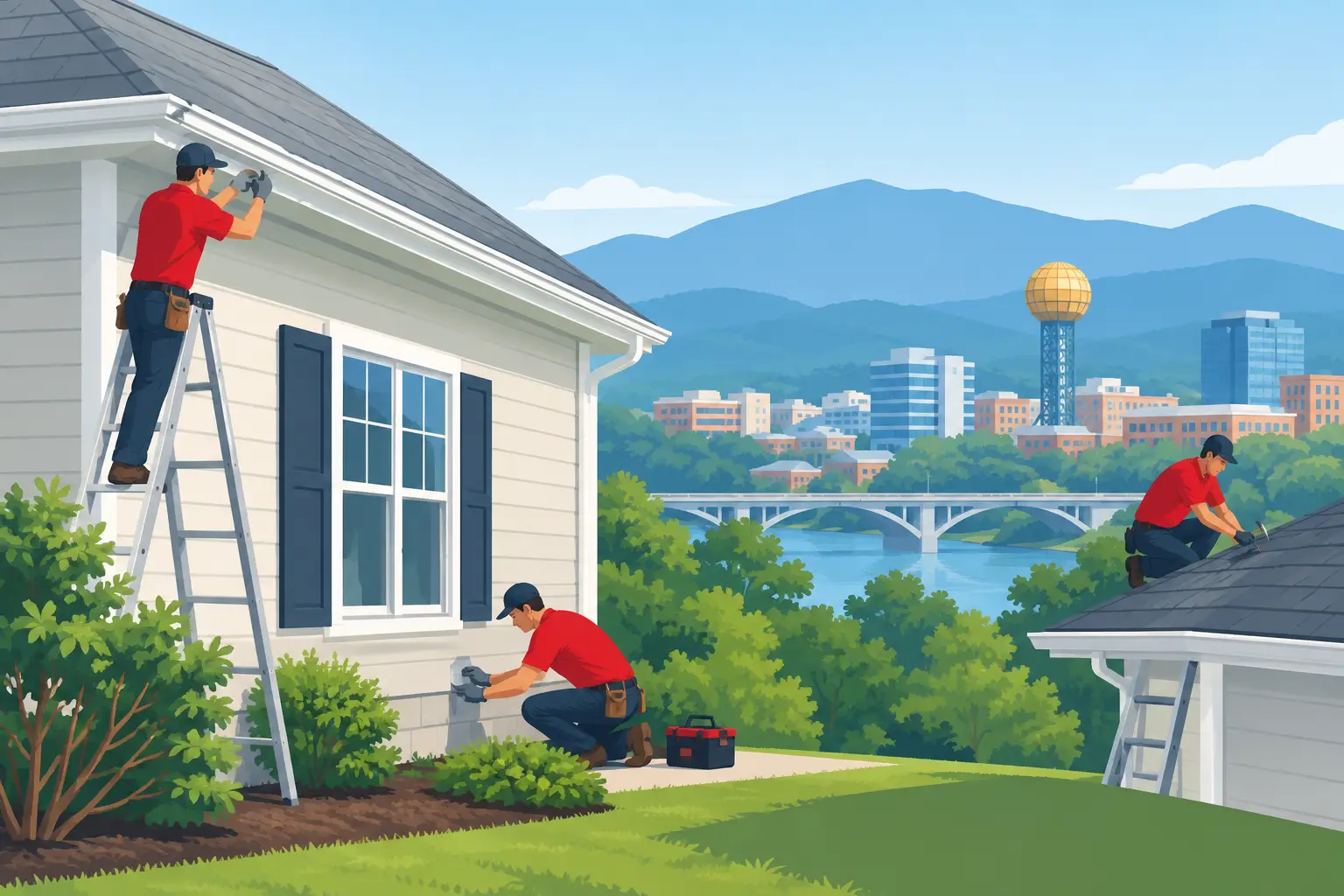
Winter rarely announces the damage it leaves behind. A small roof leak may not show up until a spring rain, a loose gutter can become obvious only when it overflows, and a hairline crack in a driveway can spread after repeated freezing and thawing. Addressing the top home repairs after winter early gives Knoxville homeowners a better chance to prevent minor issues from becoming disruptive projects later in the year.
A thoughtful spring inspection is not about finding something wrong with every part of the house. It is about paying attention to the areas that take the hardest hit from cold temperatures, wind, rain, and moisture. Start outside, work your way in, and give priority to anything that affects water management, safety, or the structure of your home.
Start With the Top Home Repairs After Winter
The most urgent repair needs usually involve water. Water can enter through a damaged roof, back up because of clogged gutters, collect against the foundation, or find a path through worn exterior caulking. Left alone, it can affect drywall, framing, flooring, and indoor air quality.
Walk around your property after a rain if possible. That is often the easiest time to see where water is going and where it should not be. Look for standing water near the foundation, overflowing gutters, wet spots on ceilings, peeling paint, or soft wood around trim and doors. These clues help you focus your repair list on the work that protects the rest of the home.
Inspect the Roof and Attic for Leaks
Your roof does not need missing shingles to have a problem. Winter winds can loosen shingles, lift flashing around vents and chimneys, and expose small gaps that allow water inside. Tree limbs rubbing on the roof can also wear away roofing material over time.
From the ground, look for uneven roof lines, visible shingle damage, debris piled in valleys, or flashing that appears loose. Avoid climbing onto a roof unless you have the proper equipment and experience. Inside, check the attic for damp insulation, dark staining, musty odors, or daylight around roof penetrations. A small attic stain is worth investigating before spring storms turn it into a ceiling repair.
Repair Gutters, Downspouts, and Drainage
Gutters are simple, but they do a major job. When leaves, twigs, and roof grit block the system, rainwater can spill over the edge and soak fascia boards, siding, landscaping, and soil next to the foundation. In East Tennessee, frequent rain makes clear drainage especially important.
Clean debris from gutters and make sure they are firmly attached. Downspouts should direct water well away from the house, not empty at the base of a wall. If water pools in one area of the yard, the answer may be as simple as an extension, regrading, or a drainage improvement. The right solution depends on the slope of the property and where the water originates.
Check fascia and soffit boards while you are there. Peeling paint, soft spots, or discoloration can signal moisture damage behind the gutters. Replacing a small damaged section early is usually far easier than dealing with rot that has spread into surrounding trim.
Check Siding, Trim, Windows, and Exterior Caulk
Exterior materials expand and contract as temperatures change. Over the winter, that movement can widen gaps around windows, doors, siding joints, and trim. Caulk that was already aging may crack or separate, creating an entry point for rain and insects.
Look closely at window and door trim, particularly on the weather-facing sides of your home. Repair loose boards, replace damaged trim, and renew failed caulk where needed. Fresh caulk should be applied to a clean, dry surface, so wait for a suitable stretch of spring weather rather than applying it during a wet day.
Wood siding and trim deserve extra attention. Probe suspicious areas gently with a screwdriver. If the wood feels soft, flakes apart, or gives easily, moisture may have caused deterioration beneath the paint. The cause matters as much as the repair. Repainting over damaged wood without correcting the water source only delays the problem.
Look for Foundation and Masonry Changes
Cold weather can make existing cracks more noticeable in concrete, brick, and mortar. Not every crack calls for alarm. Thin, stable surface cracks in a driveway or walkway are common, especially after freeze-thaw cycles. Still, they should be sealed or repaired before water gets inside and expands the damage during the next cold season.
Pay closer attention to changes that are new, growing, wide, or accompanied by water intrusion. Check foundation walls, porch steps, retaining walls, and brick mortar joints. Inside the home, watch for doors that suddenly stick, new cracks above windows, or uneven floors. Those issues do not always indicate a serious structural concern, but they are worth a professional evaluation rather than guesswork.
Test Outdoor Plumbing and Hose Connections
A hard freeze can damage outdoor faucets, hose bibs, and exposed plumbing. Sometimes the pipe does not reveal a crack until water pressure returns in spring. Before connecting a hose for the season, turn on each outdoor faucet slowly and inspect the surrounding wall, crawl space, basement, or utility area for leaks.
Also examine irrigation components if your property has them. Broken sprinkler heads, split lines, and malfunctioning valves can waste water and create soggy areas near the home. If you find a leak, shut off the water supply to that fixture when possible and arrange for the proper repair. Water moving behind a wall or under a crawl space is never a wait-and-see issue.
Repair Damaged Walkways, Decks, and Railings
Spring is a good time to make outdoor living areas safe before cookouts, visitors, and regular use return. Inspect decks for loose boards, raised fasteners, wobbly railings, and signs of rot at posts or steps. Wood that stays damp near the ground is particularly vulnerable.
Walkways, patios, and driveway edges also deserve a close look. Uneven concrete and lifted pavers create trip hazards, especially for children, guests, and older family members. Some surface repairs are straightforward, while movement caused by drainage or soil conditions may need a more complete fix. Correcting the underlying cause helps keep the same area from shifting again.
A practical exterior safety check should include these items:
- Loose handrails at steps, decks, and porches
- Damaged or missing boards on decks and stairs
- Cracked sidewalks or uneven pavers
- Failing exterior lights near entrances and pathways
- Broken screens, storm doors, or door hardware
Give Doors, Windows, and Screens a Spring Tune-Up
Doors and windows often become harder to use after a season of temperature swings and moisture. A door that rubs the frame may need hinge adjustment, hardware tightening, or a closer look at the surrounding trim. Windows that stick may have worn weatherstripping, paint buildup, or a track that needs cleaning.
Do not overlook screens. Small tears can become an open invitation for insects once windows are opened regularly. Repairing or replacing screens, adjusting storm doors, and checking locks are modest projects that make the home more comfortable and secure.
Know When a Repair Should Not Wait
Some repairs can be scheduled around your plans for spring. Others should move to the front of the list. Active leaks, loose electrical components, rotted steps, damaged railings, and water near the foundation deserve prompt attention. So do signs of mold, a sagging ceiling, or a door or window that no longer closes securely.
For homeowners who would rather not coordinate separate specialists for every small issue, a qualified handyman can be a practical first call for many exterior repairs, maintenance tasks, and improvement projects. For work involving major structural concerns, electrical systems, plumbing behind walls, or roofing at height, the right professional should assess the scope and handle the repair safely.
Smart Home Fix helps homeowners in Knoxville and nearby communities take care of the repairs that keep a house functioning well season after season. As a licensed and insured local team, we focus on clear communication, dependable workmanship, and making home maintenance easier to manage.
A spring repair list does more than improve curb appeal. It gives you a chance to stop moisture, wear, and safety concerns at the point where they are still manageable. Set aside time for a careful inspection now, and your home will be better prepared for the rain, heat, and busy months ahead.