A deck usually gives you a warning before it becomes a real problem. It may start with one board that feels soft underfoot, a crack that keeps getting wider, or a spot that holds water long after the rest of the surface dries. When that happens, a deck board replacement service is often the smartest next step – not because every aging deck needs to be rebuilt, but because damaged boards can quickly turn a usable outdoor space into a safety issue.
For many homeowners, the hardest part is knowing whether they are looking at normal wear or a repair that should not wait. Decks take a beating from sun, rain, foot traffic, grills, furniture, and years of seasonal expansion and contraction. Some problems stay cosmetic for a while. Others signal rot, structural stress, or fast-moving deterioration. The difference matters.
What a deck board replacement service actually solves
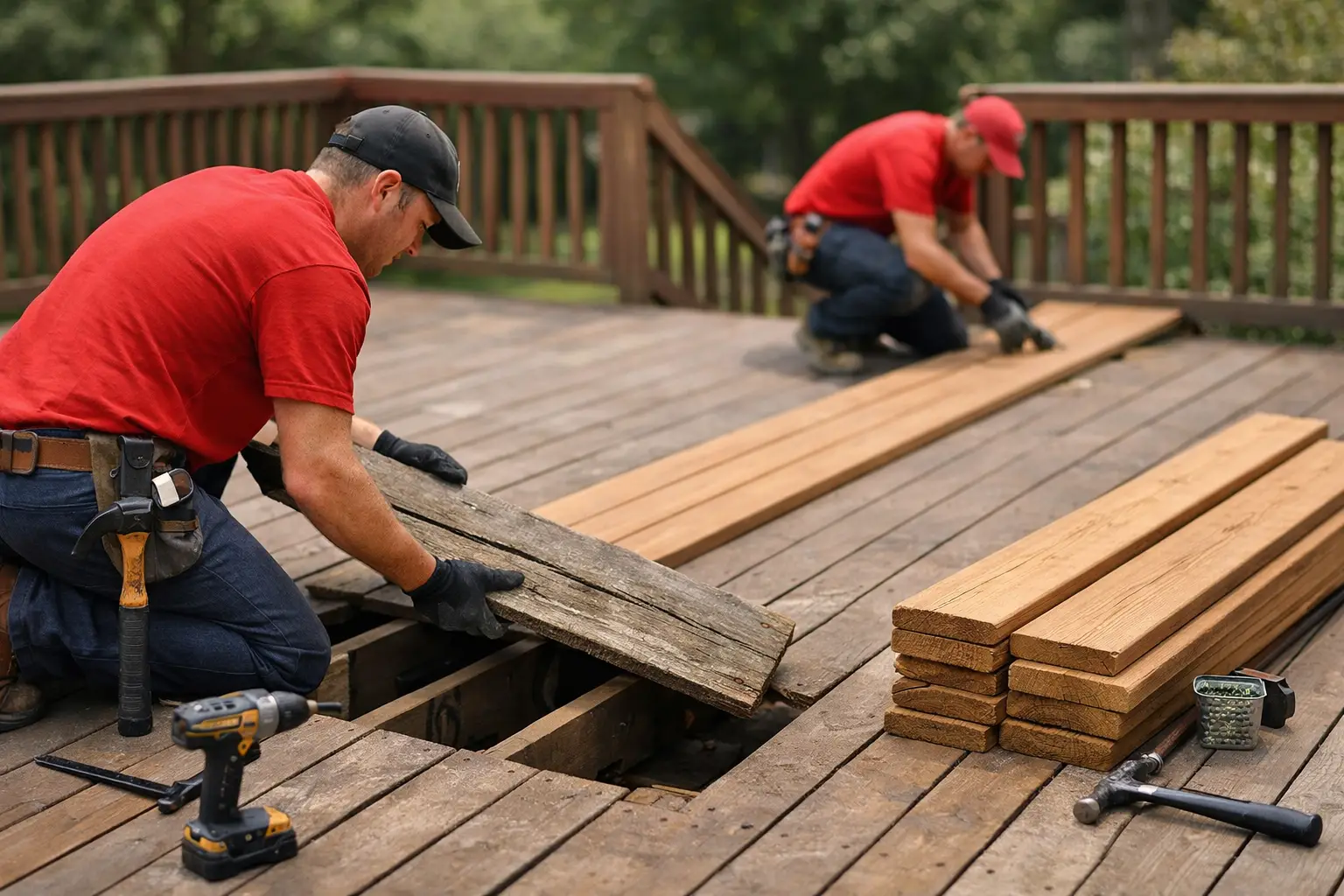
Replacing deck boards is a targeted repair. It focuses on worn, cracked, splintered, loose, rotted, or otherwise damaged decking boards while keeping the larger deck structure if that structure is still sound. That can make a lot of sense when the framing, posts, and joists remain in good condition but the walking surface has started to fail.
This kind of service is about more than appearance, although fresh boards do improve the look of the deck. The bigger issue is function. Damaged deck boards can catch a shoe, cut bare feet, wobble under weight, or allow moisture to keep working its way into the material. Left alone, one bad section often leads to neighboring boards deteriorating faster.
A professional assessment also helps uncover whether the problem stops at the boards or extends deeper. Sometimes surface damage is exactly that – surface damage. In other cases, a board that looks only slightly worn may be hiding rot near fasteners or along the underside where moisture lingers.
Signs your deck boards should not be ignored
Some deck problems are easy to spot. Others are subtle enough that homeowners put them off for another season. If your deck is showing multiple signs of wear, it is worth having it looked at sooner rather than later.
Soft spots and spongy areas
If a board feels soft, flexes too much, or seems spongy when you step on it, that is a strong sign of moisture damage or decay. Wood should have some natural give, but it should not feel weak. A soft board can fail unexpectedly, especially in high-traffic areas like stairs, landings, and entry points.
Splitting, cracking, and splintering
Not every crack means immediate replacement. Small surface checking can happen as wood ages. The concern grows when cracks deepen, run the length of the board, spread around fasteners, or create sharp splinters. At that point, the board is no longer just weathered. It is breaking down.
Loose boards or raised fasteners
If boards shift underfoot or nails and screws are backing out, the deck surface is becoming less secure. Sometimes the fix is as simple as correcting the fasteners. Sometimes the movement indicates the board itself is warped, weakened, or no longer holding securely.
Discoloration that comes with decay
Staining alone does not always mean rot. But dark patches, persistent dampness, mildew buildup, and areas that stay wet long after rainfall can point to moisture problems. When discoloration comes with softness, crumbling edges, or a musty odor, replacement is usually the safer route.
Uneven surfaces and trip hazards
A deck should feel solid and predictable to walk across. Boards that cup, twist, lift, or sink can create a trip hazard for anyone using the space. This is especially important for households with kids, older adults, or frequent guests.
Repair or full replacement? It depends on the condition below
This is where many homeowners get stuck. If several boards look rough, does that mean the whole deck has reached the end of its life? Not necessarily.
A deck board replacement service makes sense when the issues are limited mainly to the surface boards and the underlying framing is still structurally sound. In that case, replacing the damaged boards can extend the life of the deck, improve safety, and restore a cleaner look without taking on a larger project than necessary.
But there are times when board replacement is only part of the answer. If joists are rotted, ledger connections are failing, stairs are unstable, or the deck has widespread structural movement, replacing top boards alone will not solve the core problem. That is why inspection matters. A good repair plan starts with understanding what is salvageable and what is not.
For homeowners in Knoxville, where heat, humidity, and seasonal weather shifts can all affect exterior wood, localized damage can escalate faster than expected. What looks like a few worn boards at the end of summer may be a much bigger issue after another wet season.
Why professional deck board replacement matters
Deck boards may seem straightforward, but proper replacement takes more than pulling up the old material and screwing down new planks. The new boards need to be the right size, properly aligned, adequately supported, and securely fastened. Spacing matters. Board condition around the repair area matters. So does checking for hidden moisture damage before the new material goes in.
A professional also looks at how the repaired section will perform over time. If one section is trapping water, if ventilation is poor, or if fastener issues caused early failure, those conditions should be addressed during the repair. Otherwise, the same problem often returns.
There is also the question of matching. Depending on the age and material of the deck, new boards may not blend perfectly with older ones at first. That does not mean replacement is the wrong call. It simply means the repair should be planned with the overall appearance in mind, especially if multiple sections need attention.
What to expect from a deck board replacement service
The process usually begins with a close look at the deck surface and the framing beneath it, if accessible. The goal is to determine which boards are failing, whether the surrounding boards are still sound, and whether any structural concerns need to be addressed alongside the board replacement.
Once the damaged boards are removed, the framing in those areas can be checked for hidden rot, water damage, or fastening issues. This step matters. Covering compromised framing with new deck boards only delays a bigger repair.
New boards are then installed to fit the existing layout and support pattern. Depending on the deck, that may involve trimming for a clean fit, adjusting spacing, and ensuring the surface sits evenly and securely. The final result should feel stable underfoot and look consistent with the rest of the deck.
For homeowners who want reliable help without juggling multiple contractors, this is the kind of practical repair that fits well with a broad-service company like Smart Home Fix. The goal is simple: fix the problem correctly, protect the usable life of the deck, and make your life easier.
When waiting makes the repair harder
Deck issues rarely improve with time. A cracked board keeps splitting. A soft spot keeps absorbing moisture. A loose board puts more stress on nearby fasteners and boards every time someone walks across it.
The longer the damage sits, the more likely it is to spread to adjacent boards or expose deeper problems. That can also limit repair options. A deck with a few failing boards may be a straightforward service call today. After another season of weather and use, the same deck may need a much larger scope of work.
This is especially true if the damaged area is near stairs, railings, door thresholds, or high-traffic sections where people naturally put more weight and movement on the structure.
A safer deck is a better-used deck
Most homeowners do not need a perfect deck. They need one that feels safe, solid, and ready to use when the weather is good. If you find yourself avoiding a certain corner, warning guests about a loose spot, or mentally noting that one bad board every time you step outside, the deck is already telling you it needs attention.
A timely deck board replacement service can restore confidence in the space without turning a manageable repair into a bigger disruption. When the surface is sound, the whole deck becomes more inviting again – for quiet mornings, cookouts, family time, and all the normal moments that make outdoor living worth having.
If your deck has started to feel questionable underfoot, trust that instinct and have it checked. Small repairs done at the right time are often the smartest way to protect both your home and the way you use it.