A kitchen cabinet repair handyman is often the right call when your kitchen still has good bones, but the cabinets are making daily life harder. A door that will not stay closed, a drawer that catches every time, or a loose hinge can turn a simple meal into a recurring frustration. These are usually fixable problems, and addressing them early can protect the cabinets you already have.
For homeowners, cabinet repair is about more than appearance. Cabinets hold heavy dishes, support busy routines, and set the tone for the room. The right repair can restore function, improve safety, and delay the need for a larger renovation.
Common Cabinet Problems Worth Repairing
Most cabinet issues start small. Hinges gradually loosen from repeated opening and closing. Drawer slides wear out or shift out of alignment. Screws lose their grip in particleboard, especially around frequently used doors. Water from a sink leak or dishwasher can swell cabinet bases before anyone notices the full extent of the damage.
A skilled handyman can assess whether the problem is limited to hardware, alignment, or a damaged cabinet component. That distinction matters. Replacing a hinge is straightforward when the door and cabinet frame are sound. If screw holes are stripped, the mounting area may need reinforcement before new hardware is installed. Simply tightening the same loose screw may provide a temporary fix, but it rarely solves the underlying issue.
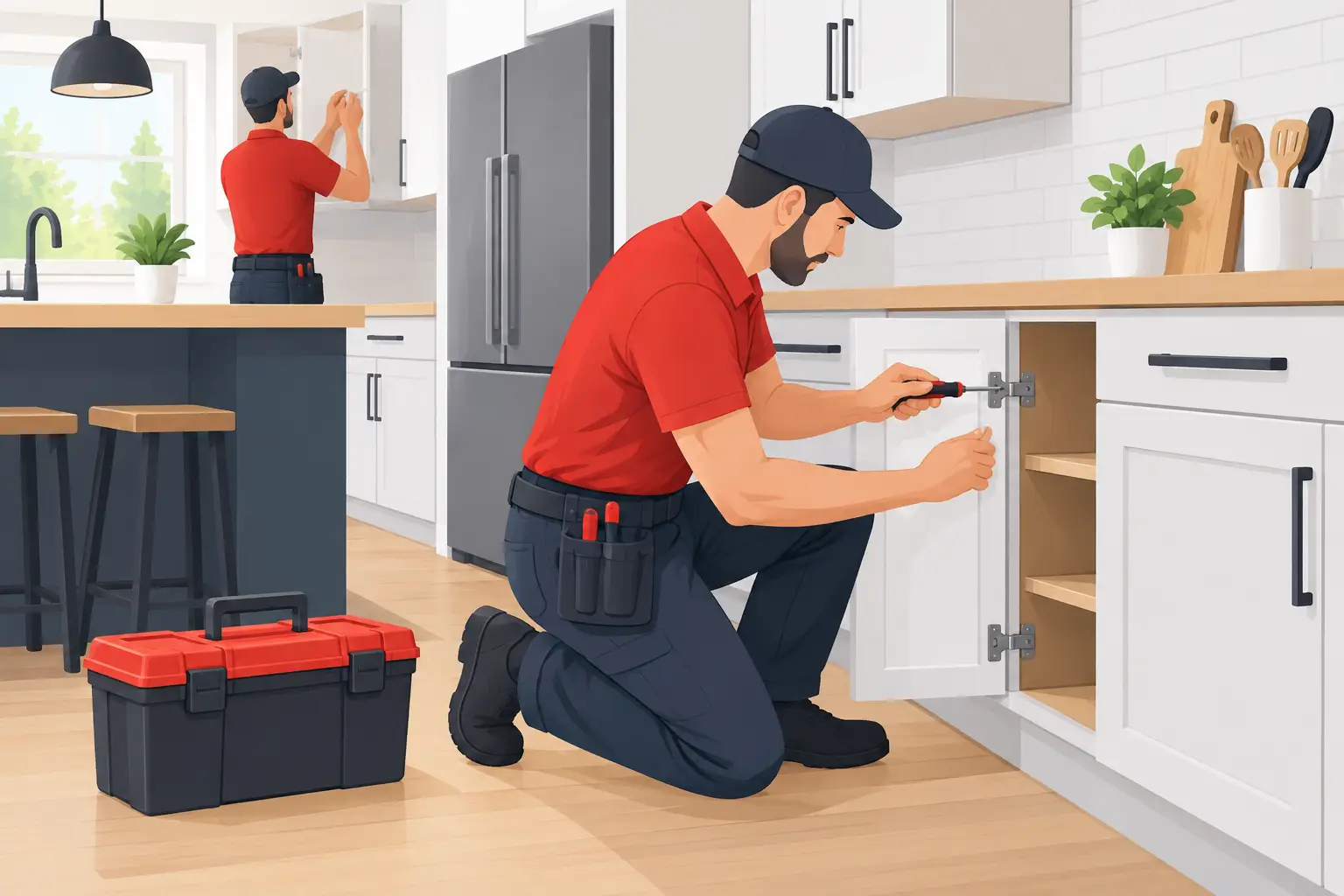
Doors that rub against each other, sit unevenly, or refuse to close often need adjustment rather than replacement. Modern concealed hinges have adjustment points that allow a door to move up, down, in, or out. Getting the reveal between doors consistent takes patience and the right approach. A small adjustment in one location can affect the way the entire cabinet run looks.
Drawers are another common trouble spot. A drawer that sticks may have debris in its track, a failed slide, a warped drawer box, or a cabinet opening that has shifted. The solution depends on the cause. Replacing slides can make a kitchen feel dramatically more functional, but the slides must be properly sized, level, and securely mounted to work as intended.
What a Kitchen Cabinet Repair Handyman Can Fix
Cabinet repair covers a wide range of practical work. It can include tightening and replacing hinges, adjusting doors, repairing loose handles and pulls, replacing worn drawer slides, and correcting drawers that no longer open smoothly. It may also involve securing loose cabinet boxes, repairing minor damage to face frames, or replacing a damaged toe kick or trim piece.
Water damage deserves particular attention. The cabinet beneath a kitchen sink is exposed to plumbing connections, cleaning supplies, and occasional spills. When moisture is caught early, a handyman may be able to repair or replace a localized section and help restore the cabinet’s stability. When water has spread into adjoining cabinets, flooring, or wall materials, the project may require a broader repair plan.
Cosmetic issues can be addressed as well, though the best approach depends on the cabinet material and finish. Minor scratches, dings, and worn areas may be touched up or repaired. Peeling laminate, deep swelling, and extensive finish failure are more complicated. In those cases, repair may improve the cabinet, but replacement of a door, drawer front, or affected section may produce a better long-term result.
Repair or Replacement: How to Make the Call
Not every damaged cabinet needs to be replaced. If the cabinet boxes are stable, the doors are in decent shape, and the problem is isolated to hardware or one damaged component, repair is usually a sensible path. It preserves a kitchen that already works for your household while resolving the issues you notice every day.
Replacement becomes more reasonable when the cabinet structure has significant water damage, multiple boxes are failing, or the layout no longer fits how you use the kitchen. Cabinets that have swollen, separated, or deteriorated across several areas may not hold repairs well. The same is true when a repair would leave you with mismatched materials or recurring issues.
There is also a middle ground. You may not need a full kitchen renovation to make a meaningful improvement. Repairing cabinet boxes, replacing damaged doors or drawer fronts, upgrading hardware, and correcting storage problems can refresh the room without changing everything at once. A professional assessment helps homeowners prioritize what needs attention now and what can wait.
Why Cabinet Repairs Need a Careful Approach
Kitchen cabinets are connected systems. A sagging door may be caused by a loose hinge, but it can also point to a cabinet box that has shifted or a mounting plate pulling away. A drawer that drags might have a damaged slide, but it may also indicate that the cabinet is no longer square. Treating only the visible symptom can lead to repeat problems.
Cabinet materials also affect the repair method. Solid wood, plywood, medium-density fiberboard, and particleboard each respond differently to screws, moisture, and patching materials. A repair that works well in a hardwood face frame may not be reliable in a water-damaged particleboard side panel. This is where experience matters: the goal is not just to make the cabinet look better for a week, but to restore dependable everyday use.
Hardware selection matters, too. Hinges and drawer slides come in different styles, sizes, weight ratings, and mounting configurations. Choosing a close-looking replacement is not always enough. The new hardware needs to fit the existing cabinet and door design, operate correctly, and hold up to normal kitchen use.
Signs You Should Schedule a Repair Soon
Some cabinet issues are mostly inconvenient. Others can create further damage if they are left alone. A cabinet door that is loose but still functioning can often wait briefly. A sink base that feels soft, smells musty, or shows dark staining should be checked sooner, especially if an active plumbing leak may be involved.
Pay attention when doors pull away from their hinges, drawers drop when extended, or cabinets move when you open them. These are signs that fasteners, mounting surfaces, or cabinet connections may be failing. Heavy dishes and cookware can make the problem worse over time.
You should also take action when a repair affects safe use of the kitchen. Loose upper cabinet doors, sharp broken edges, unstable shelves, and drawers that unexpectedly fall out are more than annoyances. Prompt repair helps keep a busy household safer and prevents a manageable issue from becoming a larger project.
Preparing for a Cabinet Repair Visit
A little preparation helps the repair go more smoothly. Clear items from the cabinet, drawer, or sink area being repaired so the work area is accessible. If the issue is near plumbing, remove stored cleaners and let the professional know about any recent leaks, drips, or water you have noticed.
It is also helpful to identify when the problem began and whether it has changed. For example, a drawer that has always been stiff may need a different solution than one that suddenly stopped closing after a heavy item was stored inside. Photos of intermittent problems can be useful if a door only sags at certain times or a leak appears after the dishwasher runs.
If you are considering additional updates, such as new pulls, soft-close hardware, or minor trim work, mention them during the visit. Combining compatible repairs can make the kitchen more functional while limiting disruption to your household.
Dependable Help for a Hardworking Kitchen
Cabinet repairs are easy to put off because the kitchen still looks mostly fine. Yet the small issues are often the ones you feel most often: the drawer that needs a hard tug, the door that will not line up, the cabinet under the sink that never feels dry. Smart Home Fix provides licensed and insured handyman service for homeowners who want those problems handled professionally and efficiently.
A well-repaired cabinet should fade into the background. Doors should close properly, drawers should glide, and storage should feel secure. If something in your kitchen is not working the way it should, taking care of it now can make every ordinary day in the room a little easier.