
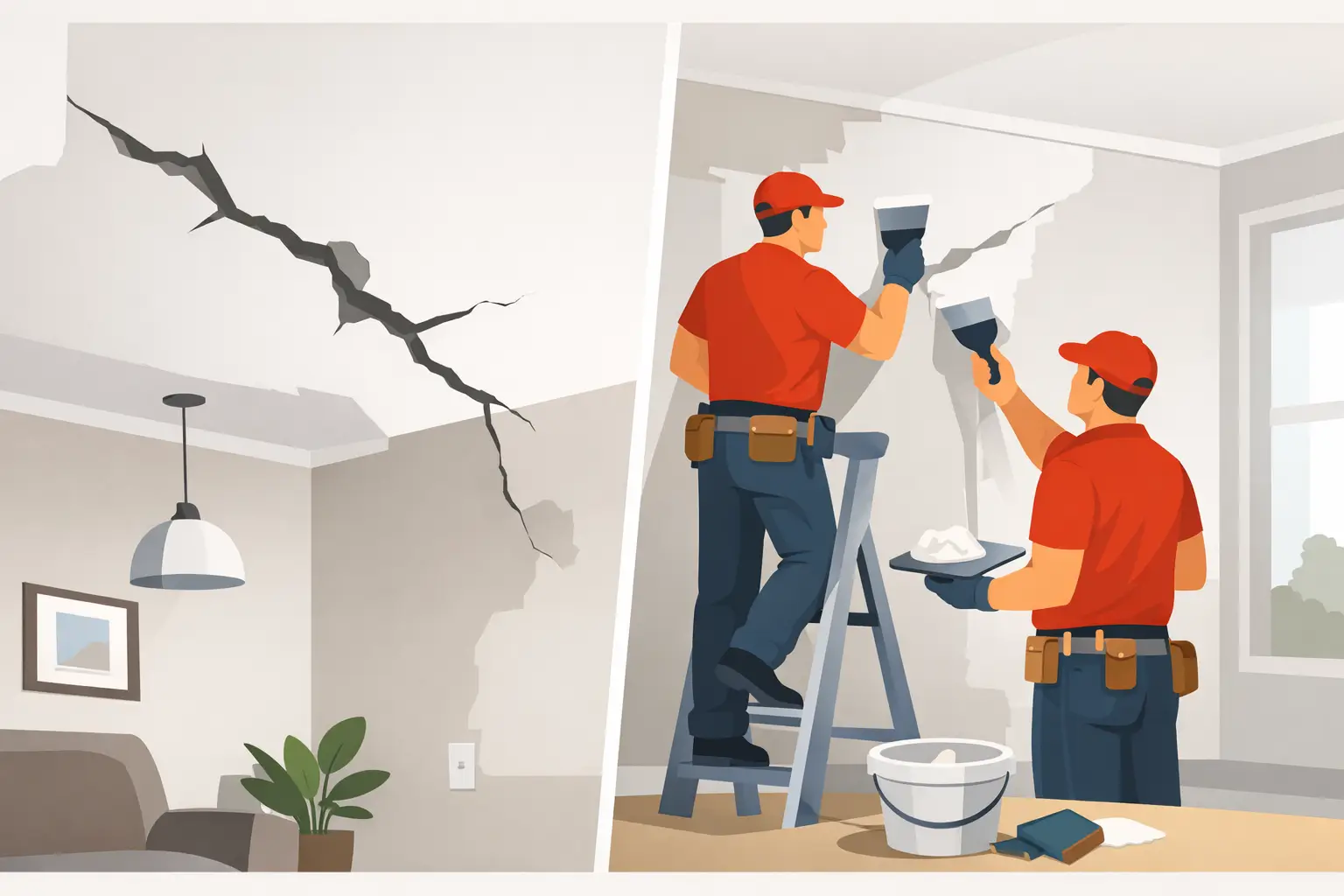
A thin line across a wall can be easy to ignore until it catches the afternoon light or reopens after you paint it. Homeowners often ask why drywall cracks, especially when the home is otherwise in good shape. The answer is usually movement – and while many cracks are cosmetic, their shape, location, and timing can tell you when a closer look is needed.
Drywall is rigid. Your home is not. Wood framing expands and contracts, foundations settle, humidity changes, and doors slam. Over time, those small forces can show up at the surface as cracks in drywall joints, corners, ceilings, and around windows or doors.
Why Drywall Cracks in Homes
Most drywall cracks develop where two building materials or two sections of framing meet. The drywall itself may be sound, but the joint compound and tape covering its seams are less flexible than the movement happening behind them.
Normal settling and seasonal movement
Newer homes commonly develop small cracks as the framing dries and the house settles into its first few years. Even older homes move slightly with seasonal weather. In East Tennessee, humid summers and cooler, drier winters can cause wood framing to expand and contract enough to stress a finished drywall seam.
A narrow, straight crack along a wall or ceiling joint is often related to this ordinary movement. It may be frustrating, but it is not automatically a structural concern. The right repair should account for why the crack formed rather than simply covering it with more compound.
Temperature and humidity changes
Indoor humidity matters more than many homeowners realize. When a house becomes very dry or very humid, wood framing can shift and drywall materials can expand or contract at different rates. This is particularly common near exterior walls, attics, bathrooms, laundry rooms, and rooms with inconsistent heating and cooling.
If cracks appear seasonally, keeping indoor humidity reasonably consistent can reduce repeated movement. Exhaust fans that vent properly, prompt repairs for plumbing leaks, and dependable HVAC performance all help protect finished walls.
Poorly finished seams or corners
A crack that follows a perfectly straight line is often a failed drywall joint. It can happen when tape did not bond well, too little joint compound was used, or the joint was not prepared correctly before finishing. Corners are also vulnerable because they receive bumps, vibration, and minor framing movement.
This type of crack is usually repairable without opening the whole wall. However, a lasting result generally requires removing loose material, securing the area if needed, retaping the joint, applying thin coats of compound, sanding carefully, and repainting. Filling the line alone may look fine briefly, then crack again.
Foundation or structural movement
Not every crack points to a serious issue, but some patterns deserve more attention. Foundation settling, shifting soil, water intrusion, or framing problems can create cracks that continue to widen or spread. These are more likely to appear with other signs, such as doors that suddenly stick, windows that no longer operate smoothly, sloping floors, or gaps around trim.
A structural concern is less about one small crack and more about a pattern of changes throughout the home. If a crack is new, wide, diagonal, or growing, document it with photos and consider having the underlying cause evaluated before scheduling cosmetic drywall repair.
Roof, plumbing, or water damage
Water changes drywall quickly. A roof leak, plumbing leak, overflowing fixture, or condensation problem can soften drywall, weaken joint compound, and make tape pull loose. Cracks caused by moisture may be paired with staining, bubbling paint, a soft spot, or a musty odor.
In this situation, repairing the visible crack first is the wrong order of operations. The moisture source must be found and corrected, wet materials need time to dry, and damaged drywall may need replacement. Otherwise, the same problem can return behind a freshly painted wall.
Which Drywall Cracks Are Usually Cosmetic?
Hairline cracks are often cosmetic when they are narrow, stable, and limited to a drywall seam or the transition between a wall and ceiling. Small cracks above doors and windows are also common because framing shifts slightly around openings.
A crack in an inside corner can be a normal response to minor movement. So can a fine line where a ceiling meets a wall, particularly in a room below an attic. These repairs still benefit from proper prep, but they rarely mean the house is unsafe.
The key word is stable. Mark the end of a crack lightly with pencil, take a dated photo, and check it over the next several months. If it remains unchanged, it is more likely a finish issue. If it extends, widens, or appears in multiple new areas, the home may be telling you something more.
When a Drywall Crack Needs Prompt Attention
Call for a professional assessment sooner when the crack is wider than a hairline, runs diagonally from a window or door corner, or appears alongside visible movement in the building. A crack that is wider at one end than the other may also indicate more than a surface-level seam failure.
Pay attention if you notice several of the following conditions at once:
- Cracks that grow noticeably over weeks or months
- Doors or windows that begin sticking without another clear explanation
- Cracks paired with sagging ceilings, bowed walls, or separated trim
- Water stains, soft drywall, peeling paint, or a recurring damp smell
- New cracks after storm damage, a plumbing leak, or major nearby excavation
These signs do not always mean there is a major structural problem. They do mean a cosmetic repair should wait until the source of movement or moisture is understood. Repairing drywall before addressing the cause can hide useful evidence and lead to repeat work.
How a Proper Drywall Crack Repair Holds Up
The best repair depends on the crack and what caused it. For a minor seam crack, a skilled handyman may remove loose compound and tape, reinforce the joint with fresh tape, and build up several thin layers of joint compound. Once the repair is sanded smooth, the surface is primed and painted so the sheen and texture blend with the surrounding wall.
For recurring cracks at the wall-to-ceiling line, a flexible paintable caulk may work better than a rigid compound in some situations. It allows a small amount of movement without reopening immediately. That is not the right solution for every crack, though. A failed taped seam or damaged drywall panel still needs a more complete repair.
Repairs around a door, window, or damaged corner may require new corner bead, patch material, or reinforcement behind the drywall. Water-damaged areas can require removal and replacement rather than patching. The trade-off is simple: a faster surface fix may be suitable for a very minor stable crack, while a more thorough repair takes additional preparation but is far more likely to stay finished.
Matching texture is another part of the job. Smooth walls are one challenge, but orange peel, knockdown, and hand-applied textures need careful blending before paint. A patch can be structurally sound and still stand out if the texture or paint sheen is mismatched.
Preventing Repeat Cracks Where Possible
You cannot stop a home from settling and responding to the seasons, but you can reduce unnecessary stress on its finishes. Keep gutters and downspouts moving water away from the foundation, address roof and plumbing leaks promptly, and avoid dramatic swings in indoor humidity when possible.
Watch for signs of moisture in bathrooms, kitchens, laundry areas, and ceilings below plumbing. Use exhaust fans during showers and cooking, and make sure they vent outside rather than into an attic. If you are renovating, proper framing, drywall fastening, and joint finishing make a meaningful difference in how well walls hold up over time.
For homeowners in Knoxville and nearby communities, Smart Home Fix provides dependable help with drywall repairs, water-damage-related repairs after the source is corrected, and the finishing work needed to make walls look right again. As a licensed and insured local team, we focus on identifying what the wall is showing before recommending the right repair.
A drywall crack does not have to become a bigger worry. Look at the pattern, watch for movement or moisture, and repair the cause as carefully as the surface. A well-done fix should give you more than a smooth wall – it should give you confidence that the repair will last.