A shower that feels fine on an ordinary morning can become a hazard when the floor is wet, mobility changes, or someone needs a little extra stability. The best shower safety upgrades do more than make a bathroom look updated. They help homeowners move confidently through a daily routine without relying on slippery towel bars, loose shower doors, or improvised solutions.
For Knoxville-area homeowners, shower safety improvements can be especially valuable when planning to age in place, helping a parent stay independent, or making a family bathroom more comfortable for everyone. The right changes depend on the person using the space, the bathroom layout, and whether you need a few targeted improvements or a more complete shower renovation.
Start With the Real Source of Risk
Many shower falls are not caused by one dramatic problem. They happen when several small issues come together: smooth tile, poor lighting, nowhere secure to hold on, and a high tub wall that requires an awkward step. Before choosing upgrades, look at how the shower is actually used.
Notice where someone puts a hand while stepping in or out. Consider whether they have to twist to reach controls, bend to retrieve toiletries, or balance on one foot while drying off. These details point to the improvements that will make the biggest difference.
A safer shower should support natural movement. It should not force a person to reach farther, step higher, or use a fixture that was never designed to carry body weight.
Best Shower Safety Upgrades to Prioritize
Professionally anchored grab bars
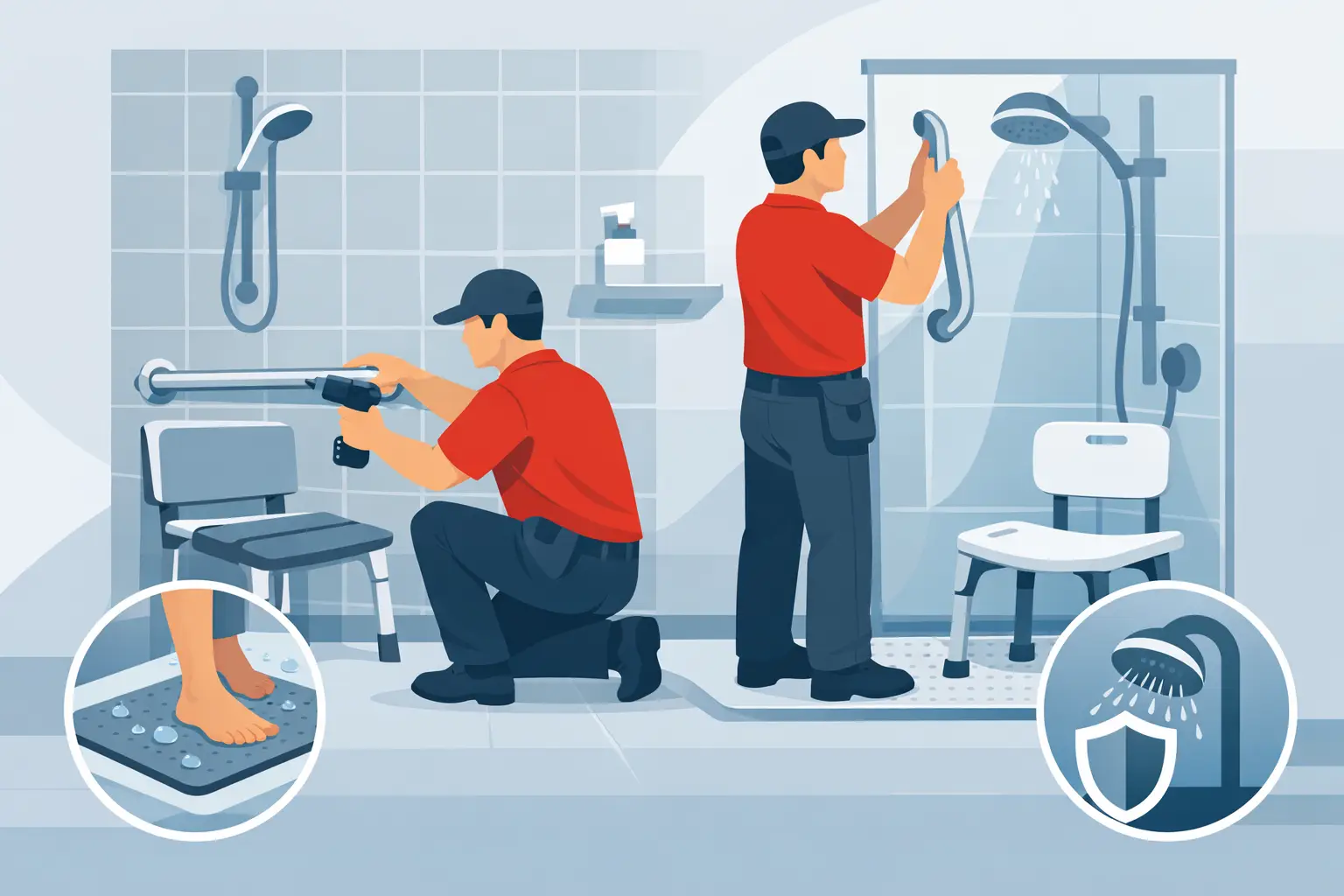
Grab bars are one of the most effective upgrades because they offer support exactly where it is needed. The key word is anchored. A grab bar must be secured to proper wall framing or installed with an approved mounting system designed for the wall structure. Attaching one only to drywall or using a suction-style handle is not a dependable safety solution.
The most useful locations are typically at the shower entry, near the controls, and along the wall where a person stands or turns. Horizontal bars can help with balance and sitting or standing. Angled bars can provide a natural grip during entry and exit. In some layouts, a vertical bar near the doorway is the better choice.
Style has improved considerably. Modern grab bars are available in finishes that coordinate with faucets and shower hardware, so safety does not have to make the bathroom feel institutional. Proper placement matters more than appearance, though, and a professional assessment can prevent a bar from ending up where it is difficult to reach.
Slip-resistant shower flooring
Water, soap residue, and smooth flooring are a risky combination. Slip-resistant surfaces provide better footing without changing how the shower is used. For an existing tile shower, this may mean selecting a suitable non-slip treatment or replacing a slick floor with tile that has more texture and smaller grout lines.
For a shower renovation, textured shower pans are a practical option. They are easier to clean than many people expect and can provide reliable traction under bare feet. Avoid relying on a loose bath mat inside the shower as the main solution. Mats can shift, curl at the edges, trap moisture, and create another trip hazard if they are not properly secured.
Outside the shower, use a stable, non-skid bath mat with a low profile. It should lie flat and stay put when someone steps onto it with wet feet.
A low-threshold or curbless entry
Stepping over a tall tub wall or shower curb is one of the most difficult parts of shower use for many people. A low-threshold shower reduces that step, while a curbless shower creates a nearly level transition from the bathroom floor into the shower.
A curbless design can be an excellent long-term accessibility upgrade, particularly for homeowners planning to stay in their homes. It is also convenient for anyone who uses a walker or may eventually need a shower chair. However, this option requires careful planning. Proper waterproofing, floor slope, and drainage are essential to keep water where it belongs.
A low-threshold shower is often a strong middle ground. It reduces the entry height without requiring the same level of structural modification as a fully curbless design. The right choice depends on the existing bathroom floor, the shower location, and the level of access needed now and in the future.
A sturdy shower seat or bench
A shower seat gives users a place to rest while bathing, shaving, or washing their feet. It can reduce fatigue and eliminate the need to balance on one leg. Built-in benches are a clean, durable choice during a shower remodel, especially when they are placed where the water reaches them without making the shower feel cramped.
For existing showers, a properly fitted wall-mounted folding seat may be a better option. It offers support when needed and folds away to preserve standing room. Freestanding shower chairs can work well as a temporary or flexible solution, but they should have non-slip feet, be sized correctly for the shower, and not block the entrance or drain.
Not every household needs a seat immediately. But if a shower renovation is already planned, adding blocking inside the walls for a future seat is a smart, low-disruption step.
Handheld showerhead and reachable controls
A handheld showerhead makes bathing easier from either a standing or seated position. It also simplifies rinsing the shower walls and helps caregivers assist someone without struggling around a fixed showerhead. Choose a model with a long enough hose to be useful, but not so long that it creates clutter underfoot.
Controls should be easy to reach from the entrance or seat area, not located where a person must stand directly under cold water before adjusting them. Lever-style handles are generally easier to operate than small round knobs, particularly for people with arthritis or limited hand strength.
Anti-scald valves are another worthwhile safety feature. They help control sudden temperature changes that can occur when water is used elsewhere in the home. This upgrade is particularly helpful for households with children, older adults, and anyone with reduced sensitivity to heat.
Better lighting and a clearer shower enclosure
Poor visibility makes wet surfaces more dangerous. Bright, well-placed lighting around the vanity and shower entry helps users see the floor, controls, and threshold clearly. If a recessed shower light is added, it should be rated for wet locations and installed correctly.
A clear glass enclosure can make a compact bathroom feel more open, but it is not always the safest choice for every household. Some people prefer a shower curtain because it is easier to move around and less likely to create a hard edge at the entry. If glass is used, choose properly installed safety glass and consider door hardware that is easy to grip.
The goal is not to follow a single design trend. It is to create an entry and enclosure that are easy to use every day.
Do Not Mistake Convenience Items for Safety Features
Some bathroom accessories look supportive but should never be used as weight-bearing equipment. Towel bars, glass door handles, soap dishes, and standard decorative shelves are not designed to catch a person during a slip. Even a vanity countertop can be too far away or too unstable as a support point during an unexpected loss of balance.
Suction grab handles may be useful as a reminder of where to place a hand, but they should not be trusted to support body weight. Adhesive strips and temporary mats can help with traction in limited situations, yet they do not replace an anchored grab bar or a properly slip-resistant surface.
A dependable safety upgrade is built into the room, secured correctly, and suited to the person using it.
Plan for Today Without Limiting Tomorrow
The most successful shower safety projects balance immediate needs with future flexibility. A homeowner may only need a grab bar and better traction today, while another may benefit from a low-threshold shower and folding seat. There is no reason to install every accessibility feature at once if the space does not require it.
Still, planning ahead during a renovation can save disruption later. Adding wall blocking for future grab bars, selecting a wider shower opening, and choosing controls that are easy to operate are practical decisions that preserve options. These choices also make the bathroom more comfortable for guests, recovering family members, and anyone whose needs change over time.
Installation quality is central to safety. Waterproofing, secure mounting, drainage, and the condition of the surrounding walls all affect whether an upgrade performs as intended. Smart Home Fix brings licensed and insured, professional workmanship to shower improvements that make daily life easier without sacrificing the look of your home.
A safer shower does not need to feel clinical or overbuilt. Start with the moment that feels least secure – stepping over the threshold, reaching for support, or standing on a wet surface – and improve that part first. Small, well-planned changes can make the room feel more confident every single day.