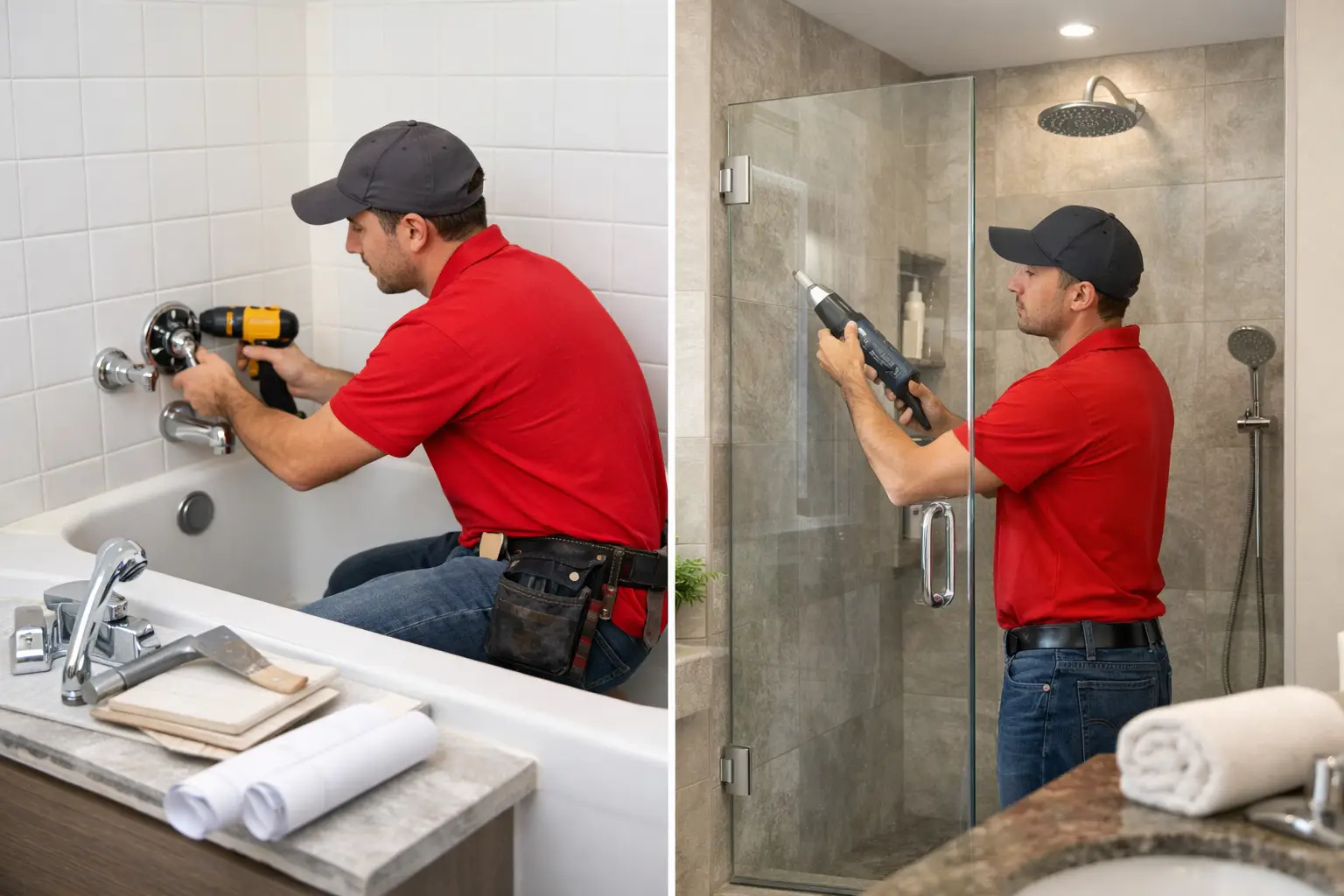
If your bathtub mostly collects dust, laundry, or kids’ bath toys you no longer need, a shower-only layout may be the smarter use of the space. This tub shower conversion comparison is for homeowners who want a bathroom that works better day to day, without guessing which setup will hold up, clean easily, and fit the way their household actually lives.
Why a tub-to-shower change makes sense
A bathtub can be useful, but it is not always the best use of a bathroom footprint. Many homeowners reach a point where stepping over a tub wall feels inconvenient, the enclosure is hard to clean, or the room simply does not function as well as it could. In those cases, converting a tub into a shower is less about trends and more about making the space safer, easier to maintain, and more comfortable to use.
That said, removing a tub is not automatically the right call for every home. If this is the only bathtub in the house, resale and family needs may matter. Households with small children often want at least one tub somewhere in the home. The best choice depends on how long you plan to stay, who uses the bathroom, and what problem you are really trying to solve.
Tub shower conversion comparison: what actually matters
When homeowners compare conversion options, they often start with appearance. That matters, but daily function matters more. A good tub shower conversion comparison should weigh access, cleaning, durability, water control, and how much disruption the project is likely to cause.
The biggest practical difference is the entry. A standard tub has a tall sidewall that can become harder to step over with age, injury, or mobility concerns. A shower conversion typically lowers that threshold significantly, making the bathroom easier to use. If accessibility is a priority, this can be the deciding factor.
The second major factor is maintenance. Tubs with old wall surrounds, worn caulk, or awkward corners can be frustrating to keep clean. A well-built shower with the right wall material and fewer joints usually cuts down on scrubbing and long-term upkeep. That does not mean every shower is low maintenance by default. The materials and design choices make a real difference.
Comparing the most common conversion types
Prefabricated shower systems
A prefabricated shower system is one of the most straightforward ways to replace a tub. These units are built from manufactured wall panels and a shower base designed to fit together cleanly. For many homeowners, the appeal is speed, predictability, and a finished look without a long construction timeline.
In a tub shower conversion comparison, prefab systems tend to score well for efficiency and easy maintenance. They usually have fewer grout lines, which means fewer places for mold and soap scum to build up. They also work well when the goal is a practical upgrade rather than a highly customized design.
The trade-off is flexibility. You may have fewer choices in layout, shelving placement, and overall style compared with a custom-built shower. If your bathroom has unusual dimensions or you want a very specific look, prefab may feel limiting.
Custom tiled showers
A custom tiled shower offers the most design freedom. It can be built around your bathroom’s exact dimensions and tailored with niches, benches, specific tile patterns, and upgraded finishes. For homeowners focused on aesthetics, this option often creates the most polished and personalized result.
But custom tile requires more attention to craftsmanship. Waterproofing has to be done correctly behind the finished surface, not just at the visible layer. Tile also introduces more joints and grout, which means more cleaning over time unless the design is carefully planned.
In a practical sense, custom tile is best when you want the bathroom to feel intentionally upgraded rather than simply converted. It is less ideal if your top priority is minimizing maintenance and keeping the project as simple as possible.
Low-threshold and accessible showers
Some conversions are driven by mobility and safety rather than style. A low-threshold or walk-in shower reduces the step-in height and can be paired with grab bars, built-in seating, handheld showerheads, and slip-resistant flooring. For older homeowners or families planning ahead, this type of conversion can make the bathroom much easier to use without sacrificing a clean, modern appearance.
In a tub shower conversion comparison, accessible showers stand out for comfort and long-term usability. They are especially valuable for aging in place. The main consideration is making sure the shower is designed well enough to control water and maintain a comfortable layout. A more open entry can be helpful, but it also needs the right slope, drain placement, and enclosure strategy.
Materials change the long-term experience
A conversion can look great on day one and still become a headache later if the materials are not chosen wisely. Wall surrounds, tile, grout, shower pans, hardware, and doors all affect how the space performs.
Acrylic and solid surface wall systems are often appealing because they are smooth, simple to clean, and less prone to mildew buildup than grout-heavy installations. Tile can offer a premium look, but small mosaic patterns or heavily textured surfaces may require more maintenance than homeowners expect. Glass doors can make the room feel larger, yet they also show water spots quickly if the bathroom gets heavy use.
This is where a smart comparison matters. The best material is not always the one that looks best in a showroom. It is the one that fits your household’s routine. A busy family may prefer surfaces that wipe down quickly. A guest bath may allow for more decorative choices because it sees less daily wear.
Layout and storage deserve more attention
Many tub areas have poor storage, awkward showerhead placement, or wall space that is not being used well. A conversion is the right time to improve those details. Built-in niches, corner shelves, better valve placement, and a more comfortable showerhead height can make the bathroom feel noticeably better every single day.
This is especially true in smaller homes, where every inch matters. A shower that is easier to enter but has nowhere to put soap, shampoo, or razors is only half improved. Good planning turns a basic replacement into a more functional bathroom.
Will it affect home value?
Homeowners often ask whether removing a tub will hurt resale. The honest answer is that it depends. If the house still has at least one bathtub elsewhere, many buyers will not see a problem. In fact, a clean, modern shower can be a selling point, especially in a primary bathroom.
If you are removing the only tub in the home, the decision deserves more caution. Some buyers want that option for children or general flexibility. If your goal is to stay in the home for years and make daily life easier, that may still be the right move. But it is worth thinking through before committing.
In Knoxville-area homes, where layouts vary widely from older ranch homes to newer family properties, there is no single rule that applies to every bathroom. The best decision balances current use with future practicality.
What the installation process can uncover
A tub-to-shower project may seem simple from the outside, but bathrooms often hide issues behind the walls. Water damage, outdated plumbing, poor ventilation, and framing problems can all show up once the old tub comes out. That is one reason homeowners often benefit from working with licensed and insured professionals who can handle more than just the visible finish work.
A reliable installer will evaluate the surrounding area, confirm that waterproofing is done correctly, and make sure the finished shower is not just attractive but built to last. That matters far more than getting a fast cosmetic update.
For homeowners who want one dependable team to handle both the practical repair side and the finished improvement work, that broad-service approach can make the process much easier. It is the kind of work Smart Home Fix is built around.
How to choose the right option for your home
The simplest way to decide is to start with the real reason you want the conversion. If you want easier cleaning, lean toward low-maintenance wall systems and straightforward layouts. If you want better accessibility, focus on entry height, grab bar support, and slip resistance. If the bathroom is a long-term upgrade to a primary suite, custom features may be worth the added complexity.
It also helps to think beyond the shower itself. Consider who uses the bathroom, how often it gets used, and whether the room needs to serve changing needs over time. A good conversion should not just solve one frustration. It should make the whole bathroom work better.
The smartest projects usually are not the flashiest ones. They are the ones that fit the household, hold up well, and remove a daily annoyance without creating a new one. If your tub is no longer serving you, a thoughtfully planned shower conversion can make the room safer, simpler, and easier to live with for years to come.
A better bathroom does not need to be complicated. It just needs to be built around how you actually live.