A small draft at the front door can make a living room feel uncomfortable long before the thermostat says anything is wrong. In East Tennessee, changing temperatures, humid summers, wind-driven rain, and winter cold can expose weak spots around doors and windows. This weatherproofing doors and windows guide helps homeowners identify those gaps, choose the right repair, and avoid quick fixes that fail after one season.
Weatherproofing is not only about comfort. Proper seals can reduce unnecessary strain on heating and cooling equipment, keep rain away from vulnerable trim, and limit the dust, pollen, and insects that find their way indoors. The best approach is to inspect first, address the actual source of the problem, and use materials suited to the location.
Start With a Careful Draft and Moisture Check
Before buying weatherstripping, look for clues that tell you where air or water is getting through. Stand near exterior doors and windows on a windy day. You may feel moving air around the edges, especially at the latch side of a door, the bottom sweep, or the meeting rails of older double-hung windows.
A visual check matters just as much. Look for daylight around a closed door, cracked caulk at exterior trim, loose storm windows, peeling paint, staining on interior drywall, or soft wood at the sill. Water marks and swollen trim call for more attention than a simple draft. They can point to failing exterior caulk, poor flashing, a damaged sill, or drainage issues around the opening.
For a quick test, hold a thin piece of tissue near the suspected gap while the door or window is closed. Movement can reveal an air leak. Avoid using an open flame for this job. It is unnecessary and can create a safety concern near curtains, insulation, or household cleaners.
Do not overlook how the door or window operates. A door that drags across the threshold, needs to be pushed hard to latch, or has a visible uneven gap may be out of alignment. A window that will not lock tightly may need hardware adjustment before new seals can do their job.
Weatherproofing Doors and Windows Guide: Know What Needs Sealing
Not every gap should be treated with the same material. Doors have moving parts and need flexible seals that hold up to repeated use. Windows may need interior air sealing, exterior water protection, or both. Using the wrong product can trap moisture, interfere with operation, or create a repair that looks good briefly but does not last.
Exterior doors
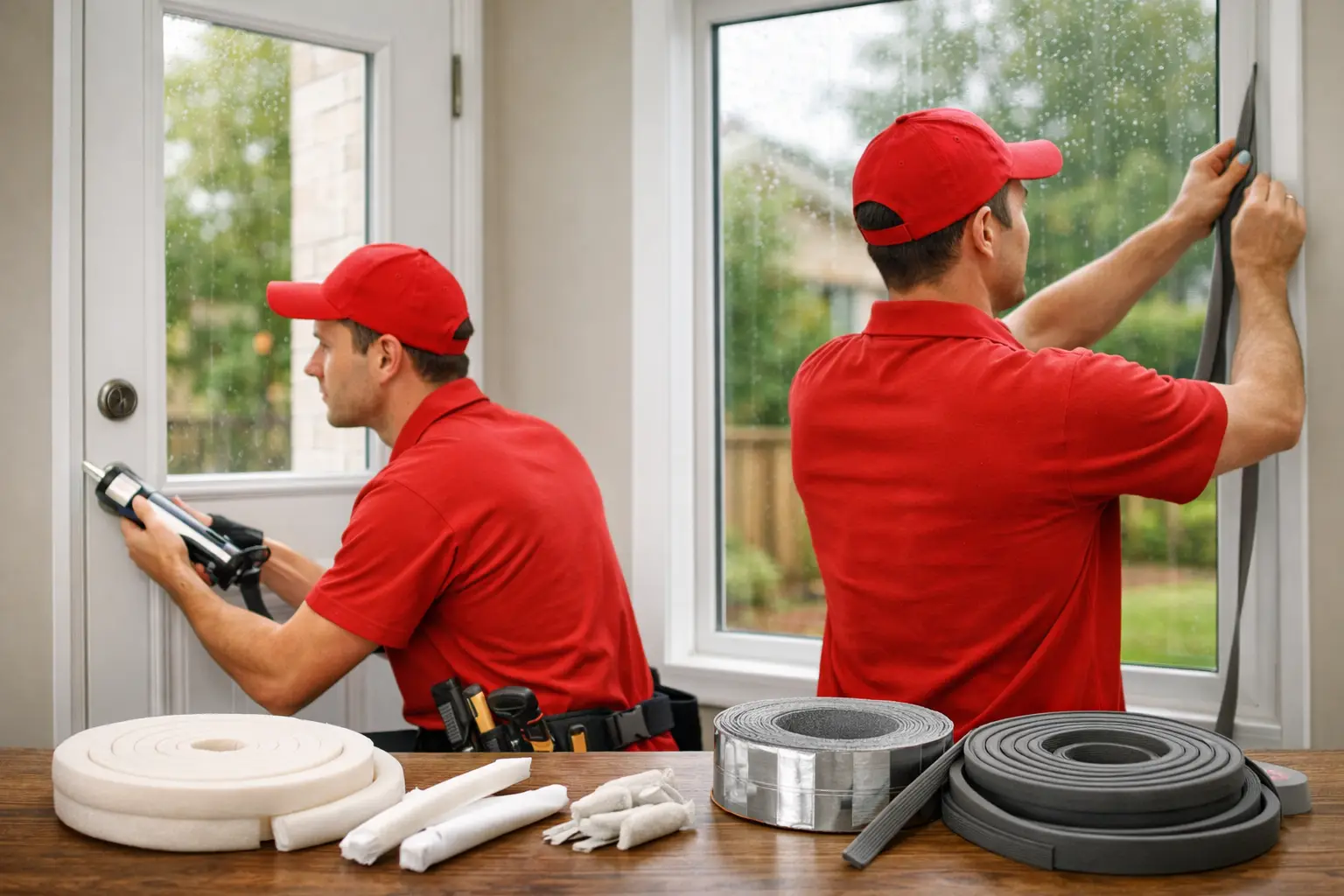
Most exterior doors need attention in three places: the perimeter of the door slab, the threshold, and the gap beneath the door. Adhesive-backed foam weatherstripping can work for a light-duty repair, but it tends to compress and wear faster in busy entryways. For a more durable result, quality compression weatherstripping or kerf-in seals are often better choices when the door frame is compatible.
The bottom of the door needs a sweep or bottom seal. A worn sweep is one of the most common reasons homeowners feel cold air at their feet. The replacement should make even contact with the threshold without dragging excessively. If the sweep is tight on one side and leaves a gap on the other, the issue may be the door alignment rather than the sweep itself.
The threshold also deserves a close look. Many adjustable thresholds can be raised slightly to improve contact with the bottom seal. Make small adjustments and test the door after each one. Raising it too far can make the door difficult to close and place extra stress on hinges and latches.
Windows
For operable windows, begin by checking locks, tracks, and sashes. A properly engaged lock often pulls the sashes together and improves the seal. Clean debris from tracks and make sure drainage channels are open, particularly on sliding windows.
Interior rope caulk or removable sealant can be useful for a seasonal draft around windows that do not need to open often. It is a practical option for older windows, but it should be removed before warm weather if the window needs ventilation. Shrink-film window kits can also reduce drafts during winter, though they are a temporary measure rather than a repair for failed caulk or rotted trim.
Outside, inspect the caulk where window trim meets siding or masonry. Cracked, missing, or separated caulk can allow water behind the trim. Remove loose material, make sure the surface is clean and dry, and use an exterior-grade sealant designed for the materials being joined. Caulk is not a solution for large holes, damaged wood, or gaps caused by structural movement. Those conditions need repair before sealing.
Fix the Cause Before Covering the Symptom
Weatherproofing works best when the opening is sound. It is tempting to add thicker weatherstripping over a large gap, but that can prevent a door from closing correctly without resolving why the gap developed.
Loose hinges are a common example. Over time, hinge screws can loosen or wear out the wood in the jamb, allowing the door to sag. Tightening screws or repairing the hinge mounting area may restore the door’s position and create an even reveal around the frame. A strike plate adjustment can help with latching, but it should not be used to force a badly misaligned door into place.
Window concerns can be more complicated. Condensation on the inside glass may result from high indoor humidity and cold glass, while moisture between panes usually indicates a failed insulated-glass seal. Water entering around the frame is a different issue altogether. The repair depends on where the moisture starts, so a careful assessment can prevent unnecessary work.
Pay attention to exterior wood trim, too. Soft or deteriorated trim should be repaired or replaced before it is caulked and painted. Sealing over rot can hide the issue for a short time while allowing moisture damage to continue behind the surface.
Choose Materials That Match the Job
Material quality affects how long a repair holds up. Foam tape is easy to install and useful for small, consistent gaps, but it is not the strongest choice for a heavily used front door. Vinyl, rubber, silicone, and compression seals generally perform better where there is regular movement and exposure to weather.
For exterior caulk, choose a paintable product rated for exterior use and compatible with the surrounding materials. Silicone is highly water-resistant, but not every silicone product can be painted. Paintable acrylic latex or hybrid sealants may be a better fit for painted wood trim, depending on the application. Read the product label and respect temperature and curing requirements. Applying caulk to wet, dirty, or very cold surfaces can shorten its life.
Expanding foam has a place around rough openings during construction or more substantial repair work, but it should be used carefully around doors and windows. Standard expanding foam can exert pressure as it cures and may affect operation. Low-expansion foam formulated for doors and windows is the appropriate choice when that type of air sealing is needed.
Protect Against Water Without Blocking Drainage
Keeping rain out is different from making every opening airtight. Doors and windows are designed with drainage paths that allow incidental moisture to escape. Covering weep holes, filling drainage channels with caulk, or sealing the wrong exterior joint can trap water where it does not belong.
This matters in Knoxville, where heavy rain can test exterior details quickly. Inspect window sills for debris, make sure exterior drainage holes are open, and keep landscaping or mulch from being pushed against lower trim. Gutters and downspouts should carry roof runoff away from entry doors and window openings rather than dumping water beside them.
If water appears after a particular type of storm, note the conditions. Does it happen only with wind from one direction? Does it appear at the top of the window, along one side, or at the bottom? Those details help distinguish a failed seal from a larger flashing, siding, roofing, or drainage concern.
Know When a Professional Repair Makes Sense
Many weatherproofing tasks are manageable for a homeowner with basic tools, especially replacing a door sweep, applying small sections of weatherstripping, or renewing accessible exterior caulk. The work becomes more involved when an opening is out of square, trim is deteriorated, a threshold is damaged, or water has reached interior finishes.
Professional help is also a practical choice when several doors and windows need attention at once. A consistent inspection can identify the repairs that will make the biggest difference, rather than spending time on temporary materials in the wrong places. For homeowners in Knoxville and nearby communities, Smart Home Fix provides licensed and insured repair help for door adjustments, trim repairs, caulking, and other weatherproofing work that needs a dependable finish.
A well-sealed home should still have doors that close easily, windows that operate as intended, and drainage paths that remain clear. Start with the small gaps you can see and feel, but treat persistent drafts or moisture as useful signals. A careful repair now can make your home more comfortable through the next change in weather.