A leaking supply line behind a bathroom vanity can soak drywall and flooring long before it becomes visible. A practical guide to fixing water damage starts with one priority: stop water from spreading, then determine whether the affected materials can truly be dried and saved. Moving quickly can protect your home, but rushing into demolition or repairs before the area is dry can create a bigger problem.
Start With Safety and Stop the Water
Before moving furniture, removing wet materials, or turning on fans, make sure the area is safe. If water is near outlets, appliances, electrical panels, or ceiling lights, turn off power to the affected area only if you can do so safely. Never stand in water to reach a breaker panel. When there is any doubt about electrical safety, step away and call a qualified professional.
Next, find and stop the source. Shut off the fixture valve for a toilet, sink, or appliance leak. For a burst pipe or an unknown leak, use the main water shutoff valve. Knoxville homeowners should know where that valve is before an emergency happens, especially in older homes where access may be in a basement, crawl space, utility room, or near the water meter.
The type of water matters just as much as the amount. Clean water from a supply line is generally the safest situation to address quickly. Water from a washing machine, dishwasher, or backed-up drain may contain contaminants. Sewage, floodwater, or water that has been sitting for an extended time should be treated as hazardous. Do not attempt to clean or salvage porous materials exposed to contaminated water without professional guidance.
Assess the Scope Before You Start Repairs
Water follows gravity, framing cavities, flooring seams, and hidden gaps around pipes. The puddle you see may be only part of the damage. Check the room below the leak, adjacent walls, baseboards, cabinets, closets, and the underside of floors when accessible. Watch for staining, soft drywall, swollen trim, buckled flooring, peeling paint, and a musty odor.
Take clear photos and notes before removing anything. Documentation helps you track the damage, communicate with your insurance provider if needed, and remember what materials were affected. It also gives a repair professional a better picture of what happened if you need help later.
A small, contained spill on a hard surface may only require prompt drying and careful monitoring. Water that reached insulation, drywall, subflooring, cabinetry, or a crawl space needs a more thorough assessment. Drywall can look normal at first while moisture remains behind the surface. Wood framing may dry successfully, but particleboard cabinets and laminate flooring often swell or lose their structural integrity once saturated.
Remove Standing Water and Begin Drying
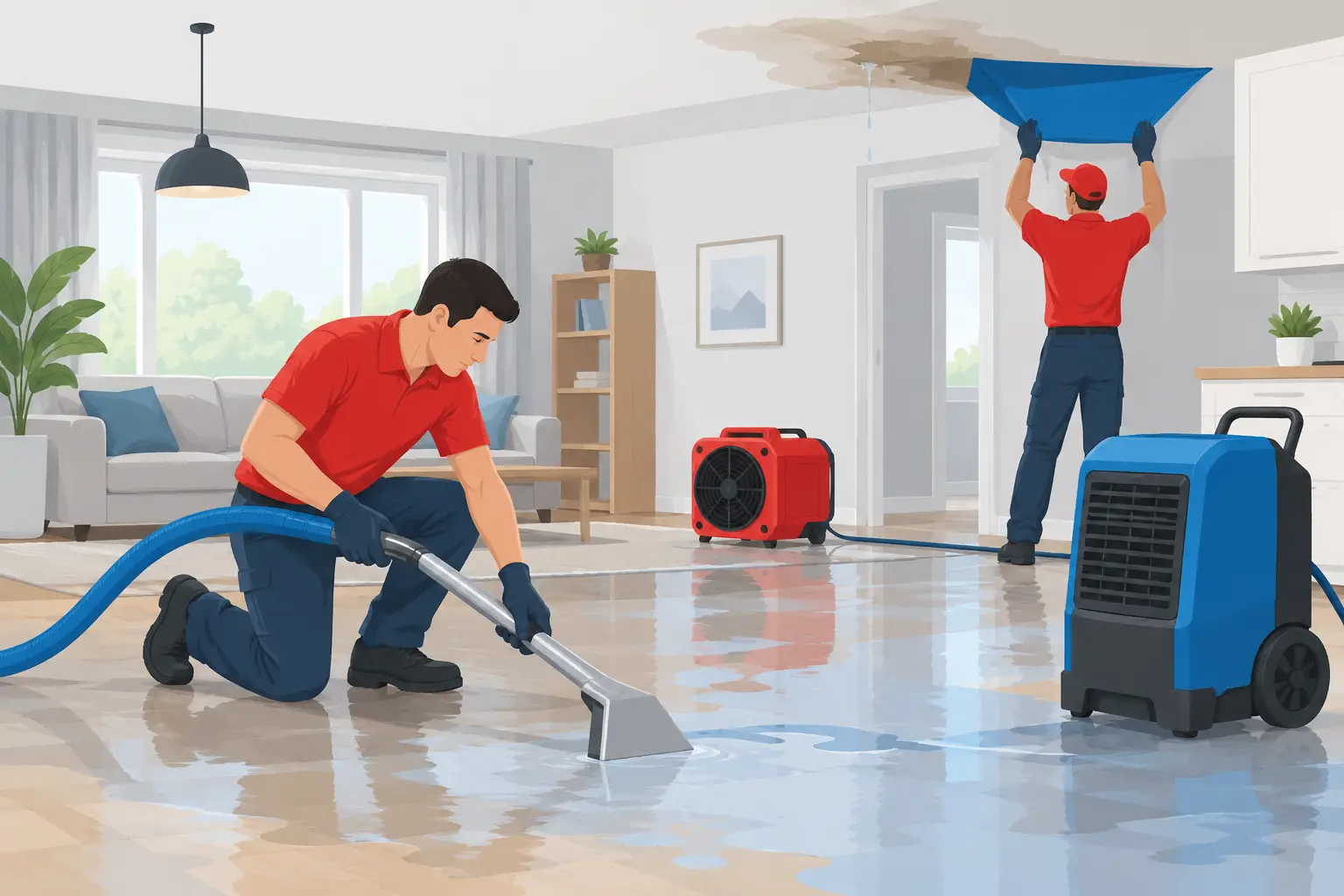
The goal is not simply to make the room look dry. The goal is to remove moisture from the materials and air before mold has an opportunity to grow. Start by removing standing water with towels, a wet-dry vacuum, or a pump for larger amounts. Do not use a regular household vacuum on water.
Move wet rugs, cushions, boxes, and furniture away from the affected area. Place aluminum foil or plastic blocks under furniture legs that cannot be moved immediately to reduce staining and transfer to flooring. Open cabinet doors, closet doors, and interior doors so trapped moisture can escape.
Use fans to move air across damp surfaces and run a dehumidifier to pull moisture from the room. Air conditioning can also help lower indoor humidity during warm, humid Tennessee weather. Keep windows closed when outdoor air is humid, since bringing in damp air can slow drying. In drier conditions, controlled ventilation may help, but it depends on the weather and the extent of the damage.
Do not rely on heat alone. High heat can warp wood, damage finishes, and dry the surface faster than the interior, trapping moisture where you cannot see it. Consistent airflow and dehumidification are more effective than turning the thermostat up and hoping for the best.
Know What Can Be Saved and What Should Be Removed
Some materials recover well after clean-water exposure if they are dried promptly. Solid wood trim, tile, metal, and many hard surfaces can often be cleaned and dried. Hardwood floors may be salvageable, though cupping, gaps, or discoloration can appear if moisture remains underneath. The sooner they are dried, the better the chance of avoiding major repairs.
Other materials are less forgiving. Soaked carpet padding usually needs to be removed because it holds moisture against the subfloor. Wet insulation can lose effectiveness and may retain moisture inside walls or ceilings. Swollen particleboard, MDF baseboards, laminate flooring, and damaged drywall often require replacement rather than cosmetic repair.
Drywall is a judgment call. If only a small area was exposed to clean water and it dried completely within a short period, it may remain sound. If it is soft, crumbling, stained, swollen, or exposed to contaminated water, remove the affected section. Cutting out damaged drywall can also provide access for drying wall cavities and inspecting framing.
Avoid covering up stains or soft spots with paint, caulk, or new trim. That may improve the appearance temporarily, but it does not fix hidden moisture. Repairs should begin after the materials are dry and the leak source has been corrected.
Watch for Hidden Moisture and Mold
Mold can begin growing in damp conditions within 24 to 48 hours. That does not mean every wet surface becomes a mold problem, but it is a reason to treat drying as urgent. A persistent musty smell, discoloration around baseboards, fuzzy growth, or recurring paint bubbles are signs that moisture may still be present.
Small areas of surface mold on nonporous materials can sometimes be cleaned safely with appropriate protective equipment. Larger growth, mold inside walls, repeated moisture problems, or contamination from sewage calls for professional evaluation. Disturbing a concealed mold area without containment can spread spores through the home.
A moisture meter and humidity monitor can provide useful confirmation that materials are drying, but they do not replace experience when water has entered structural cavities. If a ceiling is sagging, a floor feels spongy, or a wall is visibly bowed, keep people away from the area. Those conditions can indicate a structural concern that should be addressed before cleanup continues.
Repair the Cause, Not Just the Damage
Once the affected area is dry, identify why the water entered your home. A failed supply hose, loose toilet seal, leaking roof penetration, damaged caulk, slow drain leak, or poor exterior drainage can all lead to recurring damage if only the visible materials are repaired.
For plumbing leaks, inspect hoses, valves, supply connections, and drain lines. For exterior water intrusion, examine gutters, downspouts, siding transitions, window flashing, roof penetrations, and grading around the foundation. In crawl spaces, look for plumbing drips, standing water, missing vapor barriers, and signs that outside water is entering after heavy rain.
This step is where a patch repair can become a lasting solution. Replacing damaged drywall without correcting a slow pipe leak only resets the clock. A dependable repair plan addresses the water source first, dries the affected area fully, then restores walls, floors, trim, and finishes in the right order.
When to Call a Professional for Water Damage Repairs
Homeowners can often handle a minor spill or a small leak caught immediately. Professional help is the smarter choice when water has reached multiple rooms, entered ceilings or walls, affected electrical components, involved sewage or floodwater, or caused visible structural damage. It is also worth getting help when you cannot locate the source or cannot confirm that the area is dry.
A licensed and insured local repair professional can help coordinate the practical work after the emergency: removing damaged materials, repairing drywall and trim, replacing flooring sections, correcting the source of the leak, and restoring the room with minimal disruption. For Knoxville-area homeowners, Smart Home Fix provides dependable handyman and home repair support when the cleanup phase turns into a repair project.
Water damage feels urgent because it is urgent, but the best next move is usually straightforward: make the area safe, stop the water, dry thoroughly, and repair only after you know what is behind the surface. Acting carefully in those first hours can protect both your home and your peace of mind.