A sticking front door usually starts as a small annoyance. Then it turns into a shoulder-check every morning, a deadbolt that will not line up, or a door that lets in drafts and noise. If you have typed door repair handyman near me into a search bar, you are probably not looking for theory. You want the problem fixed correctly, without turning a basic repair into a larger headache.
That is where choosing the right handyman matters. Doors seem simple, but the reason they stop working is not always obvious. A door may sag because of loose hinges, but it can also shift because of seasonal humidity, wear in the frame, swelling in the slab, or movement in the house itself. Fixing the symptom without addressing the cause often leads to the same problem a few weeks later.
Why door problems rarely stay small
Doors get used hard. Exterior doors deal with weather, temperature swings, and repeated opening and closing. Interior doors take daily wear, especially in busy households with kids, pets, or frequent guests. Over time, even a solid door can start rubbing, rattling, or refusing to latch.
The inconvenience is one issue. Security, comfort, and home wear are the bigger ones. A front door that does not close tightly can affect your sense of safety. A door with gaps around the edges can let conditioned air escape. A dragging door can damage flooring or scrape away finish. What starts as a minor alignment issue can become trim damage, hardware failure, or frame problems if it is ignored.
That is why homeowners often do better calling a professional sooner rather than later. A qualified handyman can usually spot whether the repair is isolated to the hardware or whether the frame, jamb, or surrounding structure also needs attention.
Common repairs a door repair handyman near me can handle
Most door service calls fall into a handful of categories, but the repair itself depends on what caused the issue.
Doors that stick or drag
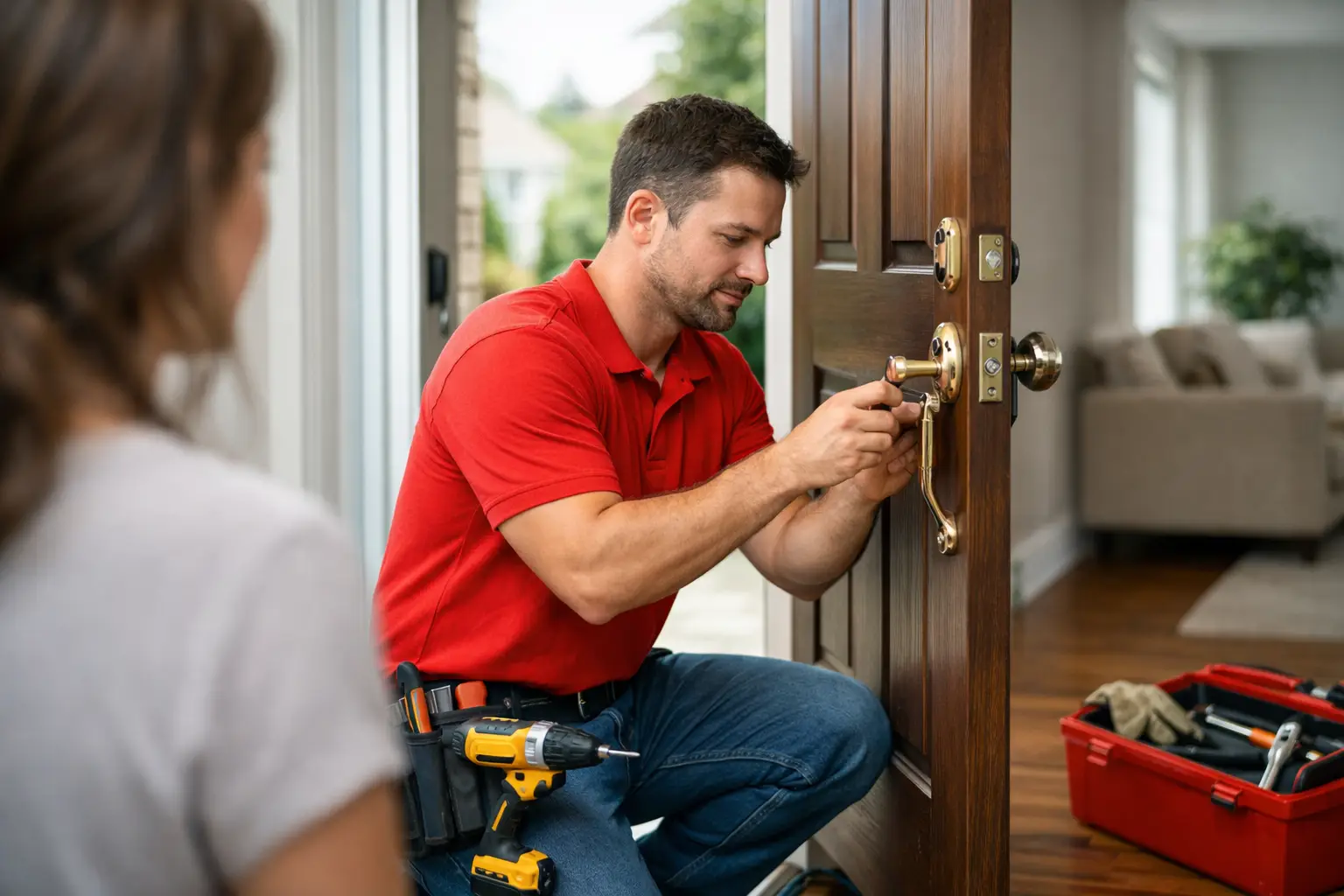
This is one of the most common complaints. Sometimes the fix is as simple as tightening hinge screws or adjusting strike plate alignment. Other times, the door has swollen from moisture, the hinges are worn, or the frame has shifted slightly. A good handyman will check the full swing of the door, identify where it binds, and correct the fit without taking off more material than necessary.
Doors that will not latch
If you have to pull, lift, or slam the door to get it shut, the latch and strike are not meeting where they should. That can happen because the door has sagged, the strike plate has loosened, or the house has settled enough to throw things off. The repair may involve hinge correction, strike plate repositioning, or careful adjustment to the door and frame.
Loose, squeaky, or damaged hinges
A squeak is not always just a squeak. It can be the first sign of loose hardware, stripped screw holes, or hinge wear that is allowing the door to drop out of alignment. Replacing hardware is straightforward, but restoring a secure fit in older wood can take more skill than homeowners expect.
Drafty exterior doors
If you feel air around a closed door, the issue could be weatherstripping, threshold wear, poor alignment, or warping. In East Tennessee, seasonal moisture and temperature changes can make this especially noticeable. A handyman can determine whether the solution is a simple seal replacement or a broader fit correction.
Damaged frames, trim, or door edges
Not every repair is about movement. Sometimes the door works poorly because the surrounding materials are damaged. Moisture, repeated impact, pet scratches, and everyday wear can all affect the frame and edges. In many cases, these areas can be repaired and restored without a full replacement.
When repair makes sense and when it depends
Many homeowners assume a troublesome door needs to be replaced. Sometimes that is true, but not always. If the slab is still solid and the issue is tied to hinges, hardware, strike alignment, weatherstripping, or minor frame movement, repair is often the more practical route.
It depends on the condition of the whole assembly. A door with widespread rot, severe warping, major structural movement, or extensive water damage may not respond well to a basic repair. On the other hand, a door that looks rough but has a sound frame and manageable alignment issues may have plenty of life left.
This is one reason an experienced handyman is valuable. The right approach is not always the biggest one. It is the one that solves the actual problem and holds up over time.
What to look for when searching for a door repair handyman near me
A search result is easy. Confidence in who shows up at your house is the real decision.
First, look for a licensed and insured professional. That matters because door repairs can involve structural trim, entry security, hardware installation, and fit adjustments that affect how the home performs. You want someone who treats the work seriously and stands behind it.
Second, look for broad repair experience, not just general availability. Doors touch several parts of the home at once – carpentry, hardware, weather sealing, trim, and function. A handyman who understands how those pieces work together is more likely to give you a lasting repair instead of a quick patch.
Third, pay attention to whether the company communicates clearly. A dependable service professional should be able to explain what is wrong in plain language, what needs to be adjusted or repaired, and whether there are signs of a larger issue. That kind of clarity helps homeowners make informed decisions without feeling pressured.
For homeowners in Knoxville and nearby communities, that local experience also matters. Houses vary by age, materials, and construction style. Someone who regularly works in the area is more likely to recognize common wear patterns and seasonal issues that affect doors in this region.
Signs your door issue may be more than basic wear
Some door problems are routine. Others point to conditions that deserve a closer look.
If multiple doors in the home suddenly stop latching, that may suggest settling or frame movement rather than isolated hardware wear. If an exterior door shows repeated swelling, soft wood, or paint failure, moisture intrusion may be involved. If the deadbolt no longer lines up and the frame feels loose, security may be compromised.
This does not automatically mean major repairs are ahead. It does mean the issue should be evaluated by someone who can separate cosmetic symptoms from functional concerns. A trusted local expert will not overstate the problem, but they also will not ignore warning signs that could affect safety or long-term performance.
What a professional repair visit should feel like
A good service call should make your life easier. The process should be straightforward, respectful of your home, and focused on solving the issue efficiently.
That starts with a proper inspection. Instead of guessing, the handyman should check hinge condition, latch alignment, frame fit, swing clearance, and signs of wear around the door and jamb. If the issue is with an exterior door, they should also look at weather sealing and threshold performance.
From there, the repair should be done with function in mind, not just appearance. A door that closes quietly, latches cleanly, and sits evenly in the opening is the goal. If touch-up work is needed around the frame or trim, that should support the repair rather than hide a problem.
At Smart Home Fix, that practical, professional approach is central to what The Smarter Handyman Service means. Homeowners want dependable help, clear communication, and workmanship that solves the issue without unnecessary hassle.
A few things homeowners can check before calling
Not every door issue needs immediate repair, but a few quick observations can help you explain the problem clearly. Open and close the door slowly and notice where it rubs. Check whether the latch catches cleanly or misses the strike plate. Look for visible gaps around the edges, loose hinge screws, or signs of moisture at the bottom of an exterior door.
That said, there is a limit to DIY troubleshooting. Over-tightening hardware, shaving the wrong edge, or forcing a swollen door can make the problem worse. If the cause is not obvious, or if the door affects security or comfort, it is better to have it handled professionally.
A well-working door is easy to overlook, and that is exactly the point. It should open smoothly, close securely, and do its job without demanding attention. If yours is doing the opposite, the right repair can bring back that everyday ease and help your home feel right again.