A dripping bathroom faucet can turn a quiet house into a nightly annoyance, while an outdated kitchen fixture can make an otherwise functional room feel tired. So, can a handyman replace faucets? In many cases, yes. A qualified handyman can often remove and install a straightforward replacement faucet, provided the existing plumbing connections are accessible, in good condition, and the job does not involve changes to water lines, drains, or the home’s plumbing layout.
The key is knowing the difference between a fixture replacement and plumbing work that calls for a licensed plumber. Choosing the right professional protects your home from leaks, water damage, and avoidable disruption.
When a Handyman Can Replace a Faucet
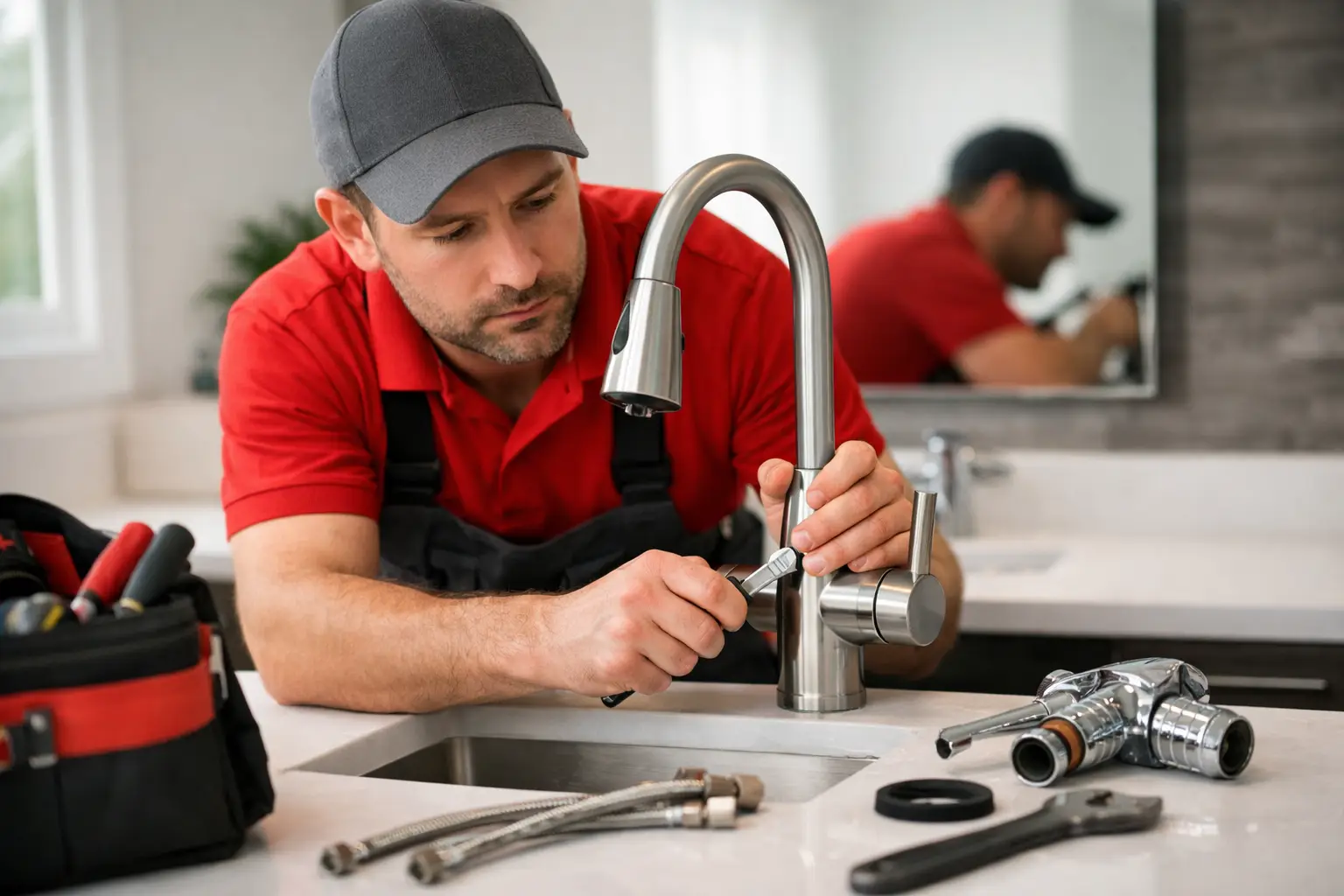
Replacing a like-for-like faucet is a common home repair task. This generally means taking out an existing kitchen, bathroom, laundry, or bar faucet and installing a new one in the same location using the existing supply lines and shutoff valves.
A skilled handyman can typically handle the practical steps: shutting off water, disconnecting the old fixture, cleaning the mounting surface, securing the new faucet, connecting compatible supply lines, and testing for proper operation. The work also includes checking beneath the sink for slow drips after the water is turned back on.
This type of project is a good fit when the fixture is easy to reach and the surrounding plumbing is in sound condition. It can be especially convenient when a homeowner has a few related items to tackle at the same time, such as replacing a sink drain stopper, re-caulking around a sink, repairing a loose cabinet door, or updating light fixtures.
A dependable handyman does more than make the new faucet look good from above. They pay attention to what is happening below the sink, where an unnoticed connection issue can lead to cabinet damage, swollen flooring, or mold growth.
Can a Handyman Replace Faucets With Complications?
It depends on what is discovered once the old faucet comes out. A simple fixture swap can quickly become a plumbing repair when corroded valves, deteriorated supply lines, damaged drain components, or incompatible connections are involved.
For example, an older Knoxville home may have seized shutoff valves that will not fully close, or the existing faucet may use an outdated mounting configuration. If changing the faucet requires moving water lines, replacing shutoff valves, altering drain piping, opening walls, or making significant changes to the plumbing system, the job may require a licensed plumber.
The same applies when a faucet replacement reveals a more serious concern, such as active leaking inside a wall, water damage around the sink cabinet, poor water pressure throughout the house, or signs of a drain blockage. Those are not details to work around. They are reasons to stop, identify the source of the issue, and bring in the appropriate plumbing professional.
A trustworthy handyman should be clear about that boundary. Good home service is not about forcing every repair into one appointment. It is about completing the work that can be done safely and correctly, then helping the homeowner understand when specialized plumbing service is the smarter next step.
What Makes Faucet Installation More Difficult?
Faucets look simple from the countertop, but installation conditions vary widely. The fixture itself may be straightforward, while the space under the sink creates the real challenge. Tight cabinet openings, garbage disposals, filtration systems, pull-out spray hoses, and old plumbing connections can make access difficult.
Kitchen faucets are often more involved than bathroom faucets because they may include a side sprayer, pull-down hose, soap dispenser, filtration connection, or multiple mounting holes. Bathroom faucets can present their own issues when the sink basin is cracked, the drain assembly is corroded, or the faucet has been installed in a very narrow vanity.
The type of faucet matters, too. A standard single-hole or widespread replacement may be relatively routine if it matches the existing sink. Switching from a three-hole faucet to a single-hole design, adding a wall-mounted faucet, or installing a touchless unit with power requirements can expand the scope considerably.
Before work begins, the installer should confirm that the faucet fits the sink’s hole pattern, reach, and clearance. A faucet that is technically installed but too tall for a window ledge, too short to reach the sink basin, or unable to operate around a backsplash is not a successful upgrade.
What Homeowners Should Check Before Scheduling Service
A little preparation helps prevent surprises and makes the appointment more efficient. Start by looking under the sink for obvious moisture, corrosion, or damaged cabinet materials. If the area is wet before the work starts, the issue may be more than the faucet itself.
It also helps to have the replacement faucet on hand and verify what comes in the box. Many new faucets include mounting hardware and supply hoses, but not every model includes all the parts needed for every installation. Keep the instructions and any included adapters available as well.
Before selecting a faucet, consider these practical questions:
- Does it match the number and spacing of holes in the existing sink or countertop?
- Is the spout height appropriate for nearby cabinets, windows, or shelving?
- Will the finish work with the room and be easy for your household to maintain?
- Does the faucet have features that require batteries, an outlet, or added components below the sink?
You should also clear personal items, cleaners, and storage bins from the cabinet before service begins. This gives the professional room to work and makes it easier to inspect the connections after installation.
Why Proper Installation Matters
A faucet can appear secure while still leaking slowly at a supply connection, drain assembly, or mounting point. Those small leaks are easy to miss because they may only occur when the faucet is running, when the sprayer is in use, or after the cabinet doors are closed.
Proper installation includes more than tightening connections. It requires correct alignment, appropriate sealing where needed, secure mounting, careful handling of finish surfaces, and a thorough test of hot and cold water flow. For kitchen faucets, the sprayer or pull-down hose should move freely without snagging on pipes or stored items below the sink.
There is also a balance to strike with tightening. Connections that are too loose can leak, but overtightening can damage fittings, crack components, or create problems that do not show up until later. Experience matters, particularly in older homes where existing parts may be fragile or difficult to access.
When to Call a Licensed Plumber Instead
A licensed plumber is the right choice when the project affects the plumbing system beyond a basic fixture replacement. That includes relocating a sink, installing new water lines, replacing valves that are part of the home’s plumbing system, changing drain configurations, or addressing recurring leaks and drainage problems.
You should also call a plumber if you cannot shut off the water at the fixture, if water is leaking from inside a wall or floor, or if the installation requires permits or must meet specific local code requirements. Plumbing rules can vary by project and jurisdiction, so it is wise to confirm what is required before starting a larger kitchen or bathroom update.
For homeowners planning a renovation, this division of work can be especially useful. A handyman may be well suited for related tasks such as cabinet adjustments, drywall repair, trim work, hardware installation, painting, and finishing details, while a licensed plumber handles the regulated plumbing changes. Coordinating the right expertise at the right stage keeps the project moving without cutting corners.
A Practical Choice for Everyday Home Updates
For a straightforward faucet replacement, an experienced handyman can be a practical and efficient choice. The best results come from an honest assessment of the existing plumbing, a compatible fixture, and careful installation with proper testing.
At Smart Home Fix, our licensed and insured team helps homeowners handle the repairs and upgrades that keep a home working well. If your faucet update is part of a longer to-do list, having trusted local experts assess the full scope can make the next step much easier – and help ensure a small upgrade stays a simple one.