A small bathroom can feel crowded long before it is truly full. The best small bathroom improvement ideas do more than make the room look newer – they improve how you move, store everyday items, clean surfaces, and get ready each morning. With the right upgrades, even a compact hall bath or powder room can feel organized, bright, and comfortable.
The key is to focus on changes that earn their space. A large decorative feature may look appealing, but a better vanity, stronger lighting, or a more practical shower layout often makes a bigger difference in daily life. Here are improvements worth considering before your next bathroom project.
Best Small Bathroom Improvement Ideas That Add Function
1. Replace a bulky vanity with a better-fitting model
An oversized vanity can consume valuable floor space and make a narrow bathroom hard to navigate. A slimmer vanity, wall-mounted vanity, or pedestal sink can open up the room visually while still providing what you need.
This decision depends on storage needs. A pedestal sink creates the most open appearance, but it offers no built-in place for toiletries or cleaning supplies. A compact vanity with drawers is often the better choice for a family bathroom because drawers keep small items easier to reach than a deep cabinet. Measure door swings, shower clearance, and walking space before selecting a replacement.
2. Use vertical storage instead of adding more furniture
When floor space is limited, look up. Recessed medicine cabinets, shallow wall cabinets, and shelves above the toilet can create useful storage without making the bathroom feel packed in.
A recessed medicine cabinet is especially effective because it sits between wall studs rather than projecting into the room. Open shelves can work well for neatly folded towels and everyday items, but they require regular tidying. If you prefer a cleaner look with less visual clutter, choose closed storage with simple hardware.
3. Upgrade the mirror and lighting together
Many small bathrooms have one overhead fixture and a basic mirror. That combination can leave shadows around the face and make the room seem darker than it is. A larger mirror paired with lighting at or near eye level spreads light more evenly and creates the impression of added depth.
Choose lighting that is bright enough for shaving, makeup, and everyday grooming without feeling harsh. Warm white light is usually more comfortable than a very cool blue tone. In bathrooms with limited natural light, this single improvement can change the room more than a new paint color.
4. Choose a glass shower enclosure when the layout allows
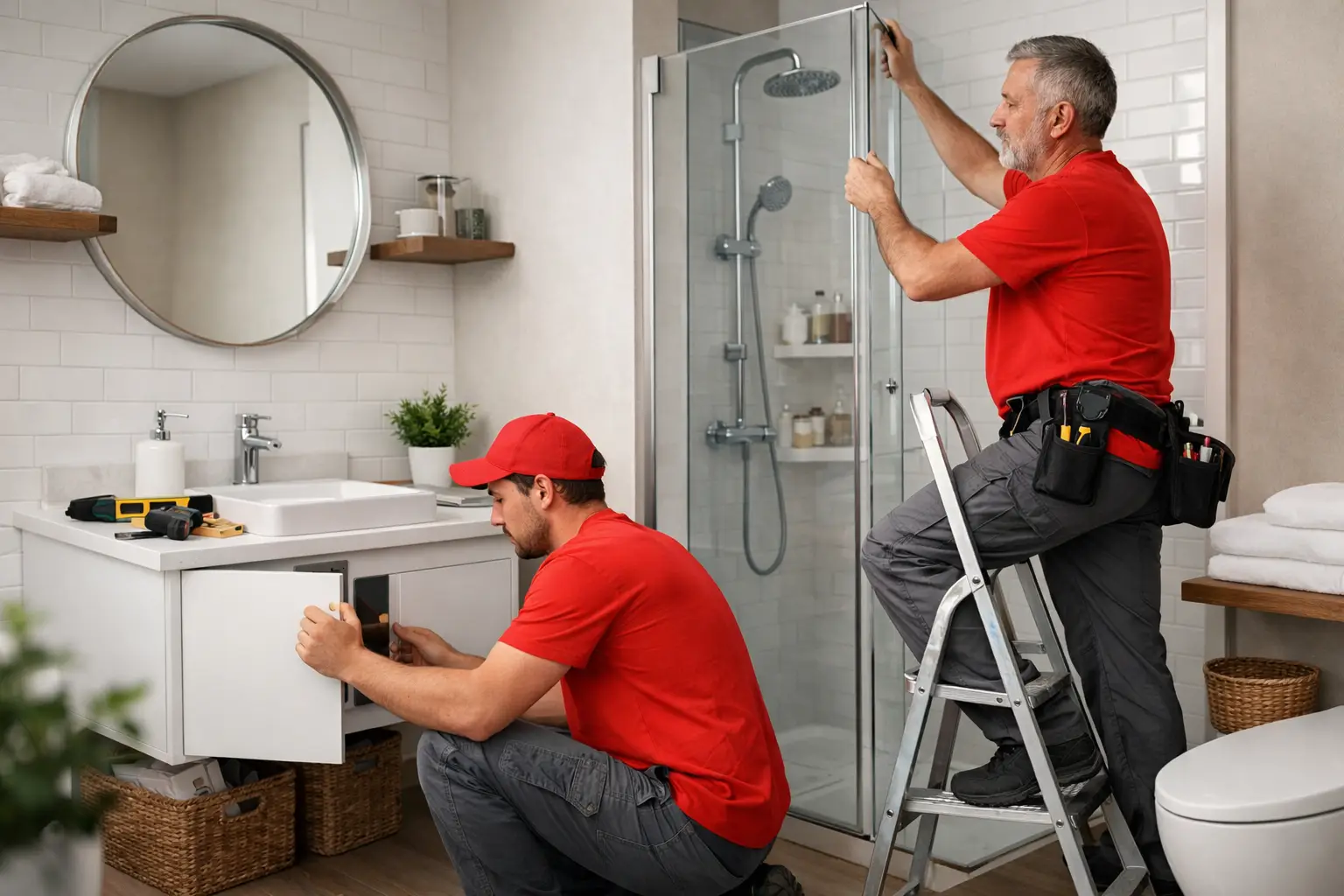
A clear glass shower door lets the eye travel farther across the room, which can make a tight bathroom feel noticeably larger. It also brings more light into the shower area. For a small primary bath or updated guest bath, a properly fitted glass enclosure can give the room a cleaner, more finished appearance.
There is a trade-off. Glass needs regular cleaning to prevent water spots and soap buildup, and a door may not work well where clearance is tight. A curved shower rod and quality curtain can be a practical alternative, especially for a tub-shower combination.
Make the Room Feel Larger Without Expanding It
5. Keep the color palette simple and connected
You do not have to make every small bathroom bright white. Soft neutrals, pale blue-grays, warm beige, and light sage can all make a compact room feel calm and open. What matters most is limiting sharp color breaks that chop up the space.
Consider using a related wall, floor, and shower color palette. A shower tile that coordinates closely with the wall color can make the room feel more continuous. If you want contrast, add it through a vanity finish, framed mirror, or towels rather than covering every surface with competing patterns.
6. Use large-format tile thoughtfully
Large tiles can reduce the number of grout lines across a floor or shower wall, creating a less busy appearance. That visual simplicity can be helpful in a small bathroom. Porcelain tile is a durable choice for wet areas and comes in finishes that resemble stone, concrete, or wood.
Size alone does not solve every layout issue. Very large tiles may require more cuts in a room with many corners, fixtures, or drains. The best option is one that suits the bathroom dimensions and allows for proper installation, waterproofing, and slip resistance. Smaller mosaic tile can still be the right choice for a shower floor because it provides more grout lines for traction and can follow the slope to the drain.
7. Create one clear focal point
Small rooms benefit from restraint. Instead of choosing a statement wall, bold floor, dramatic vanity, and patterned shower tile all at once, select one feature to carry the design. It might be a tiled shower wall, a handsome vanity, or a distinctive mirror.
A focused design makes the bathroom feel intentional rather than busy. It also helps future updates stay manageable because you are not trying to match too many strong finishes at once.
Improve the Details You Use Every Day
8. Update ventilation before moisture causes damage
A bathroom fan is easy to overlook, but it is one of the most practical improvements in the room. Proper ventilation helps remove humidity after showers, reducing the conditions that lead to peeling paint, mildew, warped trim, and persistent odors.
If the existing fan is loud, weak, or does not clear steam effectively, replacement may be worthwhile. The fan should be properly vented outside, not into an attic or another enclosed space. For busy households, a timer switch can make this task automatic and help protect the room after everyone leaves.
9. Add outlets and switches where they are actually useful
Older bathrooms often have limited electrical access, awkward switch locations, or outlets that do not support modern daily routines. Adding a properly located GFCI-protected outlet can make a major difference for electric toothbrushes, grooming tools, and night lights.
Lighting controls deserve attention too. A dimmer can provide softer light for late-night use, while a separate switch for the exhaust fan gives you more control. Electrical work in bathrooms has specific safety requirements, so this is a job for qualified professionals rather than a shortcut project.
10. Swap outdated fixtures for water-smart choices
A new showerhead, faucet, or toilet can refresh a bathroom without changing the layout. Water-efficient fixtures can reduce unnecessary water use while still providing good performance. For homeowners planning to age in place, a handheld showerhead is a useful upgrade that adds flexibility for bathing, cleaning, and assisting children.
Pay attention to scale. Oversized fixtures can overwhelm a compact vanity or narrow shower. Choose finishes that coordinate with the room’s existing hardware, but do not feel pressured to replace every metal element if the current pieces are in good condition.
11. Build in grab bars and practical support where needed
Safety features do not need to make a bathroom feel institutional. Well-placed grab bars are available in finishes and styles that coordinate with modern fixtures, and they can provide important support for older homeowners, recovering family members, and guests.
The important part is proper mounting. A grab bar must be secured to framing or installed with an approved reinforcement system. Towel bars, suction handles, and lightweight accessories are not substitutes for a securely installed safety feature.
12. Fix the small problems before they become renovation problems
A dripping faucet, loose toilet, cracked caulk line, soft flooring, or damaged grout may seem minor, but bathrooms handle water every day. Small failures can allow moisture to reach subflooring, wall materials, or surrounding trim.
Addressing repairs early protects the improvements you have already made. During a larger update, it is also wise to inspect shutoff valves, plumbing connections, fan ducting, and the condition of the floor around the toilet and shower. Good workmanship behind the finished surfaces matters just as much as the finishes you can see.
Plan Improvements Around Your Bathroom’s Real Limits
Before choosing materials or fixtures, decide what the room needs most. A powder room may benefit from a better mirror, lighting, and a compact vanity. A family hall bath may need more durable storage, stronger ventilation, and an easier-to-clean tub-shower area. A small primary bath may be ready for a layout change that improves access and makes the shower more comfortable.
Measure carefully and think through daily routines. Can cabinet doors open without blocking the toilet? Is there room to step out of the shower safely? Will a new vanity cover an existing outlet or interfere with trim? These details are where a well-planned project separates itself from a frustrating one.
For homeowners in Knoxville and nearby communities, working with a trusted local professional can simplify projects that combine repairs, carpentry, fixtures, tile, and finishing work. Smart Home Fix brings a licensed and insured approach to the practical improvements that help a small bathroom work better for the people who use it.
The most satisfying bathroom upgrade is not always the most dramatic one. It is the improvement that gives you a little more room, a little less maintenance, and a better start to every day.