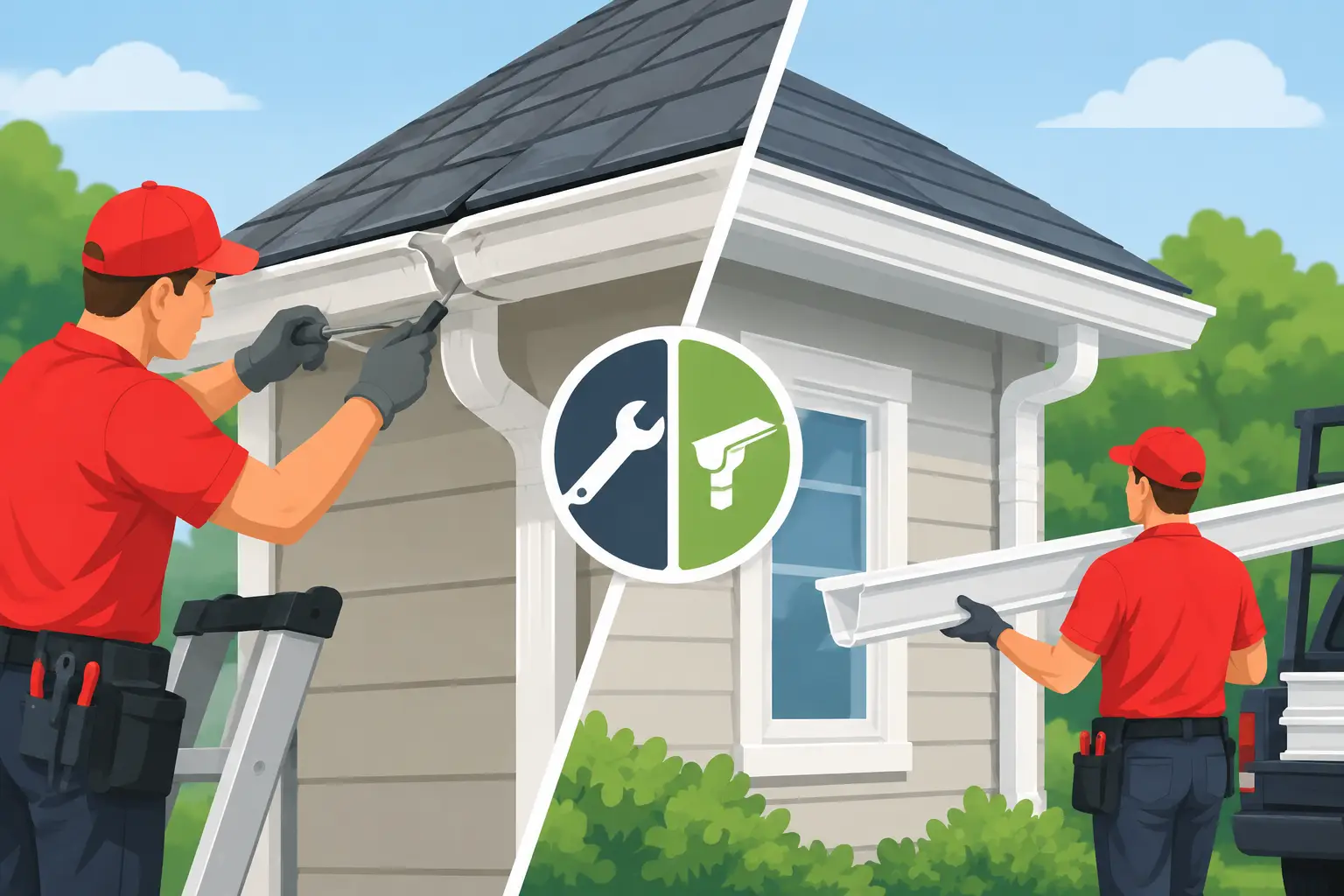
A gutter that spills over during a hard Tennessee rain can look like a small annoyance. But water landing beside the foundation, soaking the fascia, or washing out landscaping can turn it into a much larger repair. When deciding whether to repair versus replace gutters, the right answer depends on the type of damage, how widespread it is, and whether the system is still moving water where it needs to go.
A careful inspection can prevent a temporary patch from becoming repeated maintenance. It can also prevent homeowners from replacing a system that still has years of dependable service left.
Start With What the Gutters Are Telling You
Gutters work as a complete drainage system, not as a series of separate pieces. Water needs a clear path from the roof edge into the gutter, through the downspouts, and away from the home. A problem at any point can make the entire system appear to have failed.
Look at the gutters during or shortly after a steady rain if it is safe to do so. Overflow at one spot may point to a clog, a loose section, or a gutter that has pulled away from the roofline. Water running behind the gutter often indicates trouble with the drip edge, fascia, or the gutter’s placement. A downspout that pours water near the foundation may simply need an extension or a better discharge route.
Also look for staining on siding, peeling paint around eaves, soil erosion, standing water, and damp areas in a basement or crawl space. These clues matter because they show where water has been going, even after the rain has stopped.
When Gutter Repair Is the Smart Choice
Repair is usually the practical option when damage is limited and the rest of the system remains sound. A single leaking seam, a loose hanger, a disconnected downspout, or a small hole does not automatically mean the entire gutter run needs to come down.
Minor seam leaks can often be cleaned, resealed, and tested. Small holes in metal gutters may be patched when the surrounding material is solid. Loose hangers can be replaced or secured so the gutter regains the right slope. If a section has shifted after a storm or a ladder impact, it may be possible to realign it and restore proper drainage.
Clogs are another common repair situation. Leaves, roof grit, nests, and debris can block outlets and downspouts, causing water to spill over the front edge. Cleaning alone may solve the immediate issue, but it is worth checking why the debris collected in the first place. Low spots, poorly positioned downspouts, and nearby tree coverage can all contribute to repeat clogs.
Repair also makes sense when the problem is connected to one component rather than the gutter itself. For example, a damaged downspout elbow, missing splash block, or short extension can be corrected without replacing good gutters. Addressing the full water path is what protects the home.
A Repair Should Last Beyond the Next Rainstorm
The key question is not whether a damaged area can be patched. Most things can be patched temporarily. The better question is whether the repair will leave behind a stable, properly sloped system that can handle repeated rain, leaf debris, and seasonal temperature changes.
If the gutter material around a seam is thin, corroded, or distorted, new sealant may not hold for long. Likewise, tightening a hanger into rotted fascia will not create a durable repair. A trusted professional should identify the underlying condition before recommending a quick fix.
Signs It Is Time to Replace Gutters
Replacement becomes the stronger choice when damage is widespread, the gutter material is failing, or the system was installed in a way that cannot reliably manage runoff. Repeated repairs in several locations are often a sign that the system has reached the end of its useful life.
Consider replacement when you see multiple cracks, persistent leaks along several seams, widespread rust or corrosion, or sections that sag even after hangers have been addressed. Gutters that pull away from the house repeatedly may be dealing with damaged fascia, inadequate fastening, or a system that is too worn to remain secure.
Water damage behind the gutter deserves particular attention. Soft wood, peeling paint, dark staining, and visible rot along the fascia can mean water has been escaping for some time. Replacing gutters without correcting damaged wood can leave the new installation with an unstable surface. In this situation, the repair may involve both fascia work and new gutters to create a lasting result.
An undersized or poorly designed system may also need replacement, even if it is not especially old. Some homes have long roof runs, complex valleys, or roof areas that shed a large amount of water quickly. If gutters overflow during ordinary heavy rain despite being clean and securely attached, the system may lack enough capacity or downspout drainage.
Age Matters, but Condition Matters More
Aging gutters do not always need immediate replacement. Well-maintained aluminum gutters can continue to perform for many years. On the other hand, a newer system can fail early if it was installed with poor slope, inadequate support, or improperly connected downspouts.
That is why visual condition and performance should guide the decision more than age alone. A system that is clean, secure, and draining well may only need routine maintenance. A newer one that constantly leaks, sags, or overflows needs a closer look.
Repair Versus Replace Gutters: The Factors That Decide It
The repair versus replace gutters decision usually comes down to four connected factors: the extent of damage, the condition of the fascia and roof edge, the system’s ability to drain water, and the likelihood that a repair will hold up over time.
Localized damage favors repair. A single failed joint or bent downspout is generally manageable when the rest of the gutter run is in good shape. Damage spread across multiple sections favors replacement because each repair creates another potential weak point.
The condition of the wood behind the gutter is equally important. Gutters cannot do their job if they are fastened to deteriorated fascia. Before any gutter work is completed, the attachment area should be examined for rot and moisture damage. Fixing that structure first helps the finished system stay straight, secure, and properly pitched.
Drainage design is the third consideration. Gutters need a slight slope toward downspouts, and downspouts need to carry water far enough away from the home. A repair may be sufficient if the system needs only a corrected slope or a better extension. If there are too few downspouts, poorly placed outlets, or chronic overflow from major roof valleys, replacement or redesign may be the more dependable answer.
Finally, think about the pattern of maintenance. One repair after storm damage is normal homeownership. Regularly sealing leaks, reattaching loose sections, and cleaning the same troublesome areas can become a signal that a more complete solution is warranted.
Do Not Overlook Gutter Problems That Start on the Roof
Not every apparent gutter failure begins with the gutter. Roof debris, damaged shingles near the eaves, missing drip edge, or water running behind the system can all create similar symptoms. If water is bypassing the gutter, installing a new section without identifying the source may not solve the problem.
Knoxville-area homes also deal with intense rain, falling leaves, and occasional freeze-thaw cycles. Those conditions can expose weak seams, blocked downspouts, and loose fasteners quickly. Seasonal checks help catch small concerns before water reaches the siding, trim, foundation, or interior spaces.
A safe inspection matters. Ladders, wet roofs, and overhead utility lines create real risks, and gutter problems can involve hidden wood damage. A licensed and insured home repair professional can evaluate the system, explain whether a targeted repair is reasonable, and handle related fascia or exterior repairs when needed.
Keep Water Moving Away From Your Home
Whether your gutters need a focused repair or a full replacement, the goal is simple: direct roof runoff away from the house without damaging the exterior along the way. Clean gutters regularly, make sure downspouts stay clear, and watch for changes after heavy rain. A prompt inspection when you first notice overflow or staining can protect far more than the gutters themselves.