A shower can make a bathroom feel updated or worn out faster than almost any other feature. If you’re planning a Knoxville shower remodel, the best results usually come from focusing on the parts you do not see at first glance – layout, waterproofing, drainage, and daily function – not just the tile pattern.
That matters because most homeowners are not remodeling for show. They want a shower that looks clean, works better every morning, holds up over time, and does not create hidden problems behind the walls. A smart remodel should improve comfort and reliability at the same time.
What makes a Knoxville shower remodel worth it
The right shower remodel solves more than one issue at once. It can fix outdated finishes, improve water control, make entry safer, add better storage, and reduce the constant battle against mildew and hard-to-clean corners.
In many Knoxville homes, bathrooms reflect the era when the house was built. That might mean a fiberglass insert that has seen better days, a cramped footprint, or tile work that looks fine on the surface but no longer performs well underneath. Remodeling gives you a chance to correct those weak points before they turn into leaks, soft subfloors, or ongoing maintenance headaches.
A good remodel also fits the way your household actually uses the bathroom. A family with kids has different needs than an older homeowner planning for easier access. A guest bath may call for durability and simplicity, while a primary bath may benefit from a more open, polished design. The best choices are not always the flashiest ones. They are the ones that keep working year after year.
Start with function before finishes
Most people naturally begin with color, tile, and fixtures. Those decisions matter, but they should come after the practical planning. Before choosing materials, think about how the shower needs to perform.
A few questions shape the whole project. Does the current shower feel too tight? Is the threshold difficult to step over? Do you need a built-in niche so bottles are not crowding the floor? Would a better door layout make the room easier to move through? These choices affect comfort every day, and they are much harder to change later than swapping out a finish.
Drain placement is another detail that deserves real attention. The size and slope of the shower floor need to move water where it should go without puddling. Small mistakes here can create long-term frustration even if the shower looks great on day one.
Ventilation should be part of the conversation too. A remodeled shower in a bathroom with poor airflow can still struggle with moisture problems. Sometimes the smartest upgrade is not the most visible one.
Materials that hold up in a busy bathroom
A shower is one of the hardest-working areas in the home, so material selection should be grounded in durability as much as appearance. Tile remains a popular option because it offers flexibility in style and layout, but not every tile is equally practical for every surface.
Large-format tile can reduce grout lines and make cleaning easier. Smaller tile may work better on shower floors where slip resistance and proper slope are important. Natural stone has visual appeal, but it often needs more maintenance than homeowners expect. For many households, porcelain offers a dependable balance of appearance, strength, and easier upkeep.
Glass enclosures can make a bathroom feel larger and brighter, but they also show water spots and soap residue more quickly. Framed and semi-frameless options may make more sense in some bathrooms, especially when durability and ease of maintenance are priorities.
Fixture finishes matter too, but this is an area where trends can pull homeowners away from practical decisions. Matte black, brushed nickel, and chrome all have their place. The better question is which finish will fit the rest of the bathroom and still feel right several years from now. A remodel should not feel dated the moment design trends shift.
Why waterproofing matters more than surface beauty
One of the biggest differences between a shower that lasts and one that causes trouble is the work behind the tile. Waterproofing is not a decorative upgrade, but it is one of the most important parts of any shower remodel.
Tile and grout are not the waterproof layer by themselves. The real protection comes from the system installed underneath and around them. If corners, seams, benches, niches, and transitions are not handled correctly, moisture can work its way into the structure over time.
This is where cutting corners creates expensive consequences. A shower can look finished, clean, and attractive while hiding problems that show up months later as staining, soft drywall, or musty smells. Homeowners often do not realize the issue started during installation, not from day-to-day use.
That is why licensed and insured professionals matter on a project like this. Shower remodeling is not just finish work. It requires proper prep, correct substrate installation, reliable waterproofing methods, and attention to the details that keep moisture contained.
Storage and layout choices that improve daily use
A shower remodel feels more successful when it solves everyday annoyances. Storage is one of the clearest examples. If bottles, razors, and soap have nowhere to go, even a beautiful shower can feel cluttered.
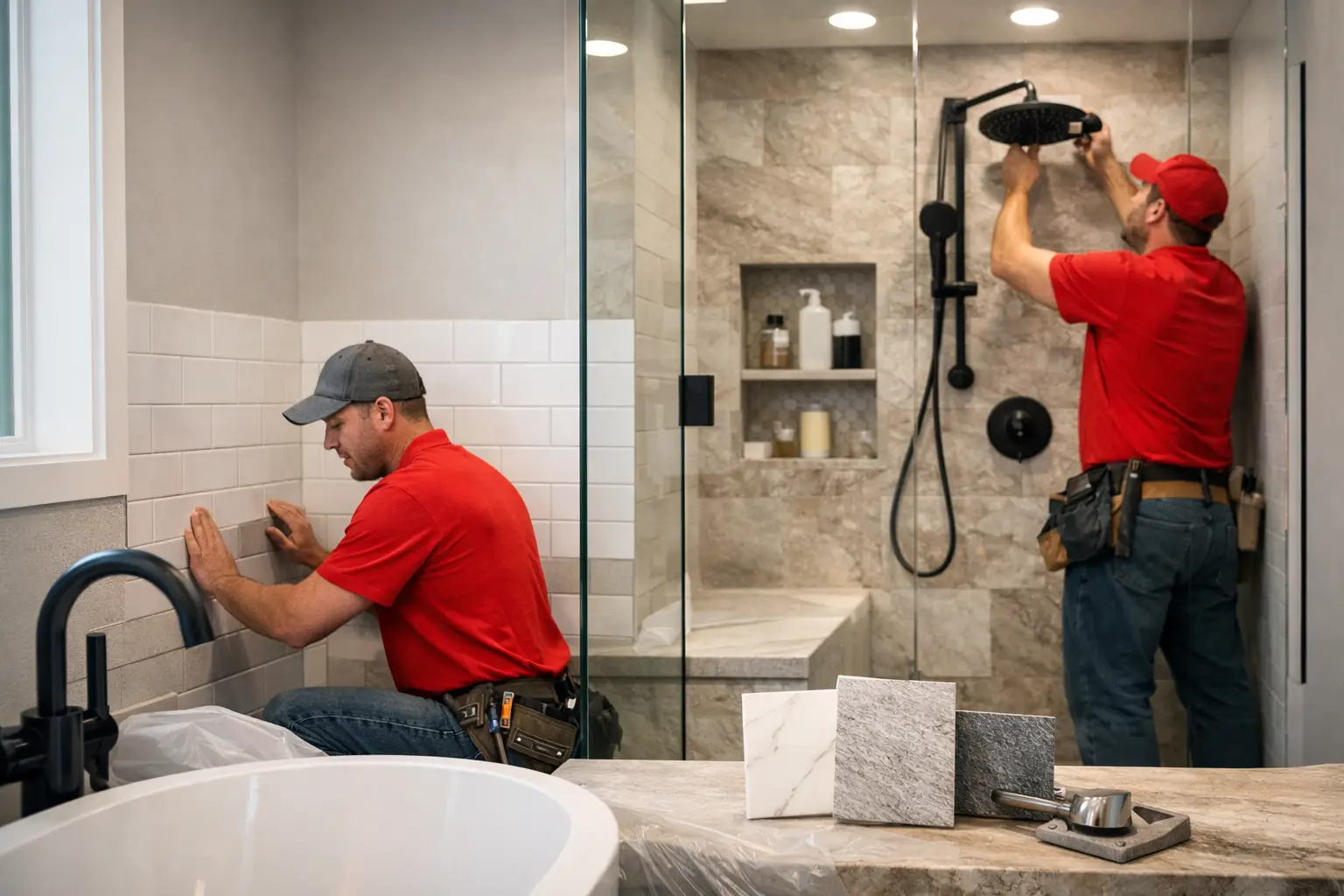
Built-in niches are a common solution, but placement matters. A niche should be easy to reach without putting products directly in the main spray path if possible. In some showers, two smaller niches work better than one oversized opening. Corner shelves can help in tighter spaces, though they may not create the same clean look.
Benches can also be useful, especially in larger showers or for homeowners thinking ahead about comfort and accessibility. Still, a bench should only be added when the layout truly supports it. In a compact shower, forcing one in can make the space feel cramped and reduce usable standing room.
Door style has a similar trade-off. A swinging door can look sharp and provide a wide opening, but it needs clearance. Sliding doors save space, although they may be less convenient for some users. In some cases, a walk-in design with a fixed glass panel is the right fit, but only if splash control and room layout support it.
Accessibility without a clinical look
Many homeowners want a shower that is easier to use without making the bathroom feel institutional. That balance is possible with good planning.
Low-threshold or curbless entry can improve accessibility and create a more open appearance. Grab bars no longer have to look like afterthoughts either. When chosen carefully and installed in the right locations, they can blend into the overall design while adding real safety.
Handheld showerheads, wider openings, and built-in seating can all improve ease of use for older homeowners or anyone planning to stay in their home long term. Even if you do not need those features today, including the right wall backing during a remodel can make future additions much easier.
This is one area where thinking ahead pays off. A shower should work for your household now, but it should also make sense five or ten years from now.
A practical timeline mindset for a shower remodel
Homeowners often picture the finished result but underestimate the number of decisions that affect the process. Demolition may uncover hidden water damage, framing issues, or plumbing updates that need to happen before the new shower can go in. That does not mean something has gone wrong. It means the remodel is addressing the real condition of the space.
The smoothest projects usually start with clear priorities. Decide what matters most: easier cleaning, better accessibility, improved storage, a more modern appearance, or correcting long-standing water issues. Once those priorities are clear, design choices become simpler and more consistent.
It also helps to stay flexible on the details while staying firm on the quality of installation. If a specific tile is backordered or a minor finish choice changes, that is usually manageable. What should not be negotiable is the quality of prep work and construction.
For homeowners in Knoxville, working with a dependable local team can make the entire experience easier. Smart Home Fix approaches shower remodeling with the same mindset behind The Smarter Handyman Service – practical solutions, professional execution, and work designed to hold up in real homes.
How to know your plan is the right one
A good Knoxville shower remodel does not need to chase every trend or include every upgrade. It needs to fit your space, your routine, and the condition of your home. The right plan usually feels clear when each decision supports function as much as appearance.
If you are choosing between a few options, ask the simplest question first: which one will still make sense on an ordinary Tuesday morning? That is often where the best remodeling decisions reveal themselves, and where a better shower starts to make everyday life easier.