A leaking faucet, a loose handrail, a clogged gutter – most home problems do not start as emergencies. They start small, stay quiet for a while, and then become the job you wish you had handled sooner. That is why the best home maintenance tasks are not always the biggest projects. They are the routine jobs that protect your home, reduce surprise repairs, and keep daily life running smoothly.
For most homeowners, the challenge is not knowing that maintenance matters. It is knowing what deserves attention first. Some tasks directly affect safety. Others prevent moisture damage, system failures, or steady wear that gets expensive over time. If you are trying to stay ahead of repairs instead of reacting to them, these are the jobs worth prioritizing.
Why the best home maintenance tasks matter
A well-maintained home is easier to live in and easier to manage. Doors close properly. Bathrooms stay dry. Air systems run more efficiently. Small exterior issues do not turn into interior damage. The goal is not perfection. The goal is catching problems while they are still manageable.
That matters even more for busy households, older homes, and homeowners who already have a running list of minor repairs. A practical maintenance plan helps you focus on the items that protect function, safety, and long-term condition first.
Start with water control
If there is one area that deserves immediate attention, it is water. Moisture damage spreads quietly behind walls, under sinks, around tubs, and near windows and doors. By the time stains, soft drywall, or warped trim appear, the repair is usually larger than it needed to be.
Check around toilets, faucets, sink connections, refrigerator water lines, and washing machine hoses. Look at caulk and grout in kitchens and bathrooms. Inspect the area under sinks for dampness, staining, or musty smells. Outside, pay attention to where water collects near the foundation after rain.
This is one of the best home maintenance tasks because it prevents a wide range of problems at once. A small plumbing leak can damage cabinets, flooring, drywall, and framing. Failed caulk can let water into wall cavities. Poor drainage can affect foundations and crawl spaces. None of these issues improve with time.
Keep gutters and downspouts working
Gutters are easy to ignore until they overflow. When that happens, water does not just spill over the edge. It can run down siding, soak fascia boards, pool near the foundation, and damage landscaping.
Cleaning gutters and checking downspouts is a simple job with a high payoff. The key is not just removing debris. You also want to make sure water is flowing where it should and discharging away from the house. If a downspout is loose, clogged, or draining too close to the foundation, the system is not doing its job.
In areas with heavy seasonal leaf buildup or strong storms, this may need attention more than once a year. It depends on your lot, tree cover, and roof layout. Homes with mature trees often need more frequent checks than homeowners expect.
Replace HVAC filters and watch airflow
A neglected HVAC system often announces itself slowly. Rooms feel stuffy. Dust builds up faster. Utility bills creep up. The system runs longer than usual. In many cases, a dirty filter is part of the problem.
Replacing air filters is one of the easiest maintenance tasks in any home, but it is also one of the most overlooked. A clean filter helps support airflow, system efficiency, and indoor air quality. It also reduces strain on your heating and cooling equipment.
This task is simple, but the schedule depends on the home. Pets, allergies, recent remodeling, and household size can all affect how often filters need to be changed. If your system still seems to struggle after a filter change, that is a sign to look deeper rather than assuming it will sort itself out.
Test smoke detectors and carbon monoxide alarms
Not every maintenance task is about preserving materials. Some are about protecting the people inside the home. Testing smoke detectors and carbon monoxide alarms belongs near the top of the list for that reason alone.
Press the test button regularly, replace batteries as needed, and do not ignore units that chirp, fail to respond, or are past their service life. Many homeowners replace batteries and assume the device is fine, but detectors themselves do not last forever.
This is also a good time to make sure alarms are installed in the right locations and have not been removed or disabled during renovations or battery changes. Safety devices only help when they are working as intended.
Inspect exterior trim, siding, and paint
Exterior surfaces take a constant beating from sun, rain, humidity, and temperature swings. Small failures in trim, siding, or paint can leave the home vulnerable to moisture intrusion and wood rot.
Walk the exterior and look for cracked caulk, peeling paint, soft wood, loose boards, or gaps around penetrations. Pay close attention to windows, doors, corners, and rooflines. These transition points are often where wear shows up first.
This is one of those tasks where timing matters. Touch-up work and minor repairs are usually straightforward when damage is limited. Once rot spreads or water gets behind the surface, the scope changes. A simple repair can become a replacement project.
Check doors, locks, and hardware
When doors stick, sag, or stop latching cleanly, it is tempting to live with it. The same goes for loose handles, wobbly railings, and worn-out hardware. But these are exactly the kinds of issues that make a home feel neglected and can create safety concerns over time.
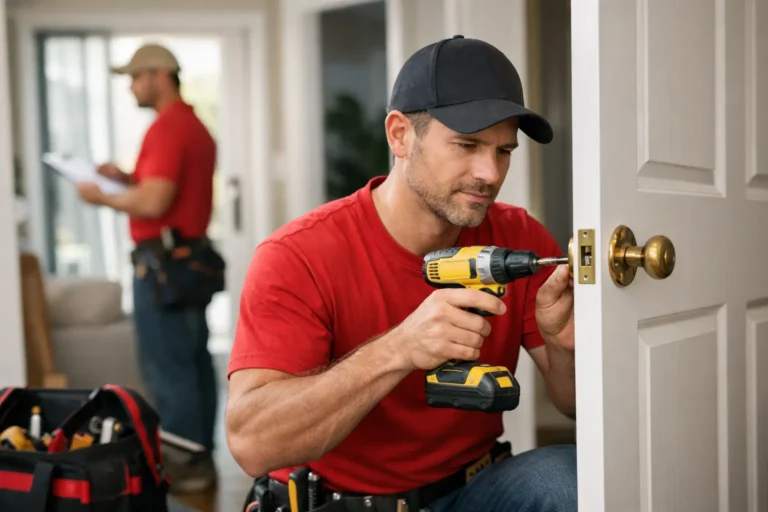
Check exterior and interior doors for proper fit and smooth operation. Tighten loose hinges, confirm locks work correctly, and make sure handrails and stair components feel solid. If a door has started rubbing, that could be seasonal movement, hinge wear, or a sign of a larger framing shift. It depends on the pattern and severity.
These are not glamorous jobs, but they improve daily function immediately. They also help prevent the bigger repairs that come from repeated strain on damaged hardware or framing.
Re-caulk high-moisture areas
Bathrooms, kitchens, and laundry areas all rely on good sealing to keep water where it belongs. Caulk does not fail all at once. It cracks, separates, shrinks, or starts pulling away at the edges. Once that seal is compromised, moisture can get behind fixtures and finishes.
Inspect around tubs, showers, backsplashes, sinks, and countertops. If caulk is moldy, brittle, missing in sections, or no longer bonded properly, it is time to remove and replace it. The same goes for exterior caulk around windows and doors.
This is one of the best home maintenance tasks because it is relatively small, but it protects some of the most damage-prone areas of the house. Good sealing is not just cosmetic. It is preventive maintenance.
Flush or inspect the water heater
Water heaters are easy to forget because they usually work quietly until they do not. Basic maintenance can help extend performance and catch issues early, especially in homes with harder water or older equipment.
Depending on the unit and manufacturer guidance, flushing sediment may be recommended. At minimum, inspect for rust, corrosion, moisture around the base, or unusual noises. Also pay attention to how reliably the unit delivers hot water.
This is an area where some homeowners prefer professional help, and that is reasonable. The right approach depends on the age of the unit, the type of water heater, and whether there are signs of wear already present.
Look over the roof from the ground
You do not need to climb onto the roof to notice warning signs. A visual check from the ground can reveal missing shingles, sagging lines, damaged flashing, or debris buildup in valleys and around penetrations.
Storms can loosen materials even when leaks are not immediately visible inside. If something looks off, it is worth addressing promptly. Roof problems tend to spread from one weak point, especially when water is involved.
For homeowners in Knoxville and surrounding areas, seasonal weather shifts can be hard on roofing materials. A quick inspection after major storms is a smart habit, especially if the roof is older.
Keep an eye on the small repairs you keep postponing
Every home has a category of jobs that seem too minor to schedule. Loose trim. A damaged screen. A slow-draining sink. A section of flooring that moves a little more than it should. Individually, these may not seem urgent. Together, they tell you where wear is accumulating.
The smartest approach is to stop treating small repairs as separate annoyances and start seeing them as part of ongoing home maintenance. When handled early, they are usually simpler, faster, and less disruptive. When ignored, they often connect to larger problems or create them.
That is where working with a dependable local handyman can make your life easier. A licensed and insured team can take care of several maintenance items in one visit, which helps homeowners stay ahead without trying to coordinate multiple specialists for everyday repairs.
How to prioritize the right tasks first
If your list feels long, start with anything involving water, safety, or active damage. After that, focus on systems and surfaces that get heavy daily use. Cosmetic issues can wait if needed, but leaks, loose railings, failing seals, and poor drainage should not.
It also helps to think seasonally. Spring and fall are good times to review exterior conditions, drainage, and weather-related wear. Interior checks can happen year-round, especially in bathrooms, kitchens, and utility areas where small problems tend to hide.
Home maintenance does not have to become a full-time project. The right tasks, done at the right time, keep your home safer, more functional, and much easier to manage. A little attention now usually beats a major repair later.