A loose stair rail, a narrow bathroom doorway, or a front step that becomes harder to manage can change how safe a home feels. Aging in place home modifications address those everyday obstacles before they limit independence. The right updates help homeowners stay comfortable in the home and neighborhood they know, while reducing the risk of falls and making daily routines less demanding.
For many Knoxville-area homeowners, the best approach is not a full renovation all at once. It is a thoughtful plan that starts with the areas used most often, handles immediate safety concerns, and prepares the home for changing needs over time.
Start With How the Home Is Actually Used
Aging in place is not one standard checklist. A home with a first-floor bedroom may need different updates than a split-level home with bedrooms upstairs. Someone who enjoys cooking every day may prioritize the kitchen, while another homeowner may need a safer path from the driveway to the front door.
Walk through the house as if you were carrying groceries, using a cane, or moving more slowly than usual. Notice where you must step over a threshold, twist to reach a switch, balance while getting dressed, or use one hand to steady yourself. Those small moments often reveal the most useful projects.
It also helps to think ahead without assuming the worst. A modification can make life easier now and become more valuable later. Lever-style door handles, brighter lighting, and a handrail on both sides of a staircase are practical improvements for almost any household.
Make Entryways Safer and Easier to Navigate
The route from the car to the front door deserves attention first. It is used in every kind of weather, often while carrying bags or packages. Uneven walkways, poor lighting, slick surfaces, and unsupported steps can create unnecessary risk.
A sturdy handrail at exterior steps is one of the most straightforward improvements. Depending on the layout, a second rail may provide additional confidence and support. Railings should be securely installed at a comfortable height and extend where they are needed most, not simply where they are easiest to mount.
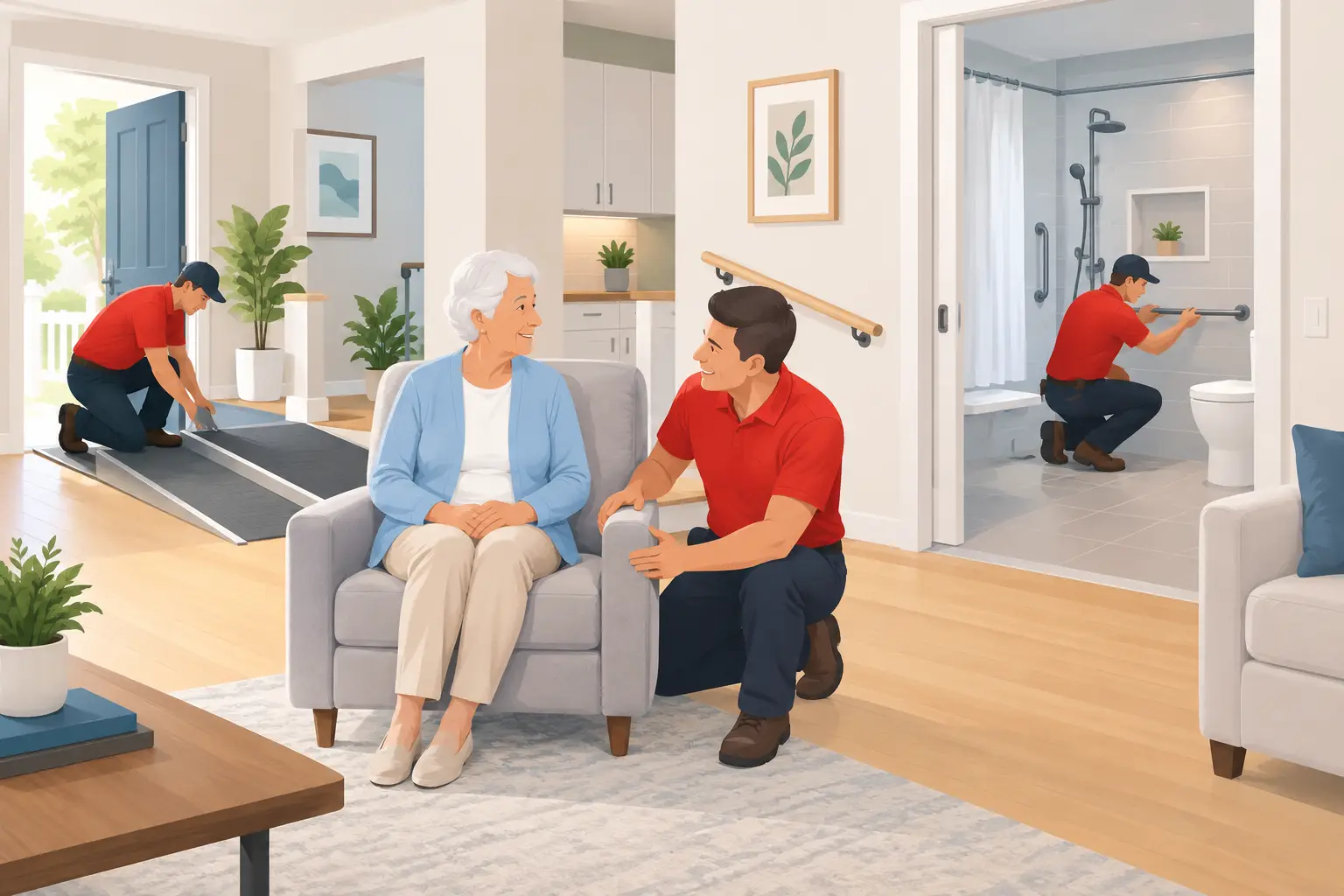
Ramps can be a good solution when steps are no longer workable, but they require careful planning. The slope, landing space, drainage, handrails, and surface material all affect safety. A ramp that is too steep or poorly positioned can create a new problem rather than solve one.
At the doorway, consider a low or no-threshold entrance, a wider clear opening, and a lever handle that does not require a tight grip. Motion-sensor lighting is also useful at entrances, garages, and walkways because it improves visibility without requiring anyone to search for a switch in the dark.
Put Bathroom Safety at the Top of the List
Bathrooms are a common source of household falls because water, smooth surfaces, and tight spaces often come together. Well-planned bathroom aging in place home modifications can make a significant difference without making the room feel clinical.
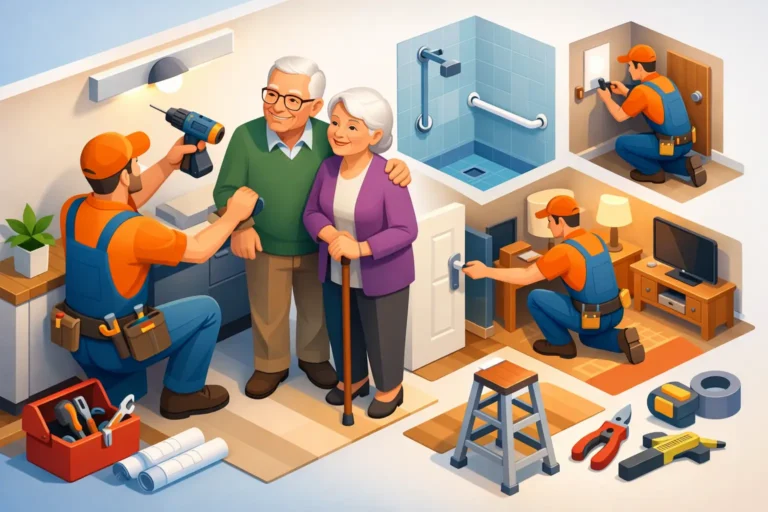
Grab bars are most effective when they are installed where support is needed: near the toilet, at the shower entry, and within reach in the bathing area. They must be properly anchored to support body weight. Towel bars and suction-mounted accessories are not substitutes for professionally installed grab bars.
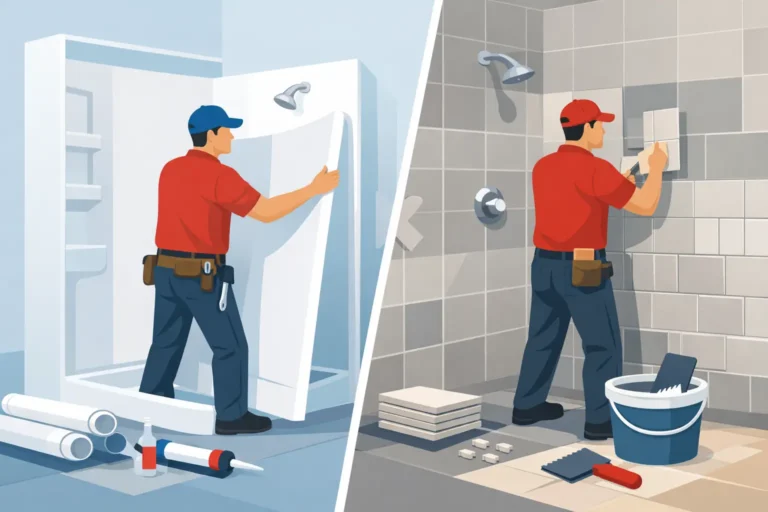
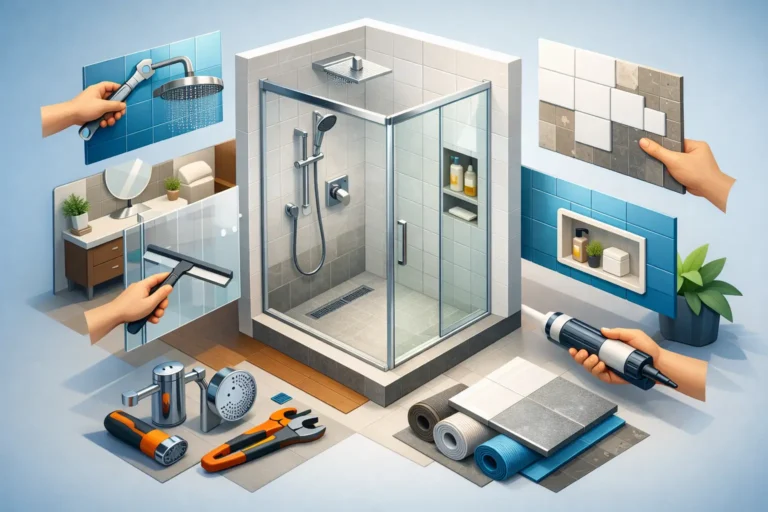
A curbless shower removes the step over a tub wall or shower threshold, making entry easier and allowing better access for mobility equipment if that becomes necessary. This is a larger project, but it can be especially worthwhile during a bathroom renovation. A built-in or securely mounted shower seat, handheld showerhead, and non-slip flooring can improve comfort and confidence even for homeowners who do not currently need mobility assistance.
If a tub remains the preferred option, adding secure grab bars and improving lighting may be enough for now. The right choice depends on the homeowner’s mobility, available space, and plans for the home. A tub-to-shower conversion is helpful for many people, but it is not automatically the best answer for every household.
Improve the Kitchen Without Losing Function
A kitchen should support independence, not turn routine tasks into a reach-and-balance exercise. Start with visibility. Bright, evenly placed lighting over countertops, the sink, and cooking areas reduces shadows and makes preparation safer. Under-cabinet lighting is a small upgrade with a noticeable everyday benefit.
Cabinet hardware with easy-to-grip pulls is often simpler to use than small knobs. Pullout shelves, drawer organizers, and lower storage can reduce bending, stretching, and climbing on a stool to reach frequently used items. Keeping everyday dishes, cookware, and pantry staples between waist and shoulder height is just as important as changing the cabinetry itself.
Countertop height and appliance placement may matter in a larger remodel. A wall oven positioned at a more accessible height can reduce the need to lift heavy dishes from a low oven. A cooktop with front controls can prevent reaching over hot burners. These changes take more planning, so they are often best included when a kitchen already needs updating.
Reduce Stair and Hallway Hazards
Stairs do not always have to be eliminated, but they should be made as safe and predictable as possible. Secure handrails on both sides provide better support than a single rail. They should be easy to grip, firmly mounted, and continuous along the stair run when possible.
Good lighting is essential. Install switches at both the top and bottom of the stairs, and consider illuminated switches or motion-activated lights for nighttime use. Stair treads should be in good condition, with no loose carpet, curled edges, or worn surfaces that increase the chance of catching a foot.
Hallways and pathways need room to move. Remove trip hazards such as unsecured rugs, clutter, extension cords, and low furniture. For homeowners who use walkers or wheelchairs, widening doorways or adjusting layouts may be worthwhile. Not every door needs to be widened immediately, but priority should go to bedrooms, bathrooms, and the main living areas.
Choose Lighting That Supports Everyday Independence
Lighting is one of the least disruptive modifications and one of the most effective. Aging eyes generally need more light to see changes in floor level, read labels, and move safely through a room. The goal is not harsh brightness. It is clear, even illumination with fewer dark corners and less glare.
Add lighting where tasks happen and where transitions occur: stairs, hallways, closets, bathrooms, entryways, laundry areas, and bedside routes. Night lights or low-level motion lighting can make overnight trips to the bathroom safer without flooding the room with light.
Contrast can help, too. A light switch that stands out from the wall, a stair edge that is easier to see, or a toilet seat that contrasts with surrounding finishes can make a home easier to navigate. These details are simple, but they support better visual awareness.
Plan for Future Needs Without Overbuilding
The best aging-in-place plan balances current needs with future flexibility. It may not make sense to renovate every room now, particularly if the home is functioning well. Instead, address urgent repairs, high-risk areas, and improvements that make daily life easier right away.
When larger projects are already planned, build accessibility into the work. If a bathroom is being remodeled, consider reinforcing walls for future grab bars. If flooring is being replaced, reduce abrupt transitions between rooms. If a first-floor room could become a bedroom later, think about storage, lighting, and nearby bathroom access before the need is immediate.
Professional installation matters for features that must safely support weight, alter plumbing, change structural elements, or affect exterior access. Smart Home Fix provides licensed and insured home improvement support for homeowners who want practical updates completed with dependable workmanship.
Start With the Route You Use Most
A safer home does not have to look institutional or feel dramatically different. It should simply work better for the person living in it. Begin with the route you take from the driveway to the bedroom and bathroom, then address the places where balance, reach, or visibility are hardest.
One secure handrail, a better-lit hallway, or a properly planned shower upgrade can make everyday life easier now while preserving more choices for the years ahead.