
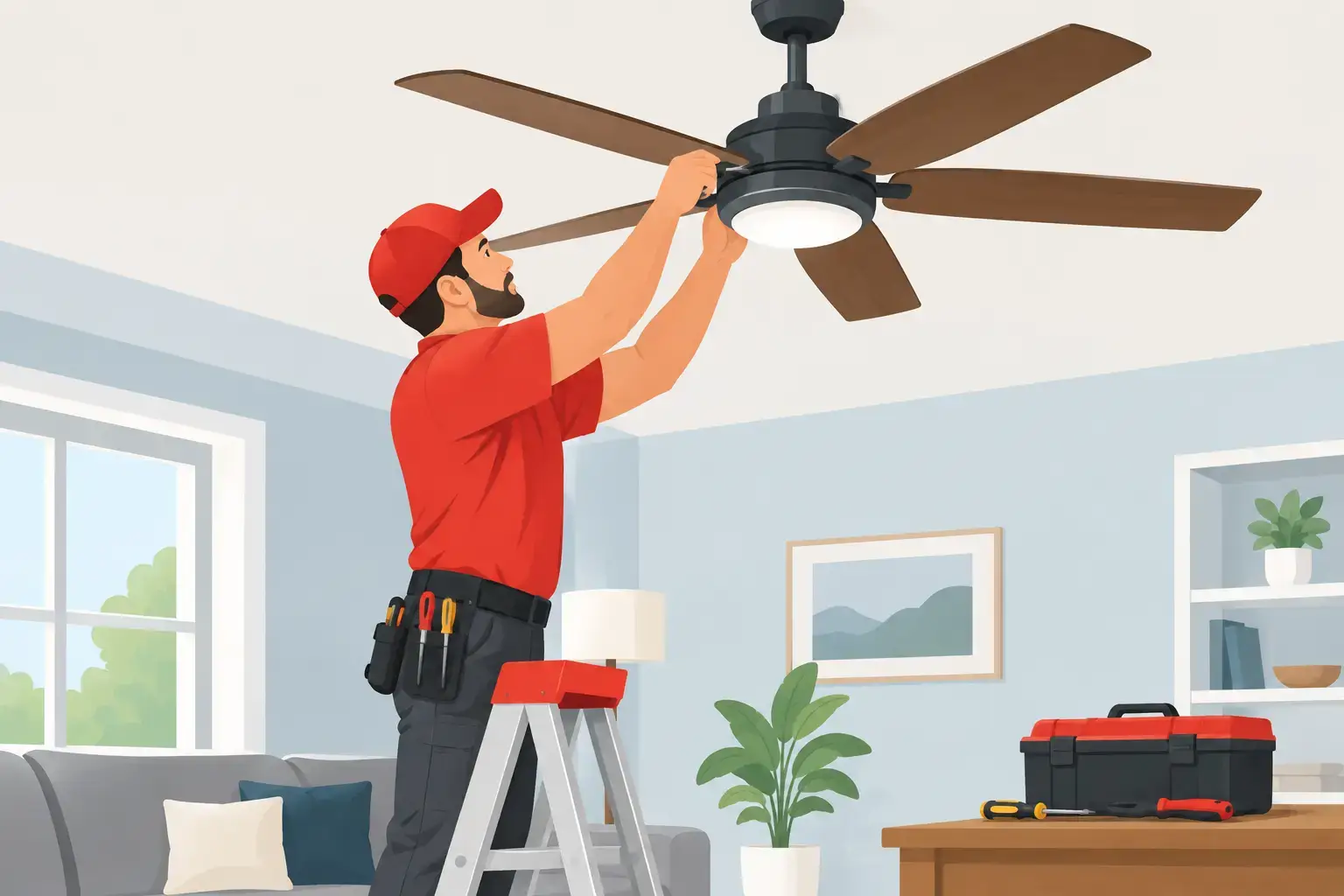
A ceiling fan should make a room more comfortable, not create a new electrical concern. So, can handyman install ceiling fans? In many cases, yes. A qualified handyman can replace or install a ceiling fan when the existing wiring, electrical box, and switch are suitable for the job. The key is knowing when the project is a straightforward fixture installation and when it needs the specialized work of a licensed electrician.
For Knoxville-area homeowners, the best choice comes down to the condition of the existing setup, the type of fan you want installed, and whether the work involves new wiring or electrical changes. A dependable, licensed and insured home services professional can help assess the job before work begins.
When Can a Handyman Install Ceiling Fans?
A handyman is often a good fit when you are replacing an existing light fixture or older ceiling fan with a new fan in the same location. The electrical wiring is already in place, the wall switch works properly, and the ceiling location has an approved, fan-rated electrical box capable of supporting the fan’s weight and movement.
This is more involved than simply hanging a light fixture. Ceiling fans have moving parts, and even a well-balanced fan creates vibration over time. The mounting box and bracket must be designed and secured for that purpose. A standard light-fixture box may not be safe for a fan, even if it appears sturdy at first glance.
An experienced handyman can handle the practical work that makes an installation look and function right: assembling the fan, securing the proper mounting hardware, attaching the blades, installing a downrod if needed, connecting the fixture where appropriate, and checking that the fan is level and stable. They can also replace a worn fan with a modern model that better suits the room’s size and ceiling height.
What a Safe Ceiling Fan Installation Requires
A proper installation starts before the fan comes out of the box. The power must be shut off at the breaker and verified before any wiring is touched. The installer should inspect the electrical box, mounting support, existing wires, and switch arrangement rather than assuming the old fixture was installed correctly.
The fan must be mounted to a fan-rated box or an approved support brace. This is especially important in older homes, where the existing box may have been intended only for a lightweight light fixture. If the box is loose, cracked, unsupported, or not rated for a fan, it should be corrected before the new fan is installed.
The fan’s location matters too. Blades need appropriate clearance from walls, cabinets, and other obstructions. On high or sloped ceilings, the fan may need a longer downrod, an angled-ceiling mounting system, or a model designed for that application. A fan mounted too close to the ceiling or at the wrong height can move less air and may not operate as intended.
Once installed, the fan should be tested at every speed. The light kit, remote control, pull chains, and wall switch should work correctly. Minor wobble can sometimes be corrected by balancing the blades, but significant shaking is a warning sign that the mounting, blade alignment, or fan itself needs attention.
When an Electrician Is the Better Choice
There are clear situations where a ceiling fan job goes beyond typical handyman work. If a room has no existing ceiling wiring and you want a fan installed in a new location, an electrician is usually the right professional. Running new cable through walls or ceilings, installing a new switch, adding a dedicated circuit, or modifying the electrical panel requires electrical expertise and may require permits or inspections.
An electrician is also the better choice if you find damaged insulation, aluminum wiring, scorched wires, a warm switch plate, frequent breaker trips, or any signs of moisture around the ceiling box. These conditions should not be covered up by a new fixture. They need to be evaluated and corrected safely.
Smart controls can create another gray area. Replacing a standard fan with one that uses a remote is often straightforward. But if you want new smart switches, multiple fans on a single control system, or changes to how the room’s lighting and fan are wired, the project may involve electrical modifications that call for an electrician.
A professional handyman should be comfortable saying when a job needs to be handed off. That protects your home, your investment, and the people living in it.
Choosing the Right Fan Before Installation
The fan itself can determine how easy the project will be. Before scheduling installation, measure the room and choose a fan with an appropriate blade span. A fan that is too small may not circulate air effectively, while an oversized fan can overwhelm a compact bedroom or breakfast nook.
Ceiling height is just as important. For standard ceilings, a flush-mount or low-profile fan may provide the necessary clearance. Taller ceilings often benefit from a downrod so the blades sit at an effective height. Sloped ceilings may require a compatible mounting kit, so check the fan specifications before purchasing.
Consider how you want to control the fan. Wall controls are convenient, while remote-controlled models can be useful when running new switch wiring is not practical. If the fan includes an integrated light, confirm that the switch arrangement works with your plans. Some homes have one switch for both the fan and light, while others have separate controls.
For outdoor covered porches, select a fan rated for damp locations. A fan designed only for indoor use may not hold up to humidity and changing temperatures. For areas exposed directly to rain, use a fan specifically rated for wet locations.
Questions to Ask Before You Schedule the Work
A few details can prevent delays on installation day. Let the professional know whether you are replacing an existing fan or adding one where no fixture exists. Mention the ceiling height, whether the ceiling is sloped, and whether the new fan includes a light kit, remote, or smart features.
It also helps to know whether the fan has already been purchased and whether all parts are available. Keep the manufacturer instructions, mounting hardware, remote, and any optional downrod together. If you are unsure whether the electrical box is fan-rated, do not guess. An on-site inspection can determine whether the existing support is appropriate.
Homeowners should also clear furniture and fragile items beneath the work area. Ceiling fan installation often requires a ladder, room to maneuver blades and hardware, and a safe path to the electrical panel. These small preparations make the visit more efficient and reduce disruption in the room.
Why Professional Installation Is Worth It
A ceiling fan can seem like a manageable weekend project, but the stakes are higher than they appear. A poorly supported fan can wobble, loosen, damage the ceiling, or create an electrical hazard. Incorrect wiring can lead to unreliable operation, tripped breakers, or a fixture that does not respond properly to its controls.
Professional help brings a careful assessment of the mounting location along with the practical skill to finish the installation cleanly. For homeowners who have a list of home repairs waiting, it can also be convenient to combine a fan installation with related tasks, such as replacing a light fixture, repairing drywall around an old box, or updating trim after the work is complete.
Smart Home Fix provides trusted local handyman help for many fixture and home improvement projects, with a focus on professional workmanship and making home maintenance easier. When electrical conditions fall outside the scope of a safe fan replacement, the right next step is always to bring in the appropriate electrical professional.
A new ceiling fan is a simple upgrade when it is matched to the room and mounted correctly. Start with an honest look at the wiring and support above the ceiling, then choose the professional whose qualifications fit the work. That approach keeps the room comfortable and gives you confidence every time you turn the fan on.