A toilet that refills every few minutes can waste a surprising amount of water and create a steady sound that is hard to ignore. The good news is that learning how to fix running toilet issues usually starts with a few visible parts inside the tank – and many repairs are straightforward when you identify the right cause first.
Before taking anything apart, remove the tank lid carefully and set it on a folded towel. Porcelain lids can crack easily. Then flush once and watch what happens as the tank empties and refills. That brief observation often tells you whether the problem is at the bottom of the tank, around the fill valve, or at the overflow tube.
How to Fix a Running Toilet by Finding the Cause
A toilet runs for one of two basic reasons: water is leaking out of the tank after it fills, or the fill valve is allowing too much water into the tank. In either case, the toilet keeps adding water to restore the correct level.
Start by looking at the water level. It should sit roughly 1 inch below the top of the vertical overflow tube. If water is flowing into that tube, the fill valve or float setting is usually the issue. If the water level is below the overflow tube but the toilet still runs intermittently, the flapper at the bottom of the tank is more likely to blame.
If the water is leaking onto the bathroom floor rather than staying in the bowl or tank, stop using the toilet and turn off the water supply. A leak outside the fixture is a different repair and can damage flooring or the subfloor if it is left alone.
Check the Flapper First
The flapper is the flexible rubber or silicone seal that covers the flush valve opening at the bottom of the tank. When you flush, the chain lifts the flapper so water can enter the bowl. Afterward, the flapper should settle flat and create a watertight seal.
Over time, flappers can warp, harden, collect mineral buildup, or become coated with residue. Even a small gap allows water to seep into the bowl, which lowers the tank level and triggers the fill valve again.
To test the flapper, let the tank fill completely. Add a few drops of food coloring to the tank water, but do not flush. Wait about 15 minutes. If colored water appears in the bowl, water is leaking past the flapper or flush valve seat.
First, check whether the flapper is sitting evenly over the opening. If it looks dirty, gently wipe it and the rim beneath it with a soft cloth. Then inspect the chain. A chain that is too tight can hold the flapper slightly open, while one that is excessively long can catch beneath the flapper. Ideally, there should be a small amount of slack when the flapper is closed.
If cleaning and adjusting the chain do not solve the problem, replace the flapper with one designed to fit your toilet’s flush valve. Flappers are common replacement parts, but sizes and styles vary. Bringing the old flapper with you can help you find a compatible match.
Inspect the Fill Valve and Float
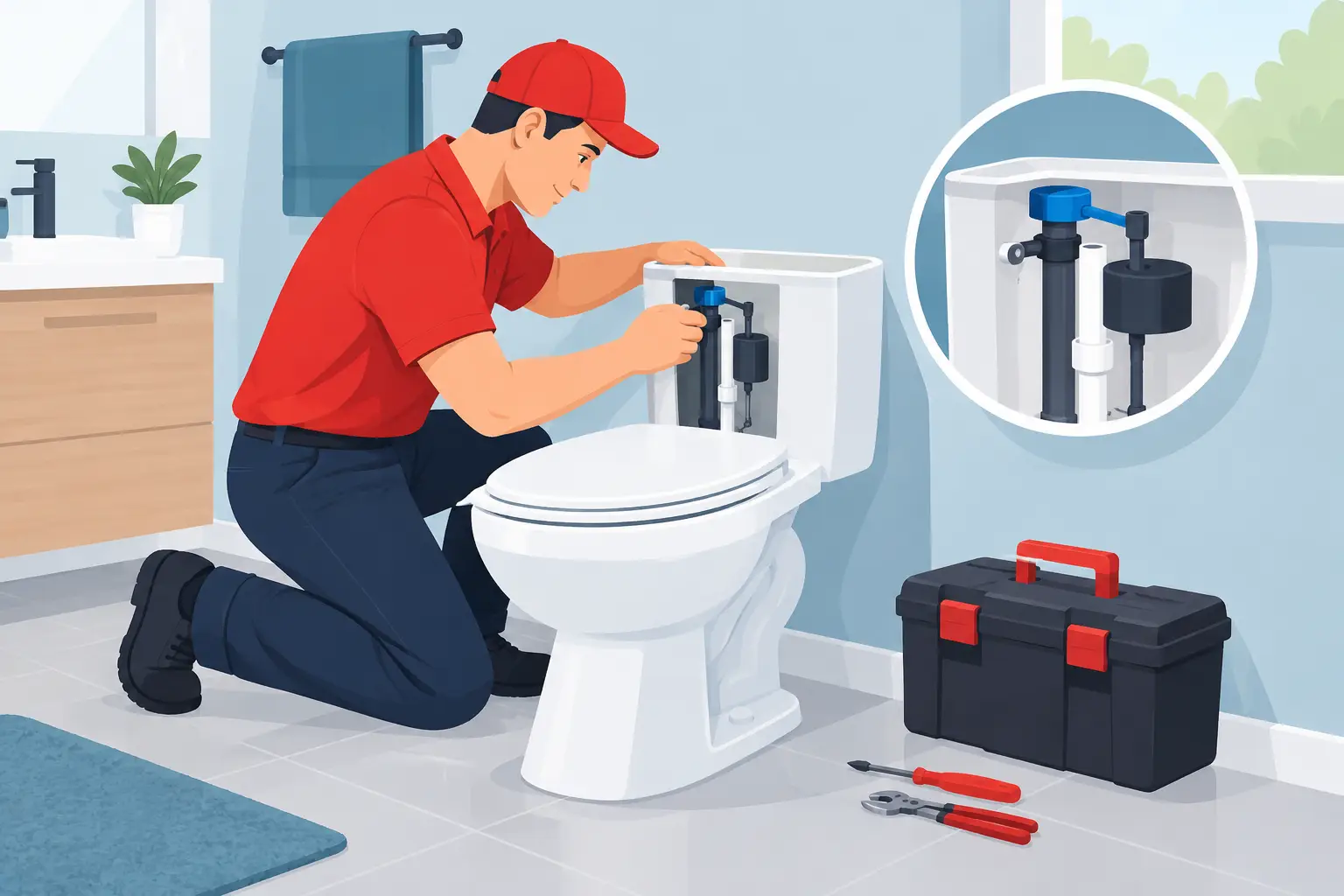
The fill valve is the tall assembly that refills the tank after flushing. It uses a float to sense the water level and shut off the incoming water when the tank is full. If it does not shut off properly, water can rise into the overflow tube and continue running.
Many newer toilets use a small float cup that slides up and down the fill valve shaft. Older toilets may have a float ball connected to a metal arm. In both cases, look for a water-level adjustment screw or clip on the fill valve.
Turn the adjustment slowly to lower the water level, then flush and let the tank refill. The goal is to stop the fill level below the top of the overflow tube. Do not lower it so far that the toilet has a weak flush. It may take one or two small adjustments to find the right setting.
If the float moves freely but the valve continues to run, the fill valve may be worn or blocked by mineral deposits. A replacement is often more reliable than trying to repair an aging valve. Make sure the water supply is turned off before removing it, and keep a towel and small container nearby for the remaining water in the tank.
Examine the Refill Tube and Overflow Tube
The small refill tube sends water into the overflow tube while the tank refills. This water restores the proper level in the toilet bowl after a flush. It should be clipped near the top of the overflow tube, not pushed down inside it.
If the refill tube extends too far into the overflow pipe, it can create a siphoning effect. Water may continue to pull from the tank even after the fill valve turns off. Reposition the tube so its end remains above the opening, secured with a clip.
Also inspect the overflow tube itself for cracks. A damaged overflow tube can cause a persistent leak that resembles a flapper problem. Because the tube is part of the flush valve assembly, this repair is more involved than swapping a flapper or fill valve. It may be a good time to call a qualified repair professional, especially if you are not comfortable removing the tank from the bowl.
A Safe, Simple Repair Process
Once you know which part is causing the running, the repair process is usually manageable. Turn the shutoff valve clockwise to stop the water supply, then flush the toilet to empty most of the tank. Hold the flush handle down briefly to release as much water as possible.
For a flapper replacement, disconnect the chain from the flush lever, unhook the old flapper, and install the new one according to its design. Reconnect the chain with a little slack, turn the water back on, and test several flushes.
For a fill valve replacement, follow the instructions that come with the new part closely. The height of the valve matters, as does the water-level adjustment once installation is complete. Check the connection at the bottom of the tank for drips before replacing the lid.
Avoid overtightening plastic nuts or fittings. They only need to be snug enough to prevent leaks. Excess force can crack a tank fitting or damage a threaded connection, turning a small repair into a larger one.
When a Running Toilet Needs Professional Help
A running toilet is often a simple maintenance issue, but not every situation is a quick do-it-yourself fix. Professional help is sensible when the toilet has a cracked tank, a broken flush valve assembly, recurring leaks after replacement parts are installed, or water on the floor near the base.
It is also worth getting help if the shutoff valve will not turn, the supply line is corroded, or the toilet rocks when you sit on it. A loose toilet may point to a failed seal at the base, and delaying that repair can allow moisture to reach the flooring below.
For homeowners in Knoxville and nearby communities, Smart Home Fix provides dependable residential repair help when a toilet issue turns out to be more than a simple adjustment. As a licensed and insured local team, we focus on practical repairs that make your home easier to live in.
A toilet should fill, stop, and stay quiet until the next flush. If yours does not, addressing the issue early can prevent wasted water and help you avoid a minor repair becoming a bathroom headache.