A handrail that wiggles when someone reaches for it is not a small cosmetic flaw. In an older house, it can be the first visible sign of a safety issue that has been ignored for too long. An older home safety upgrade focuses on the everyday details that protect the people using the home – from the front steps and bathroom floor to aging electrical components behind the walls.
Older homes often have character, solid construction, and layouts that homeowners love. They can also have years of deferred maintenance, worn materials, and systems that were built for a different time. The right improvements do not have to erase a home’s character. They should make the property safer, easier to use, and better prepared for daily life.
Start With the Risks You Use Every Day
The best place to begin is not necessarily the most dramatic-looking project. Start with the areas your household uses constantly: entryways, stairs, hallways, bathrooms, kitchens, and exterior walkways. A minor problem in one of these spaces can become a serious hazard because it is encountered every day.
Walk through the house at different times, including after dark. Notice where lighting is weak, floors feel uneven, doors stick, or you naturally reach for something to steady yourself. Look for loose railing connections, torn flooring, exposed thresholds, cracked tile, and rugs that slide underfoot.
This kind of inspection is especially useful before hosting family, preparing for an aging parent to move in, or making a home more comfortable for the long term. Safety work is often most effective when it is planned before an accident forces a rushed repair.
Electrical Updates Deserve Early Attention
Electrical safety is one of the most important considerations in an older home. Outlets, switches, wiring, and service panels may have been modified over several decades. That does not automatically mean they are unsafe, but it does mean assumptions are risky.
Warning signs can include outlets that feel warm, frequent breaker trips, flickering lights, buzzing switches, damaged cords, or two-prong outlets in areas where modern appliances are used. Bathrooms, kitchens, garages, unfinished basements, and outdoor locations deserve particular attention because moisture increases the risk of shock.
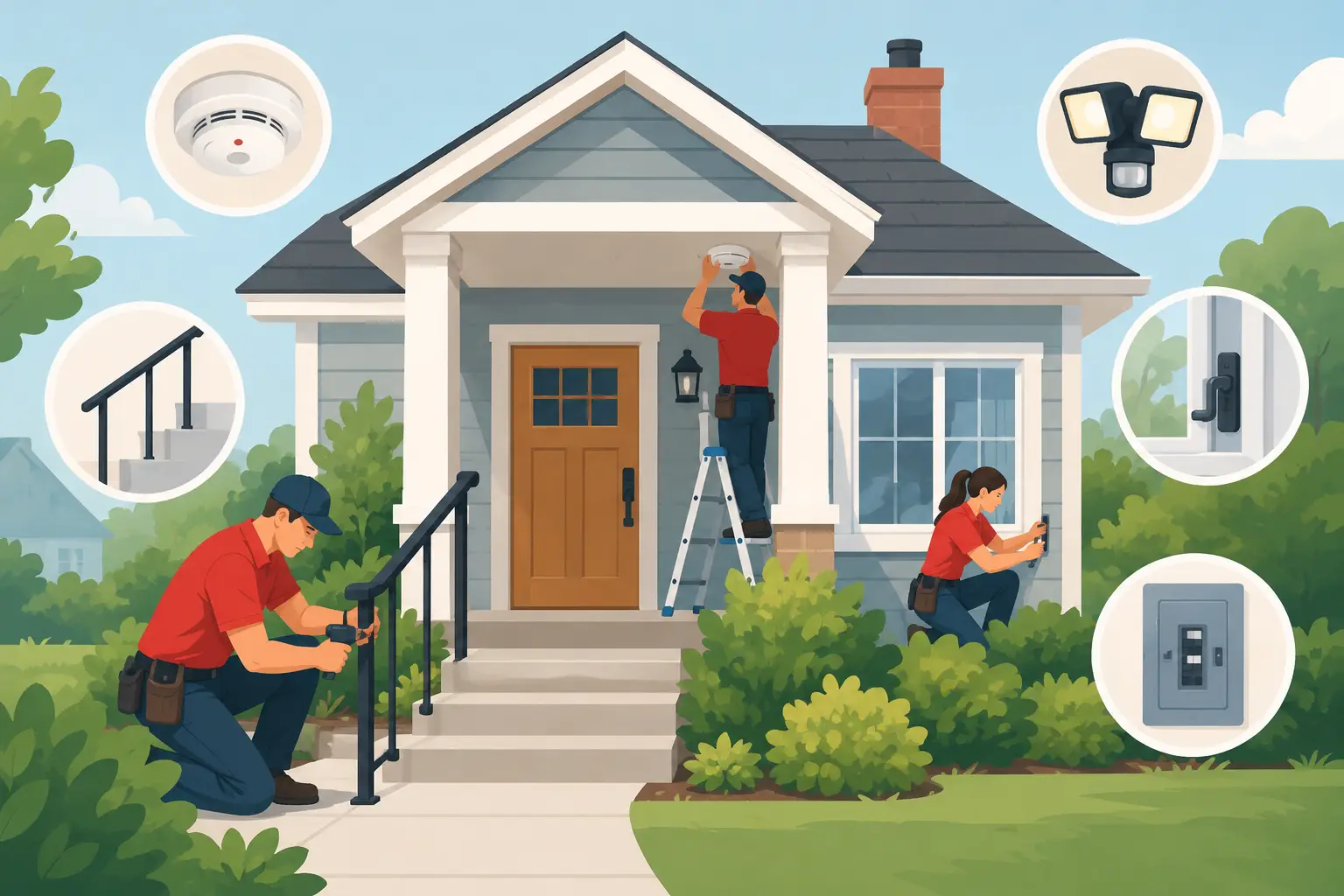
Ground-fault circuit interrupter protection, commonly called GFCI protection, is a practical upgrade for appropriate locations. Smoke alarms and carbon monoxide alarms should also be checked for proper placement, working batteries, and replacement dates. Hardwired or interconnected alarm upgrades may make sense depending on the home’s layout and existing system.
Some electrical tasks call for a qualified electrician rather than a general repair. A dependable home service professional can help identify concerns, handle related repairs, and coordinate the right scope of work, but major wiring, panel, or code-related electrical work should be evaluated by the appropriate licensed trade professional.
Make Stairs, Steps, and Entries More Secure
Falls are among the most common household injuries, and stairs are an obvious place for problems to develop. A safe staircase needs more than a handrail that looks intact from across the room. The rail should be firmly anchored, easy to grip, and present where it is needed. Stair treads should be secure, with no loose carpet, lifted edges, or damaged boards.
Exterior steps need the same attention, particularly in East Tennessee where rain, leaves, and seasonal moisture can make surfaces slick. Rotting porch boards, shifting pavers, loose masonry, and uneven concrete can all create tripping hazards. Repairing a single unstable step may be a modest project, but it can prevent a much larger problem.
Lighting matters here as much as footing. A well-placed fixture at the front entry, back door, garage access, or stair landing makes it easier to see changes in elevation. Motion-sensor lighting can be helpful for frequently used outdoor routes, although it should be positioned and adjusted so it does not leave someone standing in darkness while waiting for it to activate.
Build a Better Older Home Safety Upgrade in Bathrooms
Bathrooms combine hard surfaces, water, tight spaces, and frequent movement. That makes them one of the highest-priority rooms for safety improvements. A loose towel bar is not a substitute for a grab bar, and it should never be expected to hold a person’s weight.
Properly installed grab bars near the toilet and inside or just outside the shower can provide reliable support. The right placement depends on the user and the bathroom layout, so this is worth thinking through before installation. If walls are being opened during a remodel, adding backing for future grab bars is a smart forward-looking step.
Other useful bathroom upgrades include non-slip flooring, a secure bath mat, brighter vanity lighting, an easy-to-reach exhaust fan switch, and repairs to loose tile or soft flooring around a toilet or tub. A tub-to-shower conversion may also be practical for some homeowners, but it depends on the household’s needs and whether preserving a tub is important for children or resale preferences.
Water damage should never be treated as just a visual concern. A slow leak under a vanity or around a shower can weaken subflooring and create unstable surfaces before the problem is obvious. Address leaks promptly, then repair damaged materials properly rather than covering them up.
Improve Lighting Without Changing the Home’s Character
Poor lighting makes nearly every other home safety issue worse. Shadows hide uneven flooring, dark hallways make nighttime trips harder, and dim exterior entries make it difficult to spot wet leaves or an icy patch.
Focus first on task areas and travel paths. Hallways, stairs, closets, laundry rooms, kitchen work zones, and exterior doors should have clear, dependable illumination. Adding a light at the top and bottom of a stairway, replacing a failing fixture, or installing an easier-to-use switch can make a meaningful difference without changing the look of an older home.
For homeowners who want greater convenience, motion-activated lights and smart controls can help reduce fumbling for switches. These features are most useful when they solve a real problem. A simple, well-located fixture is often better than adding technology for its own sake.
Repair Floors, Doors, and Everyday Obstacles
Older homes can settle over time. A little character is expected, but floors that bounce, sag, or feel soft need closer attention. Loose boards, separating vinyl, curling carpet edges, and transitions between rooms are common trip hazards. Secure or replace damaged materials before they become more difficult to repair.
Door hardware also affects safety and access. Exterior doors should latch securely, deadbolts should operate smoothly, and strike plates should be firmly fastened. A door that sticks may be an annoyance, but it can also be a concern if it is difficult to open during an emergency. Interior doors should not trap family members because of a malfunctioning latch or swollen frame.
Keep pathways clear, particularly near stairs, exits, and bedrooms. This does not mean a home must feel bare or impersonal. It means furniture, cords, storage, and decorative items should not create an obstacle in a route people use when tired, carrying groceries, or moving quickly.
Do Not Forget Fire and Emergency Readiness
Safety upgrades should account for what happens when something goes wrong. Test smoke and carbon monoxide alarms regularly. Make sure sleeping areas have a clear exit path, and confirm that windows intended as emergency exits can open as designed. Windows painted shut, blocked by heavy furniture, or fitted with difficult security hardware deserve attention.
Kitchen fire safety starts with maintenance. Keep the range area clean, repair damaged appliance components, and avoid overloaded outlets. If a fire extinguisher is kept in the kitchen, place it where it can be reached without leaning over the stove. Everyone in the household should know where it is and how to use it.
For homeowners with an attached garage, a properly working door between the garage and house, reliable carbon monoxide alarms, and safe storage for fuels or chemicals are especially worthwhile. These are details that rarely attract attention during a renovation, yet they directly support a safer home.
Plan the Work in the Right Order
Not every issue needs to be addressed at once. Start with immediate hazards: active leaks, unstable steps, loose railings, exposed electrical concerns, nonworking alarms, or blocked exits. Next, prioritize high-use areas where a small repair can reduce daily risk. Then consider larger improvements such as bathroom modifications, flooring replacement, or entry repairs.
Grouping related projects can reduce disruption. For example, if bathroom flooring is being replaced, it may be the right time to repair subfloor damage, improve ventilation, add grab-bar backing, and update lighting. If exterior steps need repair, inspect railings, lighting, drainage, and nearby walkways at the same time.
A careful older-home safety plan respects what makes the house worth keeping while correcting the weaknesses that can make daily life harder. For Knoxville-area homeowners, Smart Home Fix provides dependable, licensed and insured help for practical repairs and improvement projects that make a home safer to live in. The smartest upgrade is often the one that lets everyone move through the house with more confidence tomorrow than they did today.